
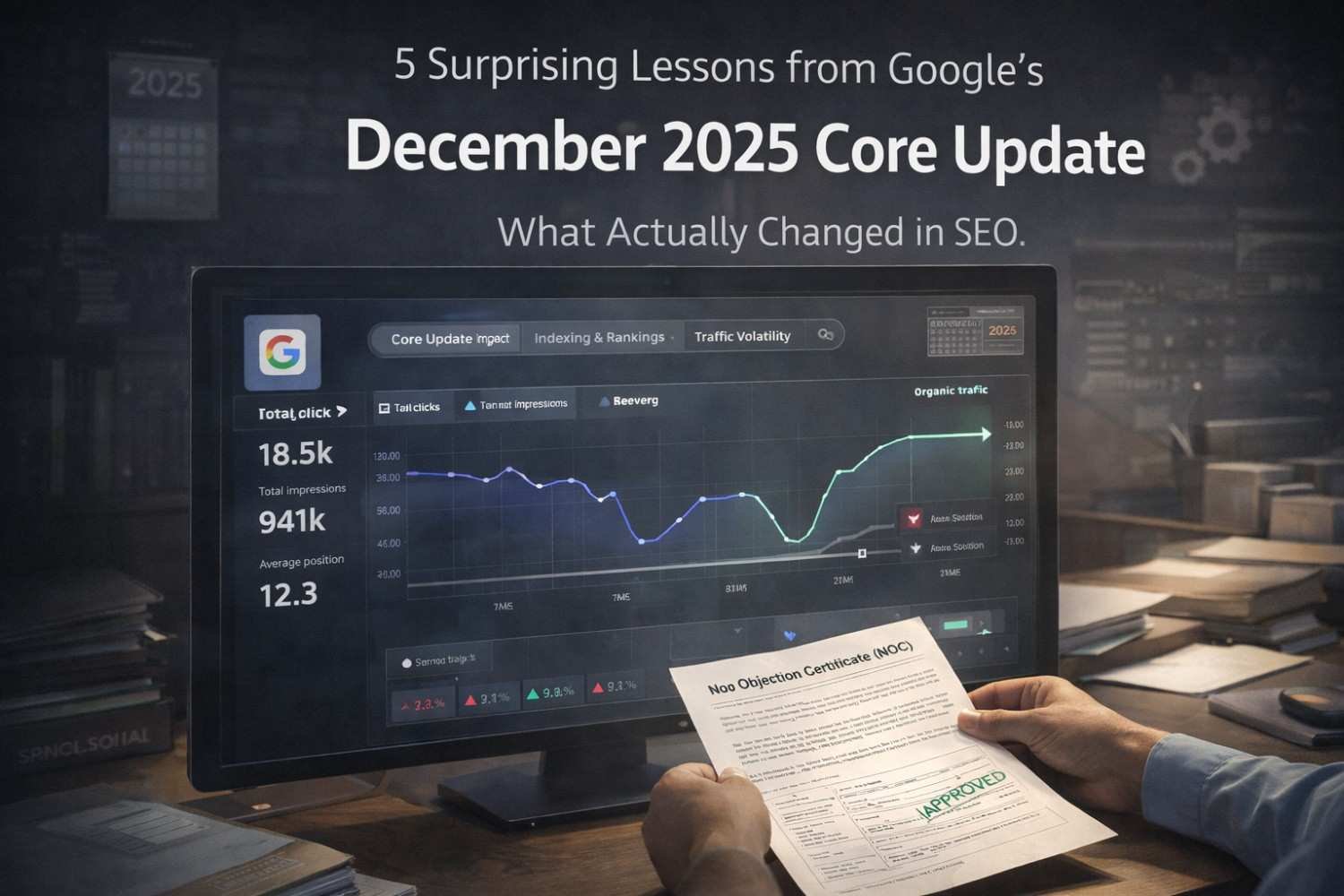
Around December 11, 2025, a familiar wave of panic swept through the SEO community. This time, it felt different. Community forums and Reddit's r/SEO lit up with reports of GSC data lagging by 48 hours and traffic that was "cut in half the past two days," while others saw sites that had been stable for years "kinda vanished" from top positions.
Google soon made it official, confirming on its Search Status Dashboard that the "December 2025 core update" was rolling out. This was the third broad core update of the year, following the March and June 2025 updates, and its impact was immediate and widespread.
Now that the dust has settled, a clearer picture of the new landscape has emerged. This post cuts through the noise to distill the five most surprising and impactful takeaways from the update—lessons that define the new rules of SEO.
1. Real-World Experience Is Now a Measurable Ranking Factor
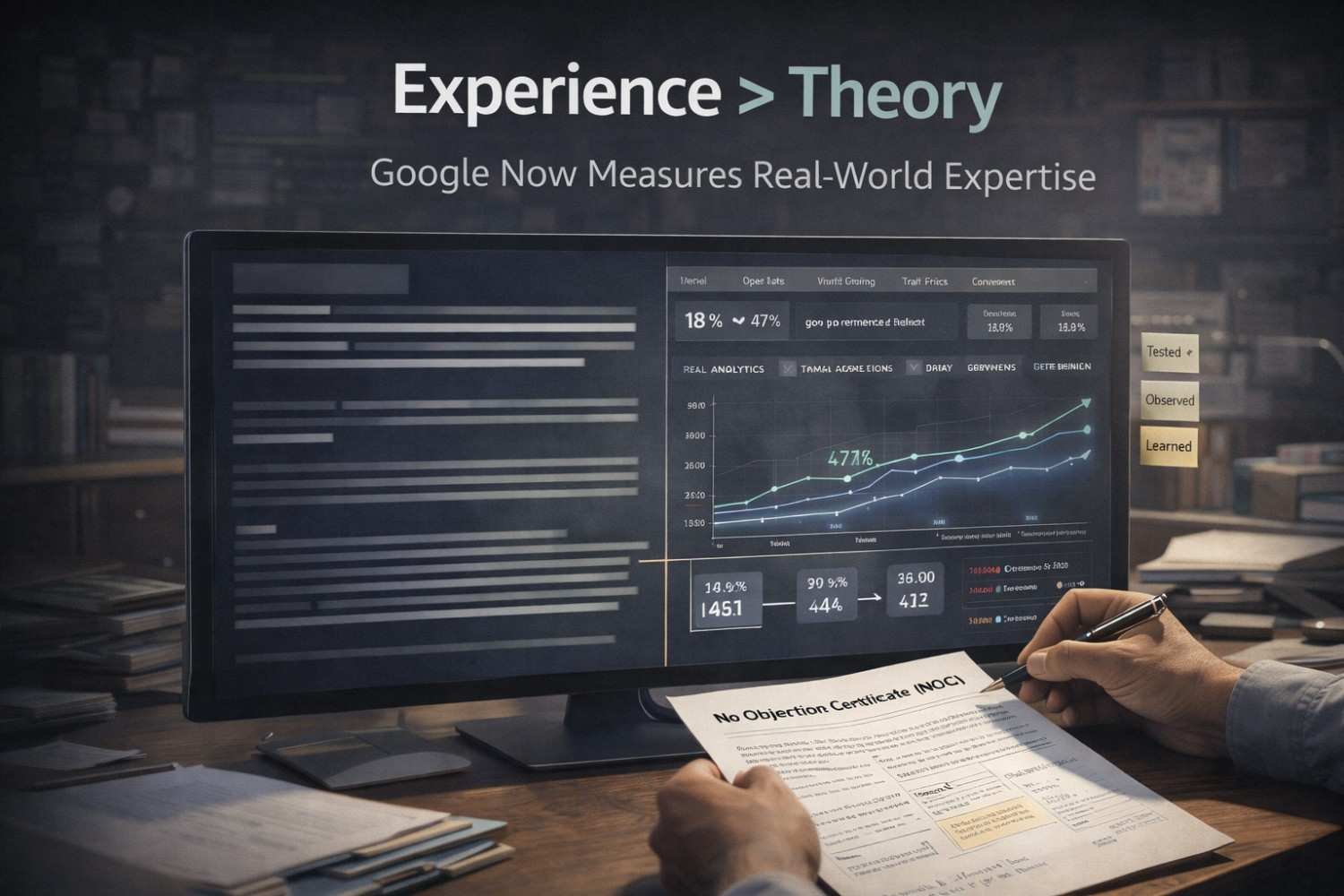
The December update signaled a major shift in how Google evaluates expertise. It's no longer enough to state your credentials in a bio; you must now actively demonstrate your experience within the content itself. As Drew Madore noted in his excellent post-update analysis on Forem, Google has gotten "uncomfortably good at distinguishing between performing expertise and demonstrating it."
Demonstrating real-world experience means providing the specific, nuanced insights that only come from hands-on work. The winning content all shared the same fingerprints:
- Including specific process descriptions with actual numbers or timelines (e.g., "our open rates increased from 18% to 47% in 90 days").
- Acknowledging limitations, failures, or unexpected details that only come from direct involvement in a task.
- Providing unique insights and perspectives that cannot be found by simply researching and rewriting other top-ranking articles.
This shift reframes the central question of content quality. Google's systems are now more focused than ever on answering:
"Does this page leave the searcher satisfied, or still searching?"
Related Reading: Technical SEO remains a foundational element for establishing site authority. Learn how to effectively communicate with search engine crawlers in our guide, How We Use XML Sitemaps to Boost SEO.
2. Your 'About Us' Page Is Now a Critical Trust Signal

Pages that were previously treated as SEO afterthoughts, like "About Us" pages and author bios, have been upgraded to significant trust signals. The update revealed that sites with unclear authorship, anonymous content, or vague corporate information saw sharper performance declines. Google is now using these pages to verify the legitimacy of the people and the organization behind the content.
The difference is stark. For example, one e-commerce site I monitor saw a significant recovery after a simple change: an anonymous "About Us" page with stock photos was replaced with one listing its three founders, their LinkedIn profiles, and a link to their 2018 business registration. This move from abstract advice to tangible action is what's being rewarded.
| What Doesn't Help Anymore | What Google Now Rewards |
|---|---|
| Generic mission statements | Specific founding dates and company milestones |
| Stock photos of the "team" | Lists of actual team members with links to professional profiles (e.g., LinkedIn) |
| Vague claims of "industry-leading expertise" | Verifiable details like a physical address and contact information |
| No named individuals or verifiable history | Links to external press mentions, company registries, or awards |
3. It Wasn't an AI Penalty—It Was a "Generic Content" Penalty
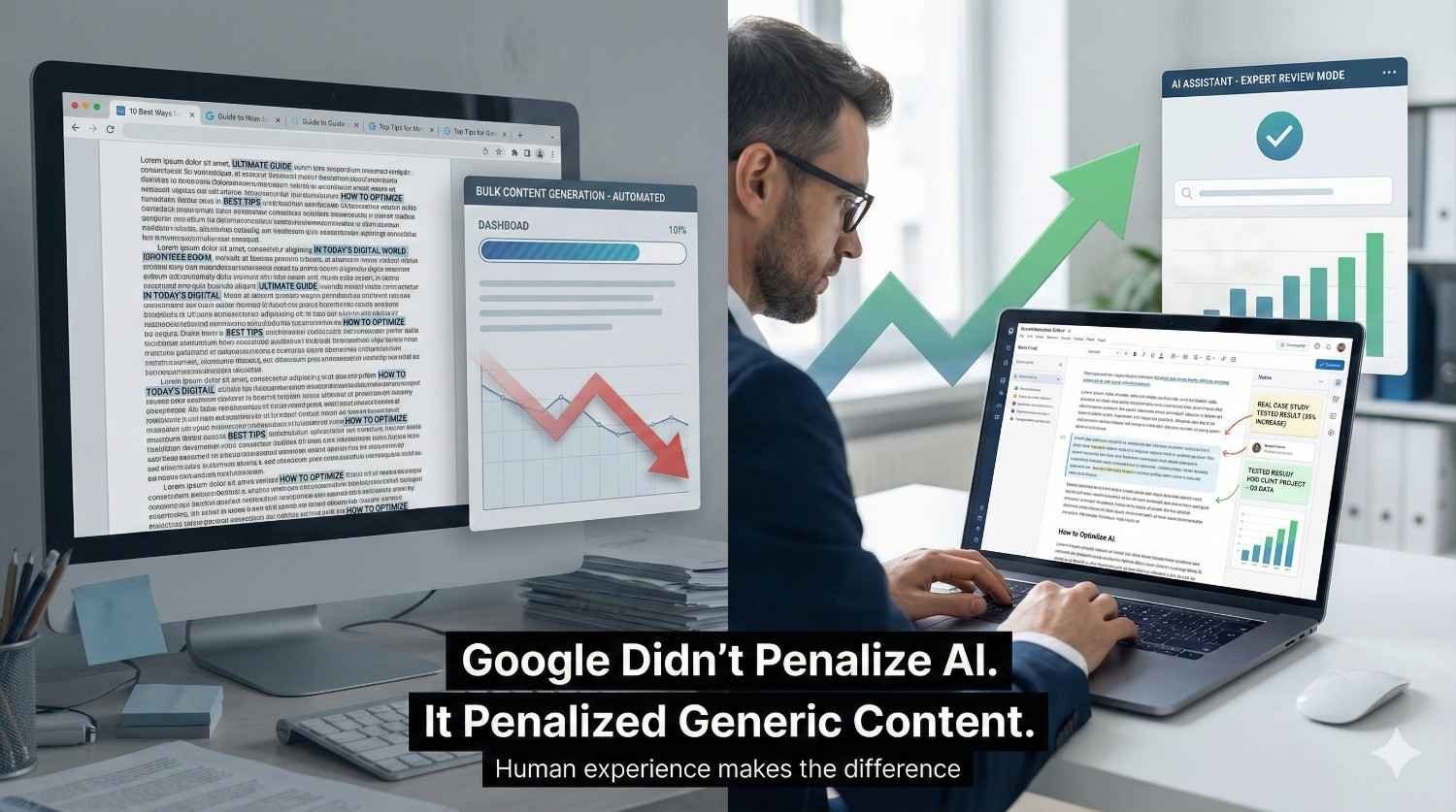
One of the most common questions following the update was whether Google was targeting AI-generated content. The analysis shows that the update did not penalize content simply because it was created with AI tools. As the team at Trendflap noted, "'lazy' AI content is the primary casualty."
Instead, the update filtered content that lacked the specific, experiential details that AI typically struggles to generate on its own. The verdict wasn't on the tool used, but on the trustworthiness of the final product.
The distinction is critical:
Content that struggled:
- Mass-generated pages created to chase keywords
- Articles produced through heavy automation with no expert review
- Content filled with generic phrasing and no original analysis
Content that performed well:
- Content where AI was used as a research or drafting assistant but was then heavily reviewed, fact-checked, and enriched by a human subject matter expert
- Content where human experts added original insights and firsthand experience
- Content that demonstrated genuine expertise beyond surface-level information
Understand the AI Search Landscape
To navigate content creation in the age of AI, it's crucial to understand how Google's AI systems work. Discover the surprising truths behind the search engine's most significant shift in our article: 5 Shocking Truths About Google's AI Search Chaos.
4. Unhelpful "Zombie" Pages Are Dragging Your Whole Site Down
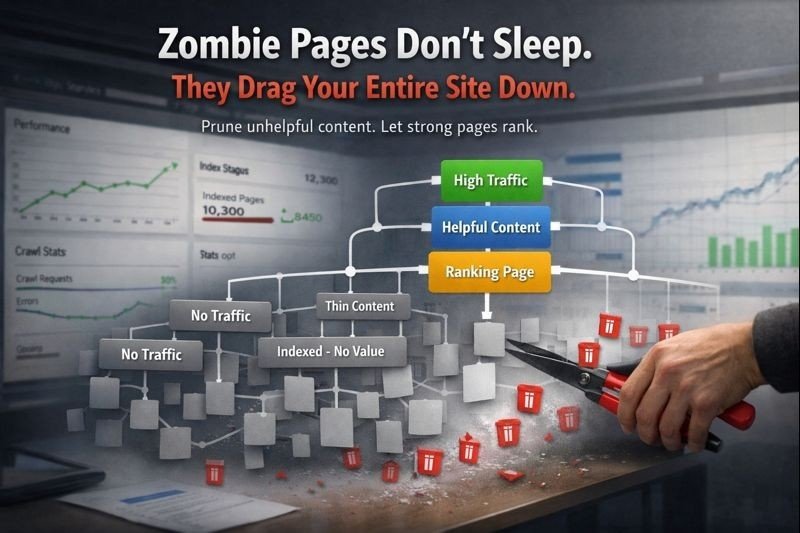
This core update reinforced a crucial concept: Google assesses the quality of a site as a whole, not just on a page-by-page basis. A large volume of low-quality, thin, or "unhelpful" content can negatively impact the rankings of even the best pages on your domain.
These low-value pages are often called "Zombie Pages"—articles that get little to no traffic but remain indexed, slowly dragging down the site's overall quality score. The advice here needs to be aggressive: Prune the Zombie Pages. If you have 500 pages and only 50 get traffic, the other 450 are dragging down your site-wide "Helpful Content" score.
This isn't just speculation. In its own documentation on core updates, Google states:
"If that's the case for your site, then deleting the unhelpful content can help the good content on your site perform better."
This confirms that a strategic content audit and pruning are no longer just occasional spring cleaning. They are a critical part of maintaining search visibility.
Technical Foundation: A clean site structure supports effective content pruning. Ensure search engines can efficiently find and crawl your quality pages by implementing a proper XML sitemap strategy.
5. Recovery Is a Marathon, Not a Sprint

For those negatively impacted, the immediate desire is to find a "quick fix." However, Google's documentation and the patterns of past updates make it clear that recovery from a core update is not instantaneous. A significant recovery often doesn't happen until a future core update rolls out, which can take several months.
However, there is a crucial nuance. Google's own documentation now clarifies that the company is "continually making updates to our search algorithms, including smaller core updates." These smaller, unannounced updates can reward improvements, so you don't always have to wait for the next major rollout to see some positive movement.
This reality demands a strategic shift: Stop the panicked, reactive changes. The correct approach is to wait for the rollout to complete, analyze the damage, and then focus on making meaningful, sustainable improvements to content quality that align with the other takeaways in this article. Patience and a long-term commitment to quality are essential.
Conclusion: The Unmistakable Path Forward
The Ultimate Takeaway
The December 2025 core update is not about punishment; it is about prioritization. Google is relentlessly refining its ability to identify and reward content that is genuinely credible, clear, and valuable to humans. Pages built on shortcuts, automation without expertise, and thin value will continue to fade.
As we move forward, the most important question is no longer "How do I optimize this page?", but rather, "Does this page, and my site as a whole, genuinely deserve a searcher's trust and attention?"
The landscape has shifted, but the path forward is clearer than ever. Focus on genuine expertise, build real trust signals, eliminate low-value content, and be patient with your recovery strategy. These are no longer optional best practices—they're the new requirements for success in Google Search.
Need Expert Guidance?
Navigating major algorithm updates requires a strategic, long-term approach. For professional SEO support, you can find our location and get in touch.
Find Us on Google Maps