

Every piece of SEO advice you’ve ever read probably says the same thing: you absolutely must have a sitemap. It’s often presented as a foundational, non-negotiable step for any website. But the reality is far more nuanced. Beyond the basic setup, there are counter-intuitive truths and expert-level tactics that are rarely discussed.
This article goes beyond the basics to reveal five surprising takeaways that will change how you think about and use sitemaps. Get ready to transform this simple file from a passive checklist item into a powerful strategic tool.
 Let’s start with the most counter-intuitive truth: not every website needs a sitemap. While they are a recommended best practice, they aren’t always critical for search engine discovery. According to Google’s own documentation, a sitemap may be unnecessary under specific conditions:
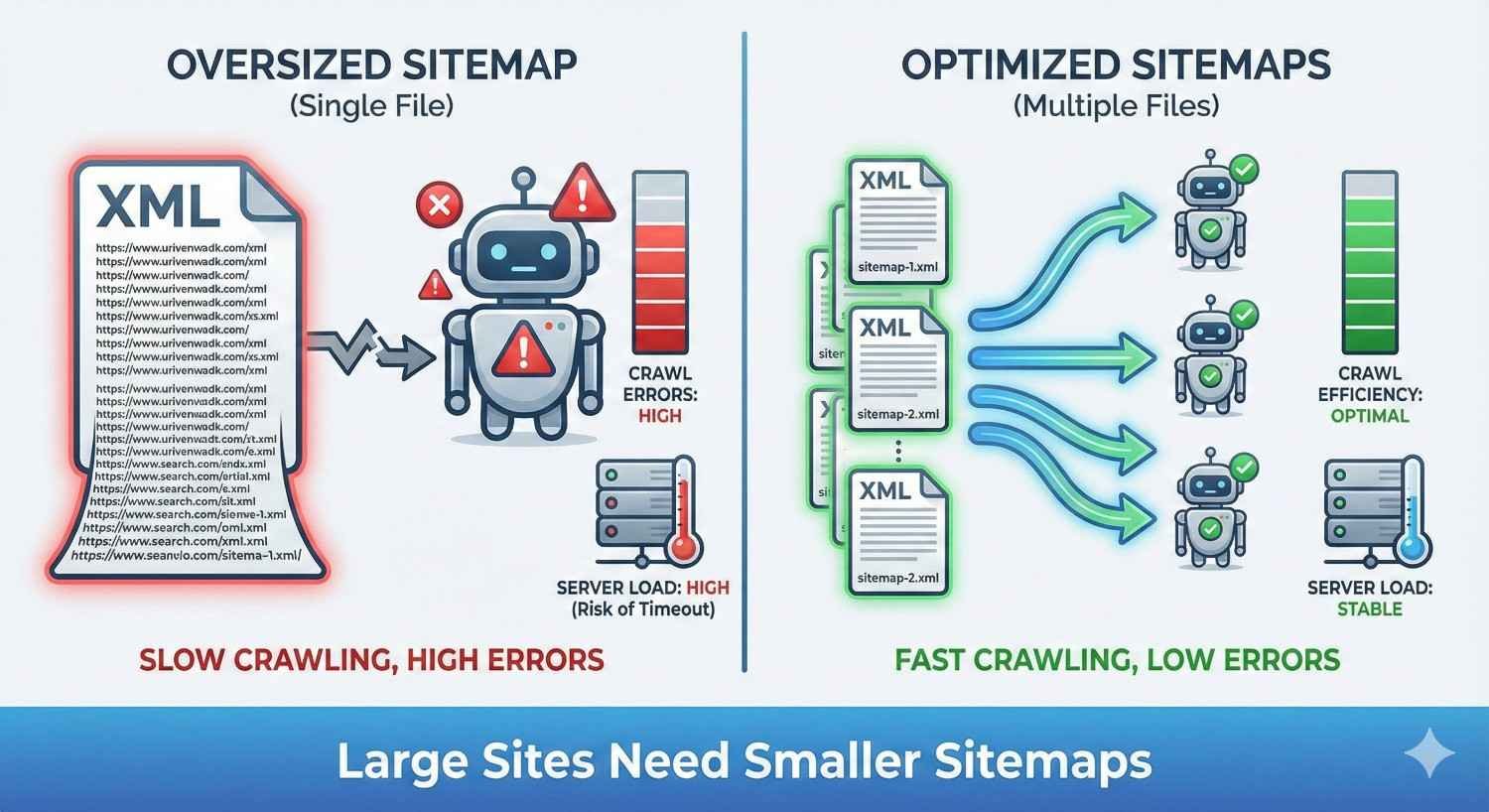 Conventional wisdom suggests packing your sitemap files as full as possible to meet the 50,000 URL limit. The surprising reality for very large websites is the opposite: it’s better to have more individual sitemap files with fewer URLs in each.
In a discussion among technical SEOs, one expert advised that “Google can deal with smaller files much better than they can with files with 50k URLs in them.” The strategic “why” is crucial: massive files can time out or cause processing failures on the search engine’s end, leading to wasted crawl budget and “Couldn’t fetch” errors. The expert provided a compelling real-world example of a 70 million page site that successfully used 3,400 separate XML sitemap files to improve crawling.
This strategy is so effective that the popular Yoast SEO plugin sets its own limit even lower, at 1,000 URLs per file, to “keep your sitemap loading as fast as possible.” Breaking up large sitemaps reduces processing errors and makes it far easier for search engines to digest your site’s data efficiently.
🔍 Deep Dive: AI Search Chaos
Uncover the 5 shocking truths about Google’s AI Overviews.
Read the Full Story →
Conventional wisdom suggests packing your sitemap files as full as possible to meet the 50,000 URL limit. The surprising reality for very large websites is the opposite: it’s better to have more individual sitemap files with fewer URLs in each.
In a discussion among technical SEOs, one expert advised that “Google can deal with smaller files much better than they can with files with 50k URLs in them.” The strategic “why” is crucial: massive files can time out or cause processing failures on the search engine’s end, leading to wasted crawl budget and “Couldn’t fetch” errors. The expert provided a compelling real-world example of a 70 million page site that successfully used 3,400 separate XML sitemap files to improve crawling.
This strategy is so effective that the popular Yoast SEO plugin sets its own limit even lower, at 1,000 URLs per file, to “keep your sitemap loading as fast as possible.” Breaking up large sitemaps reduces processing errors and makes it far easier for search engines to digest your site’s data efficiently.
🔍 Deep Dive: AI Search Chaos
Uncover the 5 shocking truths about Google’s AI Overviews.
Read the Full Story →
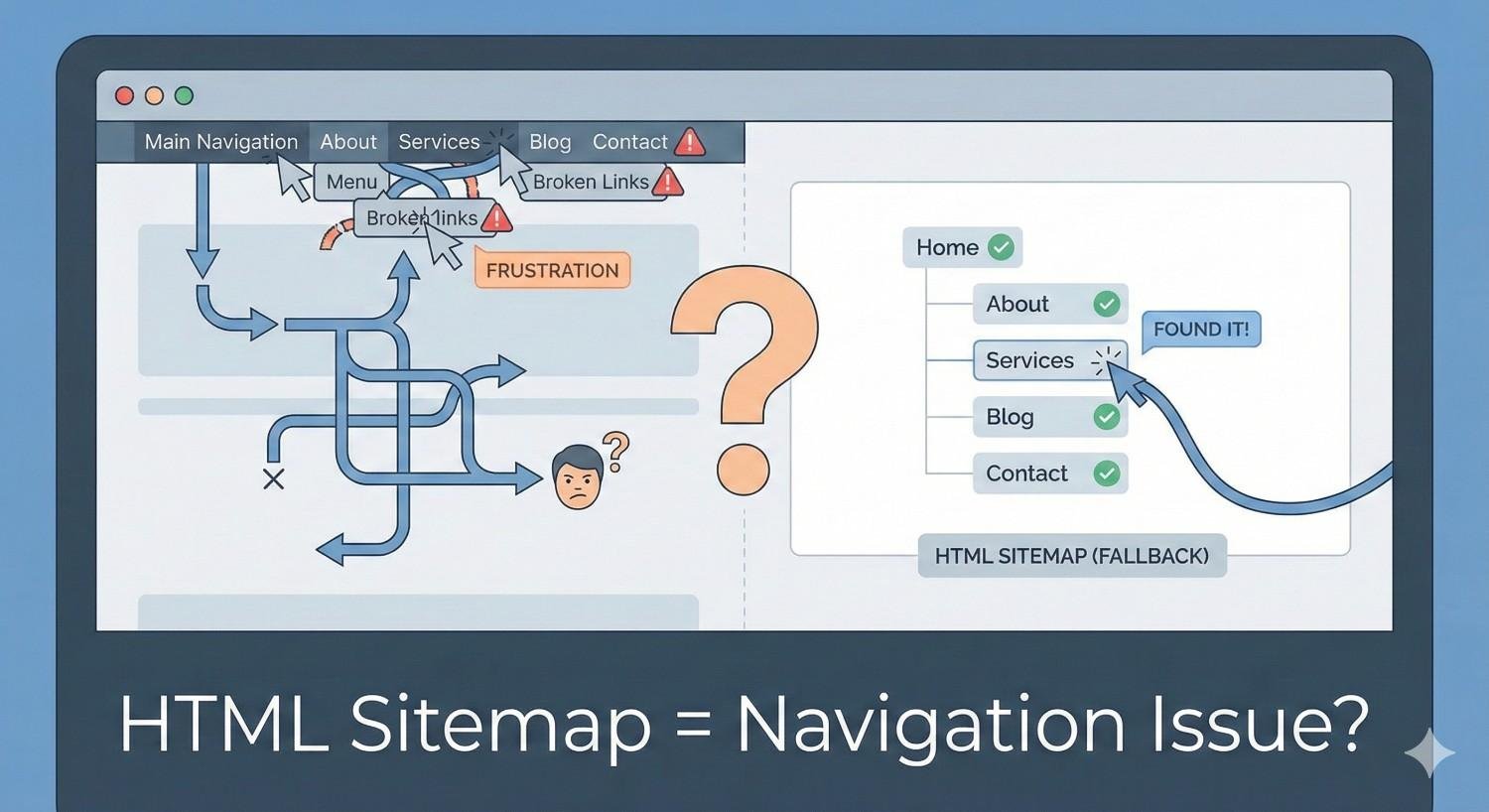 While most of the focus is on XML sitemaps for bots, the often-overlooked HTML sitemap is built primarily for human users. It serves as a “catch-all for navigation,” providing a single page where users can find links to the most important parts of a site. However, its heavy use can signal a deeper problem.
As one expert in Search Engine Journal points out, an HTML sitemap should be viewed as a “last resort to support navigation.” This leads to a surprising insight:
It is important to realize that if a user is going to your HTML sitemap to find a page, it suggests that your primary navigation on the site has failed them.
While an HTML sitemap can perform a useful “double duty” for both users and bots, this transforms it into a valuable diagnostic tool. Heavy reliance on it by your visitors is a strong indicator of deeper issues with your website’s primary information architecture, such as a confusing menu structure, deeply buried content, or an ineffective on-site search function.
While most of the focus is on XML sitemaps for bots, the often-overlooked HTML sitemap is built primarily for human users. It serves as a “catch-all for navigation,” providing a single page where users can find links to the most important parts of a site. However, its heavy use can signal a deeper problem.
As one expert in Search Engine Journal points out, an HTML sitemap should be viewed as a “last resort to support navigation.” This leads to a surprising insight:
It is important to realize that if a user is going to your HTML sitemap to find a page, it suggests that your primary navigation on the site has failed them.
While an HTML sitemap can perform a useful “double duty” for both users and bots, this transforms it into a valuable diagnostic tool. Heavy reliance on it by your visitors is a strong indicator of deeper issues with your website’s primary information architecture, such as a confusing menu structure, deeply buried content, or an ineffective on-site search function.
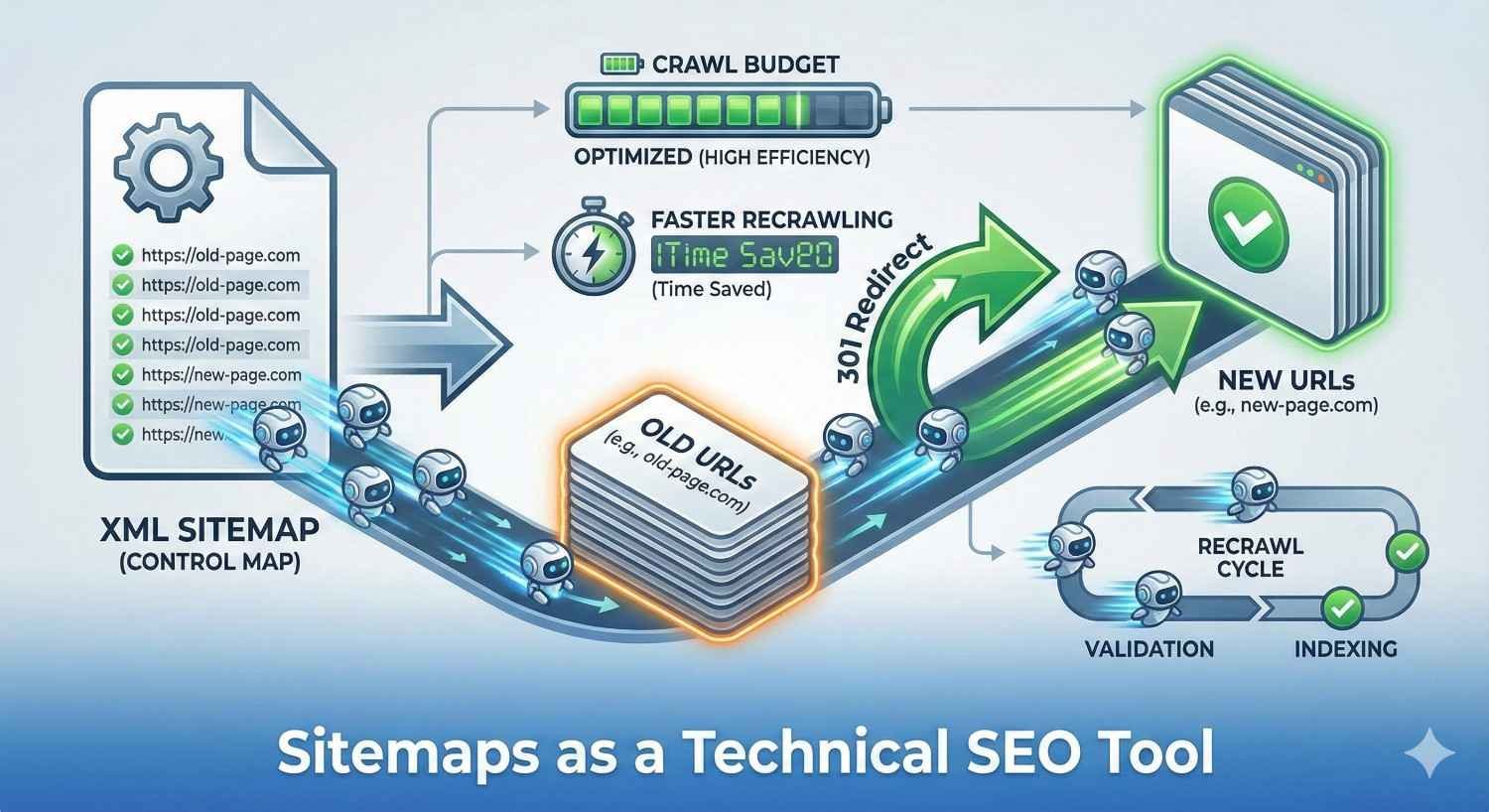 Beyond simple page discovery, XML sitemaps can be used as an active tool to accelerate technical SEO tasks. One of the most clever, non-obvious strategies involves managing large-scale URL changes.
When implementing a large number of 301 redirects, you can create a new, temporary XML sitemap that contains only the old URLs that are being redirected. According to Search Engine Journal, submitting this temporary sitemap can “encourage the bots to recrawl them and pick up the redirects sooner” than if you waited for them to be discovered through normal crawling.
This tactic transforms the sitemap from a passive record of your site into an active instrument for managing technical transitions. It allows you to proactively manage your crawl budget by directing search engines precisely where you need them during a critical period, ensuring the value of the old URLs is passed to the new ones with maximum speed and efficiency.
Beyond simple page discovery, XML sitemaps can be used as an active tool to accelerate technical SEO tasks. One of the most clever, non-obvious strategies involves managing large-scale URL changes.
When implementing a large number of 301 redirects, you can create a new, temporary XML sitemap that contains only the old URLs that are being redirected. According to Search Engine Journal, submitting this temporary sitemap can “encourage the bots to recrawl them and pick up the redirects sooner” than if you waited for them to be discovered through normal crawling.
This tactic transforms the sitemap from a passive record of your site into an active instrument for managing technical transitions. It allows you to proactively manage your crawl budget by directing search engines precisely where you need them during a critical period, ensuring the value of the old URLs is passed to the new ones with maximum speed and efficiency.
 For years, SEOs have debated the utility of the <priority> tag in sitemaps, which was intended to signal the relative importance of different pages. The myth is now officially busted: Google has confirmed that it does not use the <priority> tag.
In stark contrast, the <lastmod> tag is critically important. This tag tells search engines the date a page was last significantly modified, signaling that there is fresh content to crawl and index. As Gary Illyes of Google stated:
“The <lastmod> element in sitemaps is a signal that can help crawlers figure out how often to crawl your pages.”
The strategic takeaway is clear: stop wasting time fussing with <priority> tags. Instead, focus your efforts on maintaining accurate <lastmod> dates. By providing this direct, actionable signal, you help search engines allocate their crawl resources more effectively, encouraging them to revisit changed pages sooner and not waste time on static content.
📍 Visit Our Location
Get Directions on Maps →
For years, SEOs have debated the utility of the <priority> tag in sitemaps, which was intended to signal the relative importance of different pages. The myth is now officially busted: Google has confirmed that it does not use the <priority> tag.
In stark contrast, the <lastmod> tag is critically important. This tag tells search engines the date a page was last significantly modified, signaling that there is fresh content to crawl and index. As Gary Illyes of Google stated:
“The <lastmod> element in sitemaps is a signal that can help crawlers figure out how often to crawl your pages.”
The strategic takeaway is clear: stop wasting time fussing with <priority> tags. Instead, focus your efforts on maintaining accurate <lastmod> dates. By providing this direct, actionable signal, you help search engines allocate their crawl resources more effectively, encouraging them to revisit changed pages sooner and not waste time on static content.
📍 Visit Our Location
Get Directions on Maps →
1. You Might Not Actually Need One
Let’s start with the most counter-intuitive truth: not every website needs a sitemap. While they are a recommended best practice, they aren’t always critical for search engine discovery. According to Google’s own documentation, a sitemap may be unnecessary under specific conditions:
- Your site is small. If your site has around 500 pages or fewer, search engines can typically discover your content without a dedicated map.
- Your site is “comprehensively linked internally.” If a crawler can discover all of your important pages simply by following links starting from the homepage, your site’s navigation is already doing the heavy lifting.
2. For Large Sites, More (and Smaller) is Better
Conventional wisdom suggests packing your sitemap files as full as possible to meet the 50,000 URL limit. The surprising reality for very large websites is the opposite: it’s better to have more individual sitemap files with fewer URLs in each.
In a discussion among technical SEOs, one expert advised that “Google can deal with smaller files much better than they can with files with 50k URLs in them.” The strategic “why” is crucial: massive files can time out or cause processing failures on the search engine’s end, leading to wasted crawl budget and “Couldn’t fetch” errors. The expert provided a compelling real-world example of a 70 million page site that successfully used 3,400 separate XML sitemap files to improve crawling.
This strategy is so effective that the popular Yoast SEO plugin sets its own limit even lower, at 1,000 URLs per file, to “keep your sitemap loading as fast as possible.” Breaking up large sitemaps reduces processing errors and makes it far easier for search engines to digest your site’s data efficiently.
🔍 Deep Dive: AI Search Chaos
Uncover the 5 shocking truths about Google’s AI Overviews.
Read the Full Story →
3. The “Other” Sitemap Is a Sign Your Navigation Has Failed
While most of the focus is on XML sitemaps for bots, the often-overlooked HTML sitemap is built primarily for human users. It serves as a “catch-all for navigation,” providing a single page where users can find links to the most important parts of a site. However, its heavy use can signal a deeper problem.
As one expert in Search Engine Journal points out, an HTML sitemap should be viewed as a “last resort to support navigation.” This leads to a surprising insight:
It is important to realize that if a user is going to your HTML sitemap to find a page, it suggests that your primary navigation on the site has failed them.
While an HTML sitemap can perform a useful “double duty” for both users and bots, this transforms it into a valuable diagnostic tool. Heavy reliance on it by your visitors is a strong indicator of deeper issues with your website’s primary information architecture, such as a confusing menu structure, deeply buried content, or an ineffective on-site search function.
4. You Can Use Them to Speed Up Technical Fixes
Beyond simple page discovery, XML sitemaps can be used as an active tool to accelerate technical SEO tasks. One of the most clever, non-obvious strategies involves managing large-scale URL changes.
When implementing a large number of 301 redirects, you can create a new, temporary XML sitemap that contains only the old URLs that are being redirected. According to Search Engine Journal, submitting this temporary sitemap can “encourage the bots to recrawl them and pick up the redirects sooner” than if you waited for them to be discovered through normal crawling.
This tactic transforms the sitemap from a passive record of your site into an active instrument for managing technical transitions. It allows you to proactively manage your crawl budget by directing search engines precisely where you need them during a critical period, ensuring the value of the old URLs is passed to the new ones with maximum speed and efficiency.
📚 Foundational Knowledge
Master Semantic Search—the core technology behind modern AI. Explore the Guide5. Google Ignores Your Priorities, But Cares Deeply About Dates
For years, SEOs have debated the utility of the <priority> tag in sitemaps, which was intended to signal the relative importance of different pages. The myth is now officially busted: Google has confirmed that it does not use the <priority> tag.
In stark contrast, the <lastmod> tag is critically important. This tag tells search engines the date a page was last significantly modified, signaling that there is fresh content to crawl and index. As Gary Illyes of Google stated:
“The <lastmod> element in sitemaps is a signal that can help crawlers figure out how often to crawl your pages.”
The strategic takeaway is clear: stop wasting time fussing with <priority> tags. Instead, focus your efforts on maintaining accurate <lastmod> dates. By providing this direct, actionable signal, you help search engines allocate their crawl resources more effectively, encouraging them to revisit changed pages sooner and not waste time on static content.
📍 Visit Our Location
Get Directions on Maps →