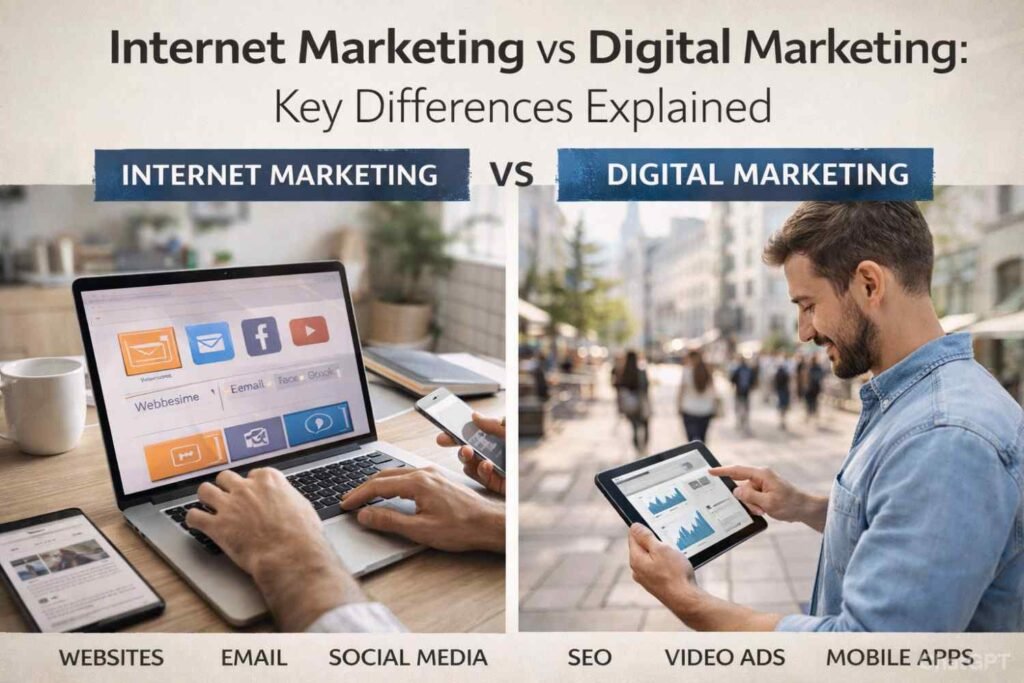

Unlock the secrets of Internet marketing vs digital marketing. Explore their key differences and discover which strategy suits your business needs best!
Understanding Internet Marketing
Internet marketing, also known as online marketing, refers to the strategies and techniques used to promote products and services through the internet. It encompasses a variety of methods, including search engine optimization (SEO), pay-per-click advertising (PPC), email marketing, social media marketing, and content marketing. The primary objective of Internet marketing is to reach potential customers where they are most active: online.
The foundation of Internet marketing lies in leveraging the power of search engines and social networks to drive traffic to a company’s website. By optimizing web pages for search engines, businesses can improve their visibility and rank higher in search results, making it easier for consumers to find them. Additionally, PPC campaigns allow companies to place ads on search engines and social media platforms, targeting specific keywords and demographics to attract the right audience.
Another crucial aspect of Internet marketing is email marketing, which involves sending promotional messages and newsletters to a subscriber list. This method helps businesses maintain a direct line of communication with their customers, fostering brand loyalty and encouraging repeat purchases. Social media marketing, on the other hand, focuses on engaging with users on platforms like Facebook, Twitter, and Instagram, creating a sense of community and driving web traffic through shared content.
Understanding Digital Marketing
Digital marketing, while often used interchangeably with Internet marketing, is a broader concept that encompasses all forms of marketing that utilize digital channels and technologies. This includes not only online tactics but also offline methods such as television ads, radio spots, and digital billboards. The goal of digital marketing is to create a cohesive and comprehensive strategy that integrates various digital touchpoints to reach and engage with the target audience.
One of the key components of digital marketing is the use of data and analytics to inform decision-making and optimize campaigns. By tracking user behavior and analyzing the performance of different marketing efforts, businesses can gain valuable insights into what works and what doesn’t. This data-driven approach allows for more precise targeting and personalized messaging, ultimately leading to better results.
In addition to online channels like websites, social media, and email, digital marketing also encompasses emerging technologies such as mobile apps, virtual reality (VR), and augmented reality (AR). These innovations provide new opportunities for businesses to connect with consumers in creative and immersive ways. For example, a retail company might use a VR app to offer virtual store tours, while an AR app could allow customers to visualize how furniture would look in their home before making a purchase.
Key Differences Between Internet Marketing and Digital Marketing
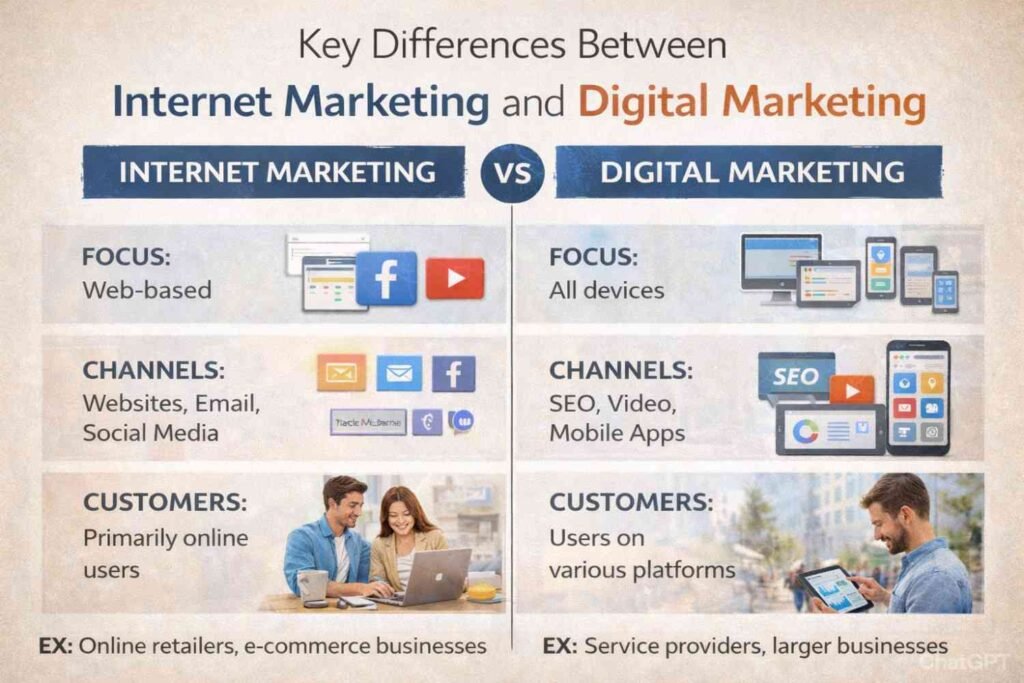
While Internet marketing is a subset of digital marketing, there are several key differences between the two. The most significant distinction lies in the scope of each approach. Internet marketing is limited to strategies that rely on the internet, whereas digital marketing encompasses a wider range of channels, including both online and offline methods.
Another important difference is the level of integration and data-driven decision-making involved in digital marketing. While Internet marketing often focuses on individual tactics, digital marketing aims to create a cohesive strategy that leverages multiple touchpoints and technologies. This holistic approach allows businesses to deliver a more consistent and personalized experience to their audience, ultimately driving better results.
Additionally, digital marketing places a greater emphasis on emerging technologies and innovative solutions. While Internet marketing primarily relies on established methods like SEO, PPC, and email marketing, digital marketing explores new frontiers such as VR, AR, and mobile apps. These cutting-edge tools provide businesses with unique opportunities to engage with consumers and differentiate themselves from competitors.
Channels Used in Internet Marketing
Internet marketing utilizes a variety of channels to reach and engage with potential customers. One of the most common methods is search engine optimization (SEO), which involves optimizing a website’s content and structure to improve its visibility in search engine results. By targeting relevant keywords and building high-quality backlinks, businesses can increase their organic traffic and attract more visitors to their site.
Another popular channel in Internet marketing is pay-per-click (PPC) advertising. This model allows businesses to bid on specific keywords and display ads on search engines and social media platforms. When users click on the ad, the business pays a fee, hence the term “pay-per-click.” PPC campaigns can be highly targeted, enabling businesses to reach specific demographics and drive traffic to their website.
Email marketing is another essential component of Internet marketing. By building a subscriber list and sending regular newsletters and promotional messages, businesses can maintain a direct line of communication with their customers. This method helps to build brand loyalty and encourages repeat purchases. Social media marketing is also a crucial channel, allowing businesses to engage with users on platforms like Facebook, Twitter, and Instagram. By sharing valuable content and interacting with followers, companies can create a sense of community and drive traffic to their website.
Channels Used in Digital Marketing
Digital marketing encompasses a broader range of channels, both online and offline. In addition to the internet-based methods used in Internet marketing, digital marketing also includes traditional media like television, radio, and digital billboards. These channels allow businesses to reach a wider audience and create a more comprehensive marketing strategy.
One of the most significant advantages of digital marketing is the ability to leverage data and analytics to inform decision-making. By tracking user behavior and analyzing the performance of different marketing efforts, businesses can gain valuable insights into what works and what doesn’t. This data-driven approach allows for more precise targeting and personalized messaging, ultimately leading to better results.
Emerging technologies such as mobile apps, virtual reality (VR), and augmented reality (AR) also play a crucial role in digital marketing. These innovations provide new opportunities for businesses to connect with consumers in creative and immersive ways. For example, a retail company might use a VR app to offer virtual store tours, while an AR app could allow customers to visualize how furniture would look in their home before making a purchase. By incorporating these cutting-edge tools into their marketing strategy, businesses can stay ahead of the competition and engage with their audience in unique ways.
Target Audience for Internet Marketing vs Digital Marketing
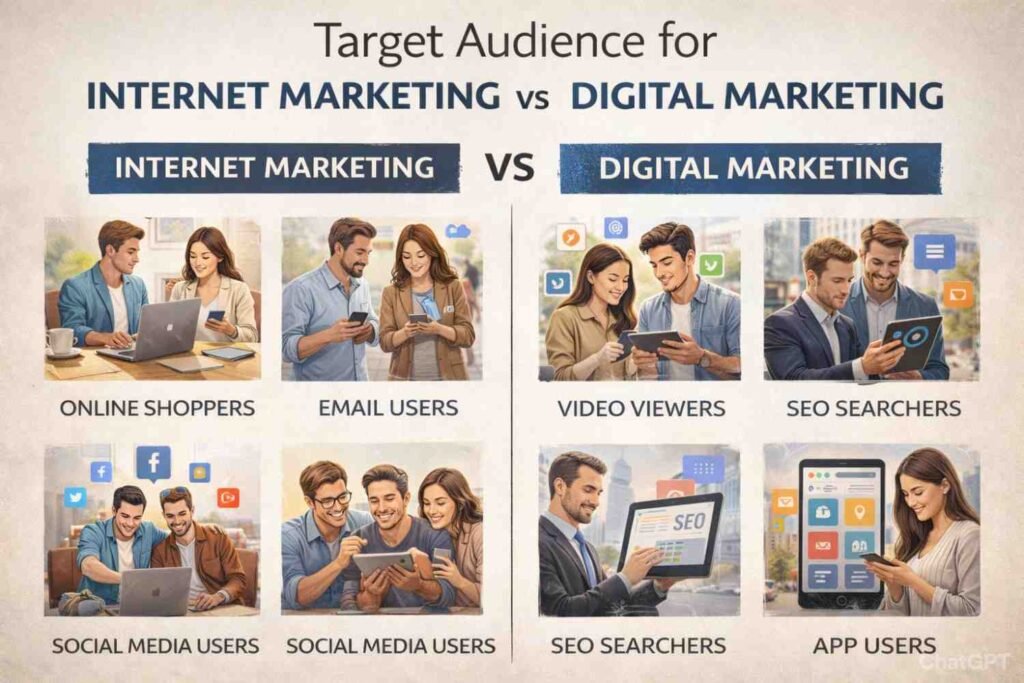
Digital marketing encompasses a broader range of channels, both online and offline. In addition to the internet-based methods used in Internet marketing, digital marketing also includes traditional media like television, radio, and digital billboards. These channels allow businesses to reach a wider audience and create a more comprehensive marketing strategy.
One of the most significant advantages of digital marketing is the ability to leverage data and analytics to inform decision-making. By tracking user behavior and analyzing the performance of different marketing efforts, businesses can gain valuable insights into what works and what doesn’t. This data-driven approach allows for more precise targeting and personalized messaging, ultimately leading to better results.
Emerging technologies such as mobile apps, virtual reality (VR), and augmented reality (AR) also play a crucial role in digital marketing. These innovations provide new opportunities for businesses to connect with consumers in creative and immersive ways. For example, a retail company might use a VR app to offer virtual store tours, while an AR app could allow customers to visualize how furniture would look in their home before making a purchase. By incorporating these cutting-edge tools into their marketing strategy, businesses can stay ahead of the competition and engage with their audience in unique ways.
Measuring Success in Internet Marketing
Measuring success in Internet marketing involves tracking various key performance indicators (KPIs) that reflect the effectiveness of different strategies and tactics. One of the primary KPIs is website traffic, which indicates the number of visitors to a company’s site. By monitoring traffic sources, businesses can identify which channels are driving the most visitors and adjust their marketing efforts accordingly.
Another crucial KPI is conversion rate, which measures the percentage of website visitors who take a desired action, such as making a purchase or signing up for a newsletter. A high conversion rate indicates that the website is effectively engaging visitors and driving them to take action. Businesses can use tools like Google Analytics to track conversions and identify areas for improvement.
Engagement metrics, such as bounce rate, average session duration, and pages per session, also play a vital role in measuring the success of Internet marketing efforts. These metrics provide insights into how visitors interact with a website and whether they find the content valuable and engaging. By analyzing these metrics, businesses can identify areas for improvement and optimize their website to better meet the needs of their audience.
Measuring Success in Digital Marketing
Measuring success in digital marketing involves tracking a wide range of KPIs that reflect the effectiveness of both online and offline strategies. One of the primary KPIs is return on investment (ROI), which measures the revenue generated from marketing efforts relative to the costs incurred. A high ROI indicates that the marketing campaigns are delivering a strong return on investment, while a low ROI suggests that adjustments may be needed.
Another crucial KPI is brand awareness, which measures the extent to which consumers recognize and recall a brand. This can be assessed through surveys, social media mentions, and search volume data. By tracking brand awareness, businesses can gauge the effectiveness of their marketing efforts in building their brand and reaching their target audience.
Customer engagement metrics, such as social media interactions, email open rates, and click-through rates, also play a vital role in measuring the success of digital marketing campaigns. These metrics provide insights into how well the marketing efforts are resonating with the target audience and driving them to take action. By analyzing these metrics, businesses can identify areas for improvement and optimize their marketing strategy to better engage with their audience.
Which Approach is Right for Your Business?
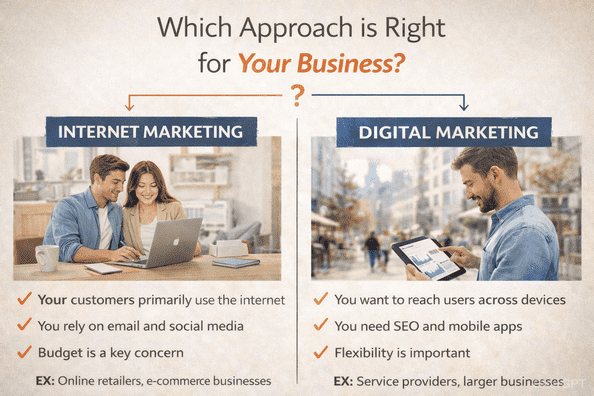
Choosing between Internet marketing and digital marketing depends on various factors, including your business goals, target audience, and available resources. If your primary objective is to drive online traffic and generate leads through internet-based channels, Internet marketing may be the best approach. This method allows for a more focused and personalized marketing strategy, which can be highly effective in reaching your ideal customers and driving conversions.
On the other hand, if you aim to create a comprehensive marketing strategy that leverages both online and offline channels, digital marketing may be the better option. This approach allows you to reach a broader audience and deliver a consistent and cohesive experience across multiple touchpoints. By integrating various digital technologies and data-driven insights, digital marketing can help you build a strong brand presence and engage with your target audience in unique and innovative ways.
Ultimately, the best approach for your business will depend on your specific goals and resources. It may be beneficial to combine elements of both Internet marketing and digital marketing to create a well-rounded strategy that meets your needs. By leveraging the strengths of each approach, you can maximize your marketing efforts and drive better results.
Conclusion and Future Trends in Marketing
In conclusion, while Internet marketing and digital marketing share some similarities, they differ in scope and approach. Internet marketing focuses on online channels and methods to drive traffic and generate leads, while digital marketing encompasses a broader range of both online and offline channels. By understanding the key differences between these two approaches, businesses can make more informed decisions and choose the strategy that best suits their needs.
Looking ahead, the future of marketing is likely to be shaped by emerging technologies and data-driven insights. As consumers become more connected and tech-savvy, businesses will need to adapt their marketing strategies to stay ahead of the competition. Innovations such as artificial intelligence (AI), machine learning, and blockchain are expected to play a significant role in the evolution of digital marketing, providing new opportunities for businesses to engage with their audience and deliver personalized experiences.
In this rapidly changing landscape, staying informed about the latest trends and best practices is crucial for success. By continuously learning and adapting, businesses can ensure that their marketing efforts remain effective and relevant in the digital age. Whether you choose to focus on Internet marketing, digital marketing, or a combination of both, the key to success lies in understanding your audience, leveraging data and technology, and continuously optimizing your strategy to meet your business goals.