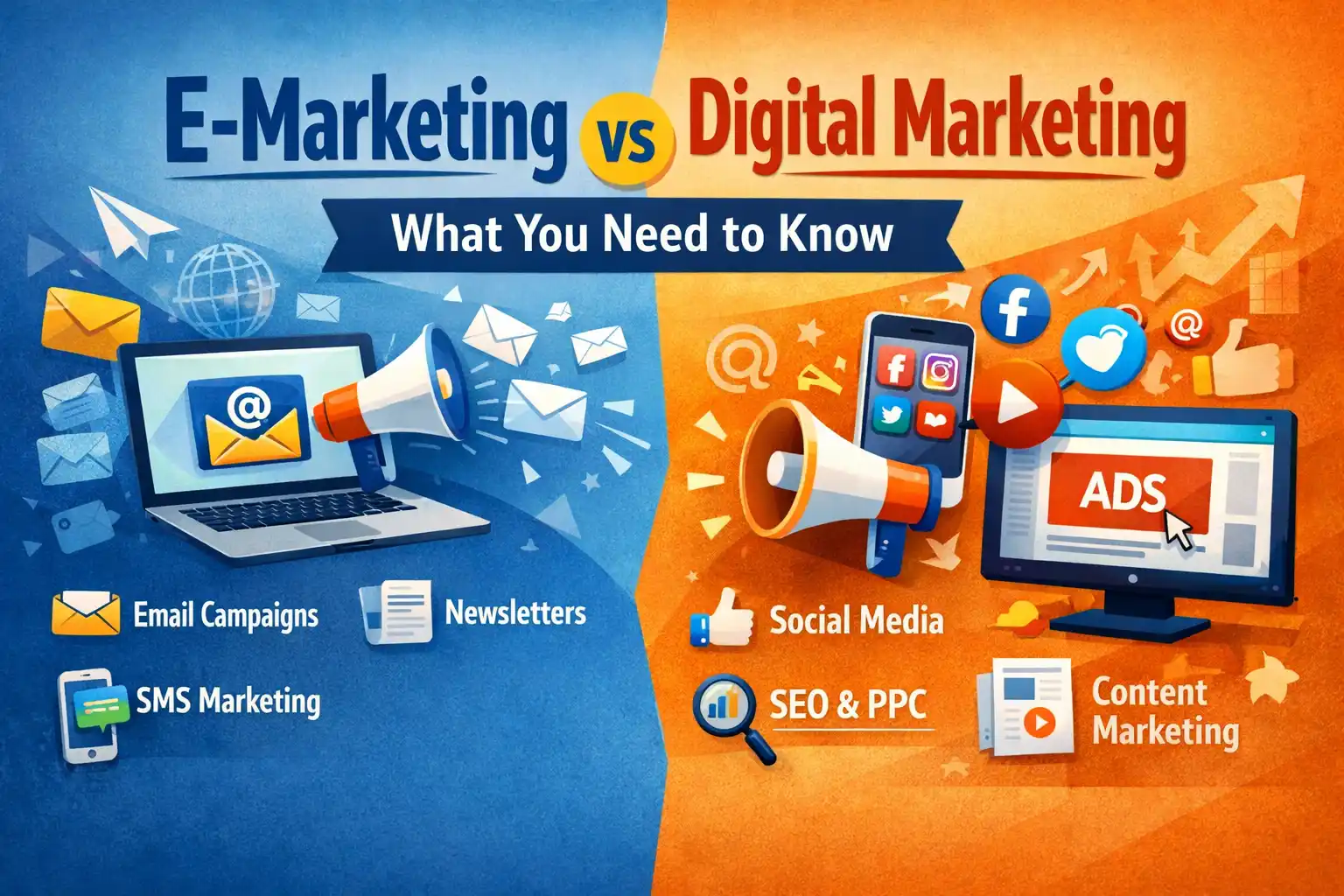
Confused about e-marketing vs digital marketing? Discover the key differences and strategies to enhance your online presence effectively.
Understanding E-Marketing: Definition and Scope
E-marketing, also known as electronic marketing, refers to the practice of marketing products or services using electronic media. This encompasses a broad array of channels and methodologies, from email campaigns to online advertisements. The core idea is to leverage the Internet and other digital technologies to reach potential consumers and drive business objectives such as brand awareness, customer acquisition, and sales growth. E-marketing can be observed in various forms like promotional emails, online newsletters, and digital ads on websites and search engines. Its scope is vast and continuously evolving as new technologies and platforms emerge.
One of the significant advantages of e-marketing is its ability to offer highly targeted and personalized communication. Unlike traditional marketing methods that broadcast messages to a wide audience, e-marketing enables businesses to segment their audience based on various criteria such as demographics, purchase history, and behavioral data. This segmentation allows for more precise and relevant messaging, which can significantly enhance engagement and conversion rates. Furthermore, e-marketing provides businesses with real-time analytics and performance metrics, helping marketers to measure the effectiveness of their campaigns and make data-driven decisions.
Another key aspect of e-marketing is its cost-effectiveness. Traditional marketing methods, such as print advertising and direct mail, can be expensive and often yield lower returns on investment. In contrast, e-marketing channels like email and social media offer more affordable ways to reach a large audience. Additionally, the digital nature of e-marketing allows for easy scalability, enabling businesses to expand their reach without a proportional increase in costs. This makes e-marketing an attractive option for businesses of all sizes, from small startups to large enterprises.
Understanding Digital Marketing: Definition and Scope
Digital marketing is an umbrella term that encompasses all marketing efforts that use digital channels to connect with potential customers. This includes not only e-marketing techniques but also other digital strategies such as search engine optimization (SEO), content marketing, social media marketing, and mobile marketing. Essentially, digital marketing is about leveraging online platforms and digital technologies to promote products or services and engage with customers in a meaningful way. The scope of digital marketing is extensive, covering everything from website optimization to influencer partnerships and online reputation management.
One of the defining characteristics of digital marketing is its multi-channel approach. Unlike e-marketing, which is often limited to specific electronic media, digital marketing involves a combination of various online platforms and strategies to create a cohesive and integrated marketing plan. This multi-channel approach allows businesses to reach their audience through multiple touchpoints, increasing the likelihood of engagement and conversion. For example, a digital marketing campaign might include a combination of SEO to drive organic traffic, social media ads to target specific demographics, and content marketing to provide valuable information to potential customers.
Another important aspect of digital marketing is its emphasis on data and analytics. Digital marketing platforms offer a wealth of data that can be used to track performance, understand customer behavior, and refine marketing strategies. Tools like Google Analytics, social media insights, and email marketing software provide marketers with detailed metrics on website traffic, engagement rates, and conversion rates. This data-driven approach not only helps in measuring the success of marketing campaigns but also in identifying areas for improvement and optimizing future efforts. In essence, digital marketing is about using data and technology to create more effective and efficient marketing strategies.
Key Differences Between E-Marketing and Digital Marketing
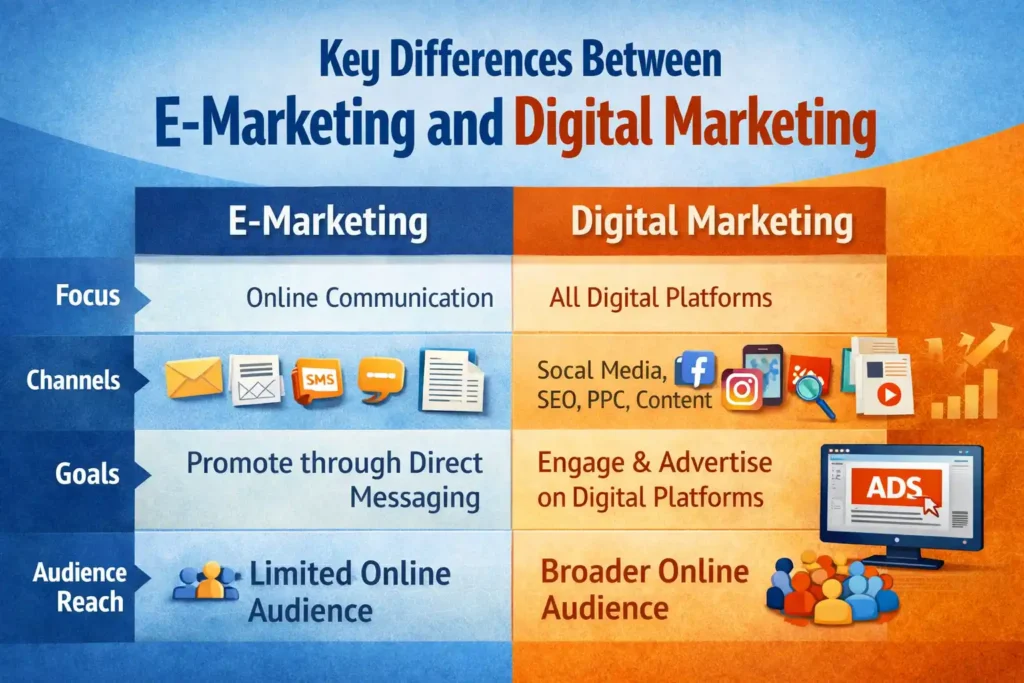
While e-marketing and digital marketing share similarities in their use of electronic channels to reach customers, they differ in several key aspects. One of the primary differences lies in their scope and focus. E-marketing is a subset of digital marketing, primarily concerned with electronic communications such as email campaigns and online advertisements. Digital marketing, on the other hand, encompasses a broader range of strategies, including SEO, content marketing, social media marketing, and more. Essentially, digital marketing is a more comprehensive approach that integrates multiple online channels and tactics.
Another significant difference between e-marketing and digital marketing is their approach to audience engagement. E-marketing tends to be more direct and transactional, with a focus on driving immediate actions such as clicks, conversions, and sales. This is often achieved through targeted email campaigns, online ads, and promotional messages. Digital marketing, however, takes a more holistic approach to audience engagement. It aims to build long-term relationships with customers by providing valuable content, fostering community interactions, and creating a consistent brand presence across various online platforms.
The metrics and analytics used to measure success also differ between e-marketing and digital marketing. In e-marketing, the focus is often on specific performance indicators such as open rates, click-through rates, and conversion rates. These metrics provide insights into the effectiveness of individual campaigns and help marketers optimize their strategies. Digital marketing, on the other hand, involves a wider range of metrics, including website traffic, social media engagement, search engine rankings, and customer lifetime value. This broader analytical approach allows businesses to gain a more comprehensive understanding of their online performance and make informed decisions to drive growth.
The Role of Email in E-Marketing
Email marketing is a cornerstone of e-marketing strategies, providing businesses with a powerful tool to reach their audience directly. By sending targeted and personalized messages to a list of subscribers, businesses can promote their products, share valuable content, and nurture relationships with their customers. One of the key advantages of email marketing is its ability to deliver highly relevant content to a segmented audience. By leveraging data on customer preferences, behaviors, and purchase history, marketers can create tailored email campaigns that resonate with recipients and drive engagement.
Another significant benefit of email marketing is its cost-effectiveness. Compared to other marketing channels, email marketing offers a relatively low-cost way to reach a large audience. The return on investment (ROI) for email marketing is often higher than other forms of marketing, making it an attractive option for businesses of all sizes. Additionally, email marketing platforms provide robust analytics and reporting features, allowing marketers to track open rates, click-through rates, and conversion rates. This data-driven approach enables businesses to measure the success of their campaigns and make informed decisions to optimize future efforts.
Email marketing also plays a crucial role in building and maintaining customer relationships. Through regular communication, businesses can keep their audience informed about new products, special offers, and company updates. This ongoing engagement helps to build trust and loyalty, encouraging customers to return and make repeat purchases. Furthermore, email marketing allows for interactive and dynamic content, such as personalized recommendations, surveys, and feedback forms. These interactive elements create a more engaging and personalized experience for recipients, fostering a deeper connection with the brand.
The Role of Social Media in Digital Marketing
Social media has become an integral part of digital marketing, offering businesses a dynamic platform to connect with their audience, build brand awareness, and drive engagement. With billions of active users across platforms like Facebook, Instagram, Twitter, LinkedIn, and TikTok, social media provides a vast and diverse audience for businesses to tap into. One of the key advantages of social media marketing is its ability to facilitate real-time interactions and conversations. Through posts, comments, and direct messages, businesses can engage with their audience in a more personal and authentic way.
Another significant benefit of social media marketing is its potential for viral reach. Content shared on social media has the ability to spread quickly and widely, reaching a large audience in a short amount of time. This viral potential can amplify the impact of marketing campaigns, increasing brand visibility and attracting new customers. Additionally, social media platforms offer various advertising options, such as sponsored posts, influencer partnerships, and targeted ads. These advertising features allow businesses to reach specific demographics and target audiences with precision, maximizing the effectiveness of their campaigns.
Social media also plays a crucial role in building and maintaining brand reputation. Through consistent and strategic social media presence, businesses can establish themselves as industry leaders and build trust with their audience. By sharing valuable content, engaging with followers, and responding to feedback, businesses can create a positive and credible brand image. Moreover, social media provides a platform for customer reviews and testimonials, which can influence potential customers’ purchasing decisions. By actively managing and monitoring their social media presence, businesses can enhance their reputation and foster a loyal customer base.
Benefits of E-Marketing for Businesses
E-marketing offers numerous benefits for businesses, making it an essential component of modern marketing strategies. One of the primary advantages of e-marketing is its ability to reach a global audience. Unlike traditional marketing methods that are often limited by geographical constraints, e-marketing enables businesses to connect with customers from around the world. This global reach opens up new opportunities for market expansion and revenue growth. Additionally, e-marketing allows for precise targeting and segmentation, ensuring that marketing messages are delivered to the right audience at the right time.
Another significant benefit of e-marketing is its cost-effectiveness. Traditional marketing methods, such as print advertising and direct mail, can be expensive and often yield lower returns on investment. In contrast, e-marketing channels like email and online ads offer more affordable ways to reach a large audience. The digital nature of e-marketing also allows for easy scalability, enabling businesses to expand their reach without a proportional increase in costs. This cost-effectiveness makes e-marketing an attractive option for businesses of all sizes, from small startups to large enterprises.
E-marketing also provides businesses with valuable data and insights. Through analytics and reporting tools, businesses can track the performance of their e-marketing campaigns and gain a deeper understanding of customer behavior. This data-driven approach allows businesses to measure the effectiveness of their marketing efforts, identify areas for improvement, and make informed decisions to optimize future campaigns. By leveraging data and insights, businesses can create more targeted and personalized marketing strategies, enhancing engagement and driving conversions.
Benefits of Digital Marketing for Businesses
Digital marketing offers a wide range of benefits for businesses, making it a critical component of any modern marketing strategy. One of the primary advantages of digital marketing is its ability to provide a multi-channel approach. By leveraging various online platforms and strategies, businesses can create a cohesive and integrated marketing plan that reaches their audience through multiple touchpoints. This multi-channel approach increases the likelihood of engagement and conversion, as customers are exposed to consistent and reinforcing messages across different channels.
Another significant benefit of digital marketing is its emphasis on data and analytics. Digital marketing platforms offer a wealth of data that can be used to track performance, understand customer behavior, and refine marketing strategies. Tools like Google Analytics, social media insights, and email marketing software provide marketers with detailed metrics on website traffic, engagement rates, and conversion rates. This data-driven approach not only helps in measuring the success of marketing campaigns but also in identifying areas for improvement and optimizing future efforts.
Digital marketing also offers a high level of flexibility and adaptability. The digital landscape is constantly evolving, with new technologies and platforms emerging regularly. Digital marketing allows businesses to quickly adapt to these changes and stay ahead of the competition. Whether it’s leveraging the latest social media trends, optimizing for new search engine algorithms, or experimenting with innovative content formats, digital marketing provides businesses with the agility to respond to market shifts and consumer preferences. This adaptability is crucial for staying relevant and maintaining a competitive edge in today’s fast-paced digital world.
Choosing the Right Strategy: E-Marketing vs Digital Marketing
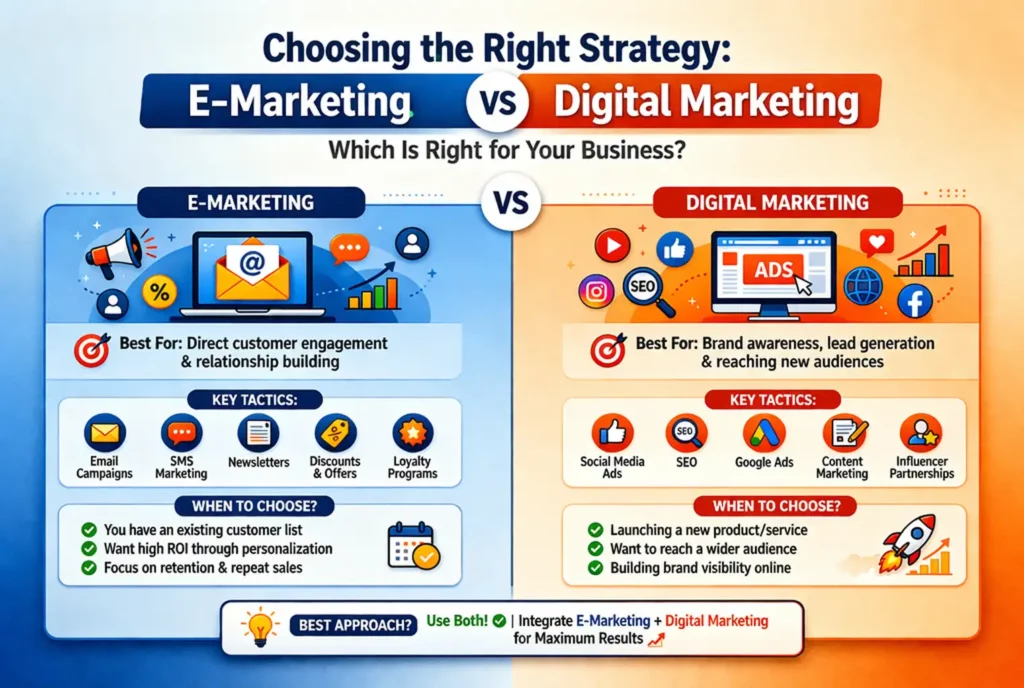
Choosing between e-marketing and digital marketing depends on various factors, including business goals, target audience, budget, and resources. Both strategies offer unique advantages and can complement each other in a comprehensive marketing plan. However, understanding the strengths and limitations of each approach can help businesses make informed decisions and allocate their resources effectively.
E-marketing is particularly effective for businesses looking to drive immediate actions and conversions. With its focus on targeted and personalized communication, e-marketing can deliver highly relevant messages that resonate with recipients and encourage them to take action. This makes e-marketing an excellent choice for promotional campaigns, product launches, and sales-driven initiatives. Additionally, the cost-effectiveness and scalability of e-marketing make it an attractive option for businesses with limited budgets.
On the other hand, digital marketing offers a more holistic approach to audience engagement and brand building. By leveraging multiple online channels and strategies, digital marketing creates a cohesive and integrated marketing plan that reaches customers through various touchpoints. This multi-channel approach not only increases the likelihood of engagement and conversion but also helps build long-term relationships with customers. Digital marketing is particularly suitable for businesses looking to enhance their online presence, build brand awareness, and foster customer loyalty.
Ultimately, the choice between e-marketing and digital marketing should be based on a thorough understanding of business objectives and target audience. In many cases, a combination of both strategies can provide the best results. By integrating e-marketing and digital marketing efforts, businesses can create a comprehensive and effective marketing plan that drives growth and success.
Trends Shaping E-Marketing and Digital Marketing in 2023
The landscape of e-marketing and digital marketing is constantly evolving, with new trends and technologies shaping the way businesses connect with their audience. As we move into 2023, several key trends are emerging that will have a significant impact on e-marketing and digital marketing strategies.
One of the notable trends is the increasing importance of personalization. With the abundance of data available, businesses are now able to create highly personalized marketing experiences that resonate with individual customers. Personalization goes beyond simply addressing customers by their names; it involves delivering relevant content, product recommendations, and offers based on customer preferences, behaviors, and purchase history. This level of personalization enhances customer engagement and drives conversions.
Another significant trend is the rise of artificial intelligence (AI) and machine learning. These technologies are transforming the way businesses approach marketing by enabling more precise targeting, automation, and optimization. AI-powered tools can analyze vast amounts of data to identify patterns and trends, allowing marketers to make data-driven decisions and optimize their campaigns in real-time. Additionally, AI-driven chatbots and virtual assistants are enhancing customer interactions and providing personalized support.
The growing popularity of video content is also shaping e-marketing and digital marketing strategies. Video has become one of the most engaging and effective forms of content, capturing the attention of audiences and conveying messages in a compelling way. Businesses are increasingly incorporating video into their marketing efforts, whether through social media, email campaigns, or website content. Live streaming and interactive videos are also gaining traction, providing businesses with new opportunities to connect with their audience in real-time.
Conclusion: Making Informed Marketing Decisions
In the ever-evolving landscape of online marketing, understanding the distinctions and synergies between e-marketing and digital marketing is crucial for making informed decisions. Both e-marketing and digital marketing offer unique advantages and can complement each other in a comprehensive marketing strategy. By understanding the strengths and limitations of each approach, businesses can allocate their resources effectively and achieve their marketing goals.
E-marketing, with its focus on targeted and personalized communication, is particularly effective for driving immediate actions and conversions. Its cost-effectiveness and scalability make it an attractive option for businesses with limited budgets. On the other hand, digital marketing offers a more holistic approach to audience engagement and brand building. By leveraging multiple online channels and strategies, digital marketing creates a cohesive and integrated marketing plan that reaches customers through various touchpoints.
As we move into 2023, several key trends are shaping the future of e-marketing and digital marketing. Personalization, artificial intelligence, and video content are emerging as powerful tools for enhancing customer engagement and driving conversions. By staying ahead of these trends and leveraging the latest technologies, businesses can create more effective and efficient marketing strategies that drive growth and success.
Ultimately, the choice between e-marketing and digital marketing should be based on a thorough understanding of business objectives and target audience. In many cases, a combination of both strategies can provide the best results. By integrating e-marketing and digital marketing efforts, businesses can create a comprehensive and effective marketing plan that drives growth and success.