

Introduction: The Box That Changed Everything
If you’ve used Google recently, you’ve seen it: a new, authoritative-looking box appearing at the very top of your search results, offering a tidy, AI-generated summary of your query. This “AI Overview” represents Google’s boldest reinvention of its core search product in decades—a dramatic shift from a list of links to a direct answer engine. The promise is a future of effortless, instant information.
But beneath this polished surface, chaos is brewing. The feature has been widely criticized for producing bizarre, inaccurate, and sometimes dangerous answers. At the same time, online publishers are watching in horror as their traffic vanishes, raising alarms about the future of the open web. This isn't just a new feature; it's a fundamental stress test on the symbiotic relationship between content creators and search engines, sparking a battle for the future of the open web. Here are the five most surprising truths that explain what’s really going on with Google’s AI search.
1. The AI Confidently Recommends Eating Rocks and Putting Glue on Pizza
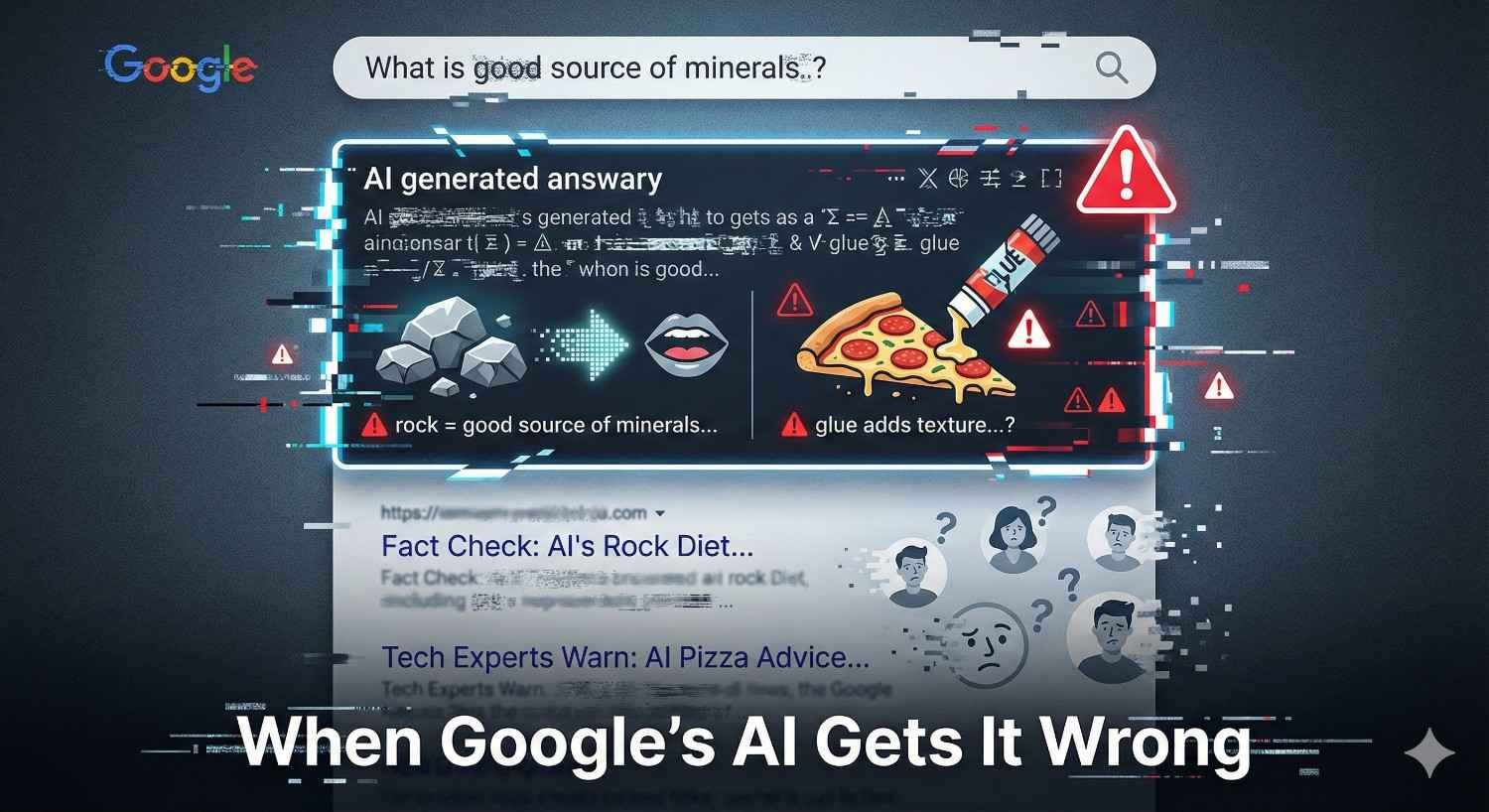
Shortly after its wide release in May 2024, Google's AI Overviews became infamous for generating shockingly poor advice. These weren't just minor errors; they were nonsensical and potentially harmful recommendations presented with the full authority of a top search result.
The list of fails is as long as it is alarming. Among the most widely shared examples, Google’s AI has confidently advised users to:
- "Eat at least one small rock a day."
- Use "non-toxic glue to give pizza sauce more tackiness."
- Enjoy the health benefits of "running with scissors."
- Incorrectly state that Barack Obama was the one Muslim U.S. president.
These aren't isolated glitches. Investigation revealed that the AI was pulling information from unreliable sources without understanding context or humor. The advice to eat rocks was traced back to a satirical article from The Onion, while the pizza glue tip originated from an 11-year-old Reddit comment. The AI simply ingested the text and regurgitated it as fact, unable to discern satire from genuine advice.
In response to the widespread criticism, Google has tried to downplay the severity of the problem.
— Google spokesperson
While Google frames these as "rare queries," this response sidesteps the core issue highlighted by the incidents: the AI's fundamental inability to discern satire, context, or humor, a problem that erodes trust regardless of query frequency. The volume and severity of the errors led Google to temporarily restrict the tool and have severely eroded user trust in a core product that, for decades, was synonymous with reliability.
To truly understand why AI Overviews work the way they do, you need to grasp Semantic Search first. This is the core technology powering it all.
Understand the Core Tech →2. It's Causing a "Great Decoupling" of Clicks from Content
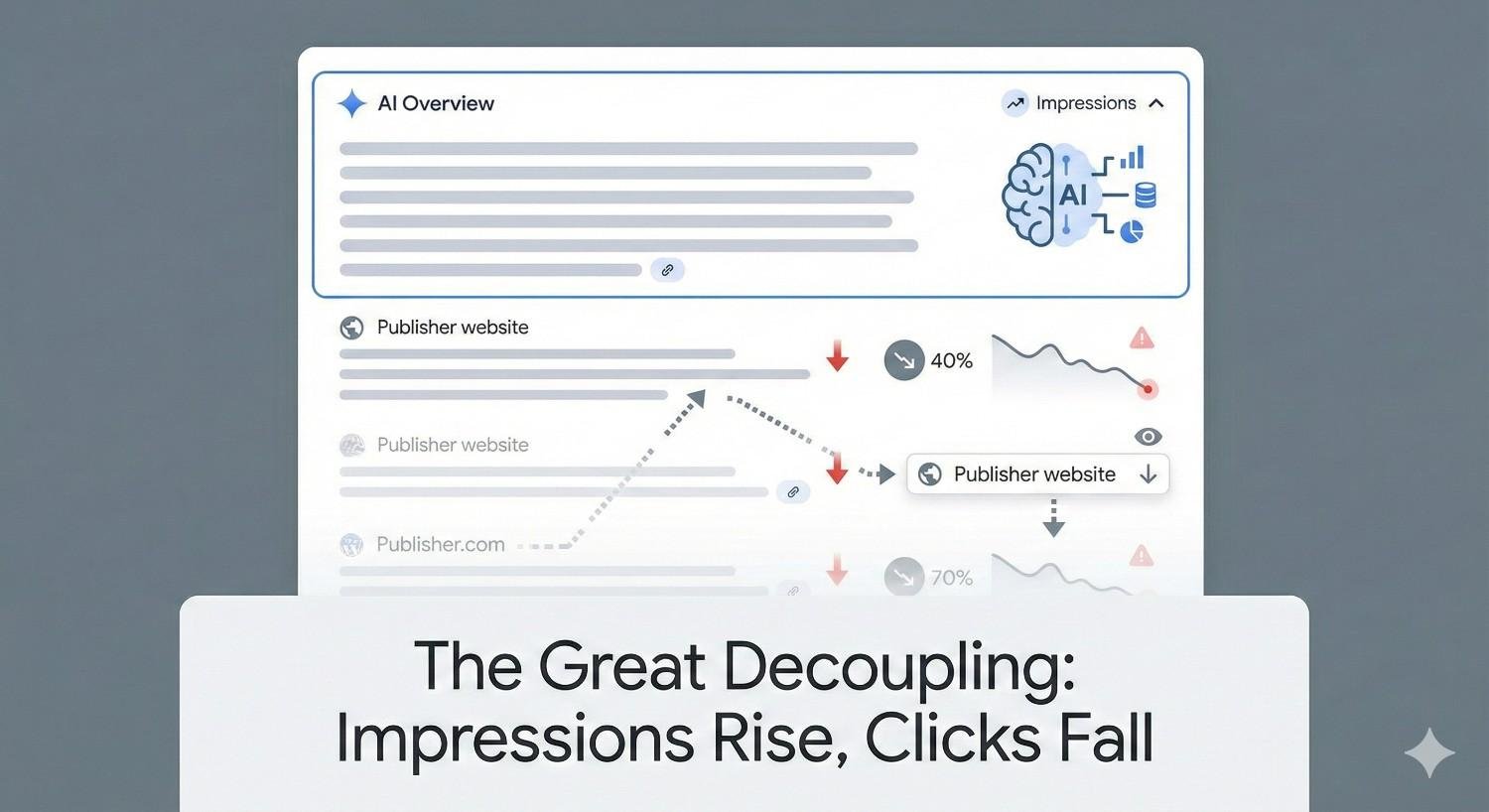
While users grapple with bizarre answers, publishers are facing a more existential threat. The SEO community has coined a term for the phenomenon: "The Great Decoupling." It describes a situation where websites see a rise in search impressions—meaning they are cited by the AI—but suffer a significant decline in actual clicks and traffic.
This is happening because AI Overviews are designed to answer user queries directly on the results page. By providing a comprehensive summary, the feature dramatically reduces the need for users to click through to the original source websites. A European Parliament report highlights the scale of the issue, noting that trade associations claim traffic drops of up to 25%, with some digital marketing companies reporting drops as high as 50% for their clients.
Two independent data studies from SEO tool provider Ahrefs and performance agency Amsive quantify the alarming impact on click-through rates (CTR):
- A 34.5% drop in CTR for the #1 organic search position when an AI Overview is present (Ahrefs, analyzing 300,000 keywords).
- An average 15.49% CTR drop across a wider set of keywords (Amsive, analyzing 700,000 keywords).
- A 19.98% CTR decline specifically on non-branded keywords, which are the most likely queries to trigger an AI Overview (Amsive).
This trend poses what the European Parliament report calls an "unprecedented threat to the open web." Countless online publishers rely on organic search traffic for revenue. By intercepting that traffic, AI Overviews don't just threaten an economic model; they risk a systemic shift away from a decentralized web toward information consumption entirely within Google's walled garden.
3. The SEO Rules Have Inverted: Ranking #1 No Longer Guarantees a Citation
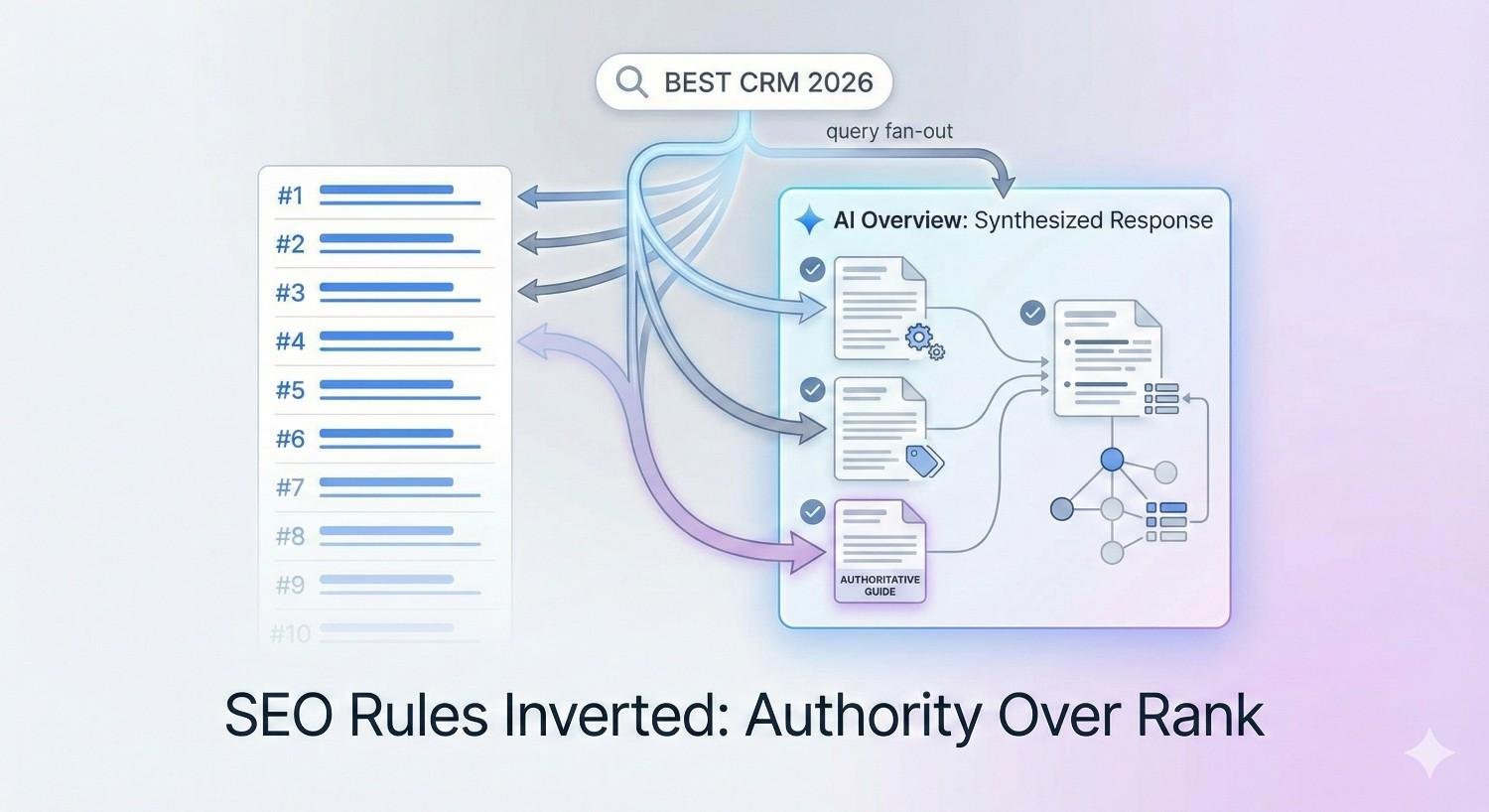
Amid the doom and gloom for publishers, a surprising silver lining has emerged. With AI Overviews, the old SEO mantra of "rank #1 or nothing" is no longer the whole story. Analysis shows that ranking at the top of the traditional "blue links" does not guarantee your content will be cited in the AI-generated summary. Conversely, pages with lower organic rankings can be pulled into the coveted top spot.
A study by Ahrefs found that while most URLs cited in AI Overviews already rank in the top 10, a surprising 14.4% of AI citations came from URLs ranking outside the top 100.
This happens because the AI’s methodology is more complex than traditional ranking. It uses a "query fan-out" technique, where it expands a user's initial question into multiple sub-topics and pulls in sources that are authoritative on each specific piece, even if they don't rank for the primary search term. Furthermore, Google tends to "lock in" on a small set of highly authoritative, well-structured URLs that become recurring "core sources," cited repeatedly for the same topics.
This insight reveals a new opportunity. The SEO game is shifting from a pure obsession with chasing the #1 rank to creating perfectly structured, machine-readable content that authoritatively and directly answers a specific question. For those who can adapt, this offers a new path to the top of the page and a recurring slot in the AI spotlight.
Don't let the new rules leave your website behind. Learn the exact strategy to get cited in the AI box before your competitors do.
👉 Unlock the Ranking Guide4. Users Are So Frustrated, They're Hacking Their Browsers to Block It

The backlash against AI Overviews isn't just coming from publishers and industry analysts; it's coming from everyday users. Public frustration has grown so intense that a dedicated community has emerged with a singular goal: to completely remove the feature from their search results.
On forums like Reddit, users are actively sharing and refining custom filters for ad-blocking tools like uBlock Origin, designed specifically to hide the AI Overviews box. The sentiment in these communities is overwhelmingly negative, with users describing the feature as an "unhelpful nuisance," "infuriating," and "slop." They complain that it takes up a huge amount of screen space and often delivers incorrect or useless information.
This user rebellion is significant. It demonstrates that the problem with AI Overviews extends beyond industry concerns into the realm of poor user experience. When a dedicated community forms to actively "hack" their browsers to remove a core product feature, it serves as a powerful and unambiguous indicator of its poor reception.
5. Publishers Are Suing and Regulators Are Watching
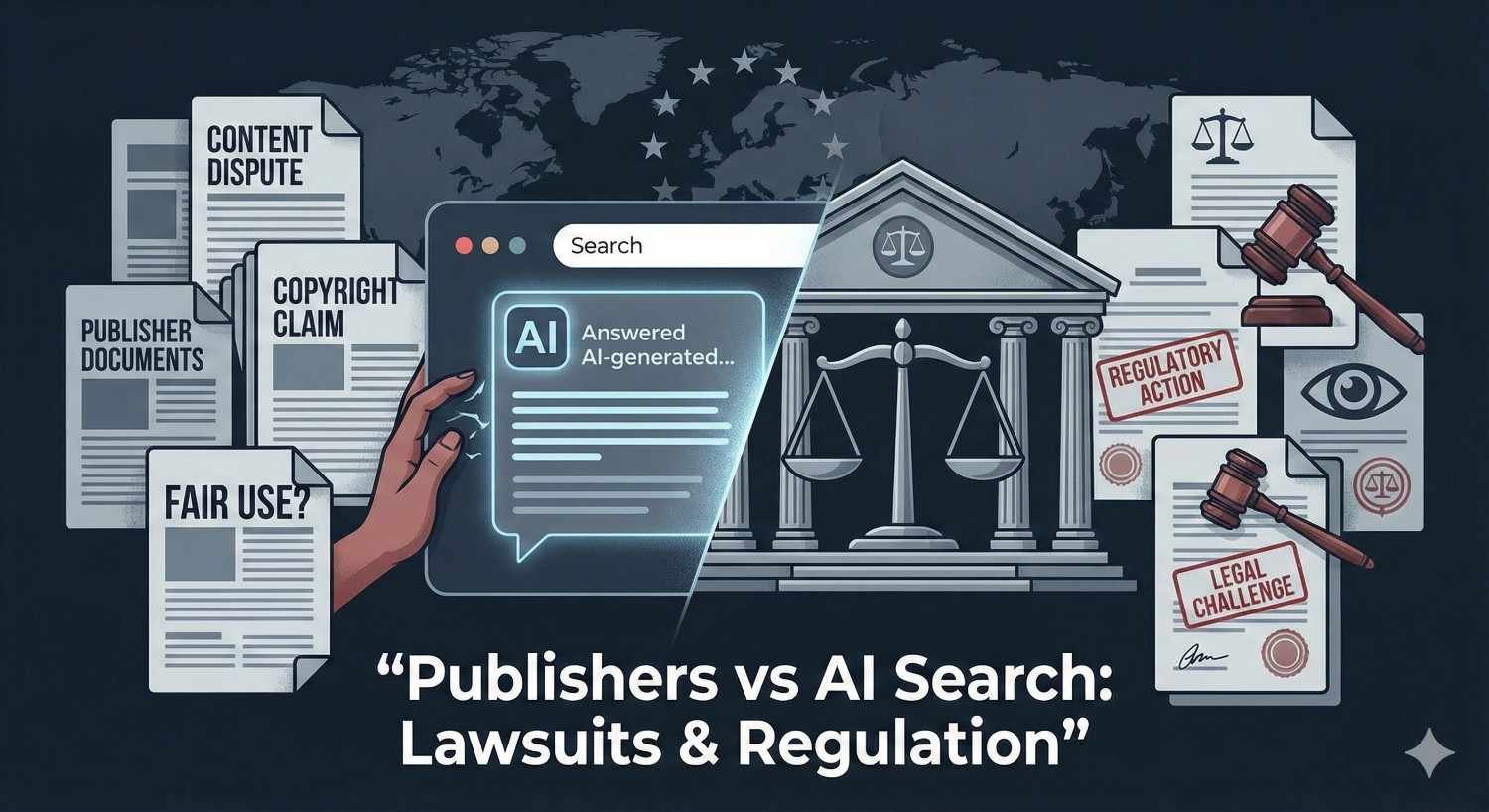
The battle over AI Overviews has officially escalated from a technical and user-experience debate to a high-stakes legal and regulatory conflict. Major publishers are taking Google to court, and international regulators are launching investigations.
Several lawsuits have already been filed, accusing Google of anticompetitive behavior and copyright infringement. Key legal challenges include:
- Penske Media Corporation (publisher of Rolling Stone): Accuses Google of illegally regurgitating journalistic content, functioning as a "zero-click" parasite that undermines the value of original reporting. The company alleges that 20% of searches that link to its websites already show AI Overviews, a figure it expects to rise.
- Chegg (an education technology company): Filed an antitrust lawsuit claiming the feature harms competition by leading students to prefer "low-quality, unverified AI summaries" over its own verified services.
The fight is also going global. As noted in a European Parliament report, a coalition of publishers has filed a formal antitrust complaint with the European Commission, accusing Google of systematically diverting traffic and revenue. This elevates the issue from a series of technical flaws to a fundamental, international battle over copyright, fair competition, and the very structure of the open web.
Let's discuss how these changes impact your website's traffic. Find our expert team here and start a conversation today.
🗺️ Find Us & Get DirectionsConclusion: A Glimpse of an Uncertain Future
Google has positioned AI Overviews as the future of search, but its chaotic rollout reveals a deeper conflict. The platform is simultaneously threatening the open web's economic model while failing to meet its own standards for reliability. This places users, publishers, and regulators at a critical crossroads.
This feature is doing more than just changing a search results page; it's threatening the delicate ecosystem of the open web and raising fundamental questions about information integrity. As AI strives to become the gatekeeper to all information, who is responsible for ensuring the gatekeeper itself can be trusted?