

Unlock the mysteries of AI wrappers! This guide explores what they are, how they work, and their transformative impact on technology today.
The Purpose of AI Wrappers
Artificial Intelligence (AI) has become an integral part of modern technology, driving innovation across numerous industries. However, the complexity associated with AI algorithms and models can make their deployment and integration a daunting task. This is where AI wrappers come into play. The primary purpose of AI wrappers is to simplify the interaction between AI models and the systems that utilize them. They act as an intermediary layer, abstracting the complexity of the AI algorithms and providing a more user-friendly interface for developers and end-users.
AI wrappers serve as a bridge, translating the intricate operations of AI models into more digestible and manageable chunks of functionality. This abstraction allows developers to focus on the application logic rather than getting bogged down by the underlying AI mechanics. By encapsulating the AI model within a wrapper, developers can easily integrate AI capabilities into their applications without needing in-depth knowledge of the AI algorithms themselves.
Furthermore, AI wrappers enable a more modular approach to AI integration. They allow developers to swap out or update AI models with minimal disruption to the existing system. This modularity is crucial in a rapidly evolving field like AI, where new models and techniques are continually being developed. AI wrappers ensure that systems can stay up-to-date with the latest advancements without requiring extensive reworking of the application’s codebase.
How AI Wrappers Function
At their core, AI wrappers function by encapsulating the AI model and exposing a set of standardized interfaces for interaction. This encapsulation involves wrapping the AI model in a layer of code that handles the input and output, manages resources, and provides error handling. The wrapper acts as a black box, where the complexities of the AI model are hidden from the end-user, and only the necessary functionalities are exposed.
The interaction with an AI wrapper typically involves a series of API calls. These APIs are designed to be intuitive and easy to use, allowing developers to send data to the AI model and receive the processed results. For instance, in a natural language processing application, the API might accept text input, pass it through the wrapped AI model, and return the processed text or extracted information. This API-driven approach simplifies the integration process and ensures consistency in how the AI model is accessed and utilized.
Moreover, AI wrappers also manage the lifecycle of the AI model, including loading, initializing, and maintaining the model’s state. This management is crucial for ensuring that the AI model performs optimally and efficiently. The wrapper takes care of resource allocation, such as memory and processing power, and handles any errors or exceptions that may occur during the model’s operation. By offloading these responsibilities to the wrapper, developers can focus on building robust applications without worrying about the intricacies of the AI model’s lifecycle.
Key Components of AI Wrappers
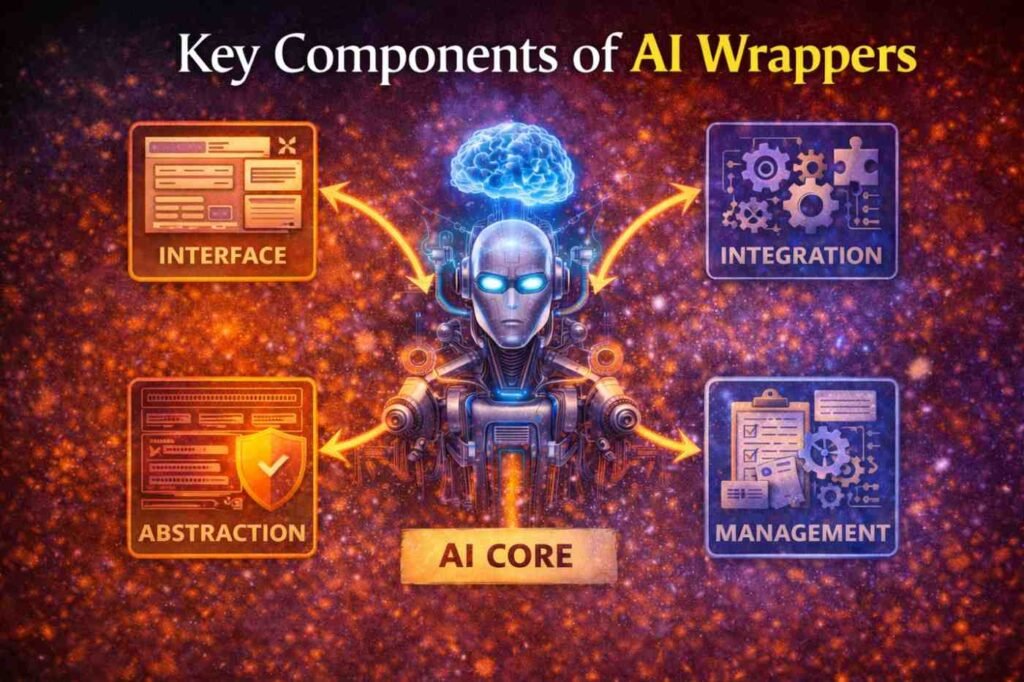
AI wrappers are composed of several key components that work together to facilitate the seamless integration of AI models into applications. The first component is the interface layer, which defines the APIs and endpoints through which the application interacts with the AI model. This layer is designed to be intuitive and user-friendly, providing a consistent and standardized way to access the AI model’s capabilities.
The second component is the data processing layer, which handles the preprocessing and postprocessing of data. This layer ensures that the input data is in the correct format for the AI model and that the output data is transformed into a usable format for the application. Preprocessing may involve tasks such as normalization, tokenization, or feature extraction, while postprocessing might include tasks like decoding, filtering, or aggregating the output results.
The third component is the resource management layer, which oversees the allocation and utilization of resources needed by the AI model. This includes managing memory, processing power, and other computational resources to ensure that the AI model operates efficiently. The resource management layer also handles tasks such as model loading, initialization, and state maintenance, ensuring that the AI model is always ready for use.
Benefits of Using AI Wrappers
One of the primary benefits of using AI wrappers is the significant reduction in complexity they offer. By abstracting the intricate details of AI models, wrappers allow developers to integrate advanced AI capabilities into their applications without needing deep expertise in AI. This democratization of AI technology enables a broader range of developers to leverage AI in their projects, fostering innovation and accelerating the development of AI-powered applications.
Another notable benefit is the modularity and flexibility that AI wrappers provide. Because wrappers encapsulate the AI model and expose standardized interfaces, developers can easily swap out or update the AI model without major changes to the application’s codebase. This modular approach is particularly valuable in the fast-paced field of AI, where new models and techniques are constantly emerging. AI wrappers ensure that applications can stay current with the latest advancements without extensive reworking.
AI wrappers also enhance the maintainability and scalability of AI-powered applications. By managing the lifecycle of the AI model and handling resource allocation, wrappers ensure that the AI model operates efficiently and reliably. This management reduces the risk of performance bottlenecks and errors, leading to more robust and scalable applications. Additionally, the use of standardized APIs and interfaces simplifies the maintenance and updating process, making it easier to extend and enhance the application over time.
Common Use Cases for AI Wrappers
AI wrappers are employed across a wide range of industries and applications, showcasing their versatility and utility. One common use case is in the field of natural language processing (NLP). AI wrappers are used to integrate NLP models into applications for tasks such as sentiment analysis, language translation, and text summarization. By providing a simplified interface for interacting with the NLP models, wrappers enable developers to easily incorporate advanced language processing capabilities into their applications.
Another prevalent use case for AI wrappers is in computer vision applications. AI wrappers are used to integrate image and video processing models into applications for tasks such as object detection, facial recognition, and image classification. The wrapper abstracts the complexities of the computer vision model, allowing developers to focus on building the application logic and user interface. This abstraction is particularly valuable in applications that require real-time image processing, such as autonomous vehicles and surveillance systems.
AI wrappers are also widely used in the realm of predictive analytics and data science. By encapsulating machine learning models, wrappers provide a straightforward way to integrate predictive capabilities into applications. For example, in finance, AI wrappers can be used to integrate models for credit scoring, fraud detection, and investment forecasting. In healthcare, wrappers can facilitate the integration of models for disease diagnosis, treatment recommendation, and patient outcome prediction. The versatility of AI wrappers makes them a valuable tool for a wide range of data-driven applications.
Comparison of AI Wrappers with Other AI Integration Methods
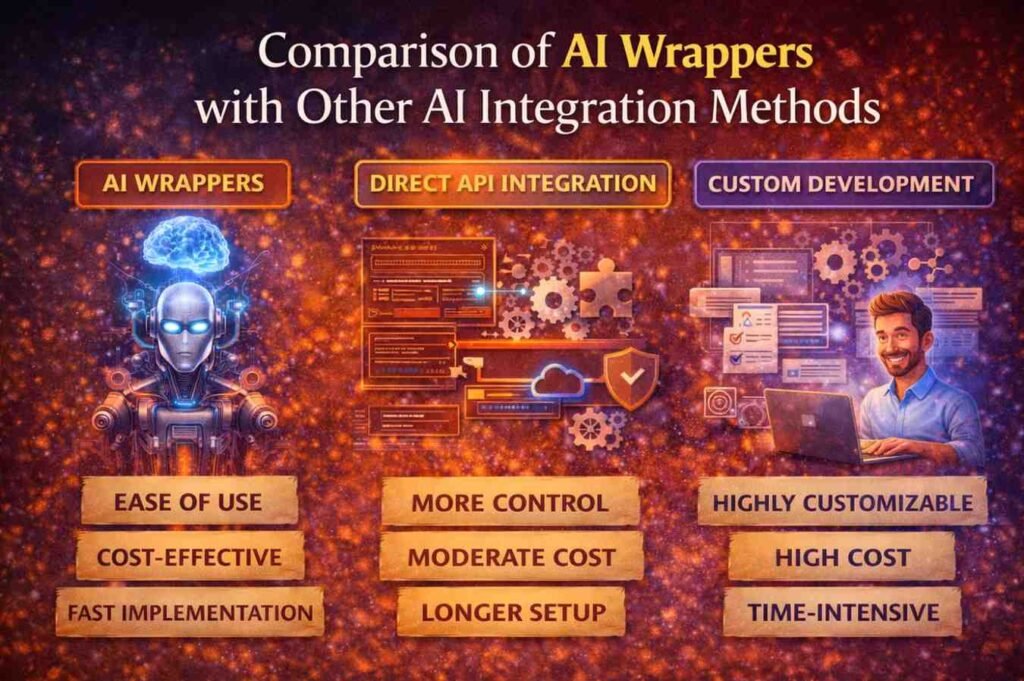
When it comes to integrating AI into applications, several methods can be employed, each with its own advantages and trade-offs. One common approach is to directly embed the AI model within the application’s codebase. While this method offers tight integration and potentially better performance, it also requires developers to have a deep understanding of the AI model and its dependencies. This approach can lead to increased complexity and maintenance challenges, especially as the AI model evolves or is updated.
Another method is to use AI platforms or services, such as cloud-based AI offerings from providers like Google Cloud AI, AWS AI, or Microsoft Azure AI. These platforms provide ready-to-use AI models and APIs that can be easily integrated into applications. While this approach simplifies the integration process and offloads the management of the AI model to the service provider, it can also lead to vendor lock-in and may have limitations in terms of customization and control over the AI model.
AI wrappers offer a middle ground between these two approaches. They provide the ease of integration and abstraction similar to AI platforms while allowing for greater customization and control over the AI model. Wrappers encapsulate the AI model within a standardized interface, making it easy to integrate and update without tightly coupling the model to the application’s codebase. This balance of simplicity, flexibility, and control makes AI wrappers an attractive option for developers looking to leverage AI in their applications.
Challenges and Limitations of AI Wrappers
Despite their numerous benefits, AI wrappers are not without their challenges and limitations. One of the primary challenges is the potential performance overhead introduced by the wrapper layer. By adding an additional layer of abstraction, wrappers can introduce latency and reduce the overall performance of the AI model. This performance overhead can be particularly problematic in applications that require real-time processing or have stringent performance requirements.
Another limitation of AI wrappers is the potential for reduced transparency and interpretability. By abstracting the complexities of the AI model, wrappers can make it more difficult for developers to understand the inner workings and decision-making processes of the AI. This lack of transparency can be a significant drawback in applications where interpretability is crucial, such as in healthcare or finance. Ensuring that the wrapper provides sufficient visibility into the AI model’s operations is essential for maintaining trust and accountability.
Additionally, AI wrappers can sometimes limit the flexibility and customization of the AI model. While wrappers provide a standardized interface for interaction, they may not expose all the functionalities or parameters of the underlying AI model. This limitation can restrict developers’ ability to fine-tune and optimize the AI model for specific use cases. Balancing the ease of use provided by the wrapper with the need for customization and flexibility is a key consideration when designing and using AI wrappers.
Future Trends in AI Wrappers
As AI technology continues to evolve, so too will the capabilities and functionalities of AI wrappers. One emerging trend is the development of more intelligent and adaptive wrappers that can automatically optimize and fine-tune the AI model based on the application’s requirements. These adaptive wrappers will leverage techniques such as reinforcement learning and meta-learning to dynamically adjust the AI model’s parameters and improve performance.
Another trend is the increasing integration of AI wrappers with edge computing devices. As the demand for real-time processing and low-latency applications grows, there is a push towards deploying AI models on edge devices, such as smartphones, IoT devices, and autonomous vehicles. AI wrappers will play a crucial role in facilitating this integration, providing a standardized and efficient way to deploy and manage AI models on edge devices.
Moreover, we can expect to see advancements in the transparency and interpretability of AI wrappers. As the importance of ethical AI and explainability continues to rise, there will be a greater focus on developing wrappers that provide deeper insights into the AI model’s decision-making processes. These transparent wrappers will include features such as detailed logging, visualization tools, and explainable AI techniques to enhance the interpretability and accountability of AI models.
Know more about How AI Wrapper works?
Conclusion and Final Thoughts
AI wrappers have emerged as a powerful tool for simplifying the integration and deployment of AI models in applications. By abstracting the complexities of AI algorithms and providing standardized interfaces, wrappers enable developers to leverage advanced AI capabilities without needing deep expertise in AI. This democratization of AI technology has the potential to drive innovation and accelerate the development of AI-powered applications across a wide range of industries.
While AI wrappers offer numerous benefits, they also come with their own set of challenges and limitations. Performance overhead, reduced transparency, and limited customization are important considerations that developers must address when using AI wrappers. However, with ongoing advancements and trends in AI technology, we can expect to see continued improvements in the capabilities and functionalities of AI wrappers, making them an even more valuable tool for developers.
In conclusion, AI wrappers are a key enabler of AI integration, providing a balance of simplicity, flexibility, and control. As AI technology continues to evolve, the role of AI wrappers will become increasingly important, facilitating the seamless integration of AI models into applications and driving the next wave of technological innovation. Whether you are a seasoned developer or just starting with AI, understanding and utilizing AI wrappers can unlock new possibilities and transform the way you build and deploy AI-powered solutions.