
What is Semantic Search? – Understanding the Future of Search Technology
Semantic search is a search technology that understands user intent and context behind words. It not only looks for keywords but also figures out what you really mean. Modern search engines like Google use this to give better answers, so your content must match intent, not just words.
You should focus on creating content that answers questions clearly. Use related terms and natural phrases (don’t just repeat keywords). This strategy gives a better ranking sometimes because search engines read meaning, not exact text.
Think of semantic search like a smart assistant. It looks at all the clues and gives results that fit your question. Optimise content for clarity, context, and intent.
How Semantic Search Differs from Traditional Keyword Search?
People often type what they need in the search bar and expect perfect results. But not all searches give accurate answers. Traditional keyword search and semantic search work very differently. Understanding the difference helps you optimise content better and reach the right audience.
Traditional Keyword Search
Keyword search looks for exact words you type. It ignores meaning and context. If you type "best running shoes," it just matches pages with those words. Pages with similar meaning but different words may not show. This strategy works fast but often misses relevant content.
Limitations of Keyword Search
Keyword search fails when users phrase their query differently. It ignores synonyms and user intent. Results can be noisy (like digging through sand to find gold). You need to repeat words exactly.
Semantic Search
Semantic search understands the meaning behind the query. It looks at context, intent, and related concepts. If you type "shoes for marathon," it shows pages about long-distance running shoes even without exact keywords. This gives better relevance and a higher chance user engaging.
Why It Matters
Optimise content for semantic search. Use natural language, answer questions, and cover topics fully. Your content ranks more stable (slow but steady growth). Think like planting seeds for long-term traffic.
Comparison Table
| Feature | Keyword Search | Semantic Search |
|---|---|---|
| Focus | Exact words | Meaning & intent |
| Relevance | Often low | High |
| Synonyms | No | Yes |
| User Experience | Weak | Strong |
The Role of Natural Language Processing (NLP) in Semantic Search
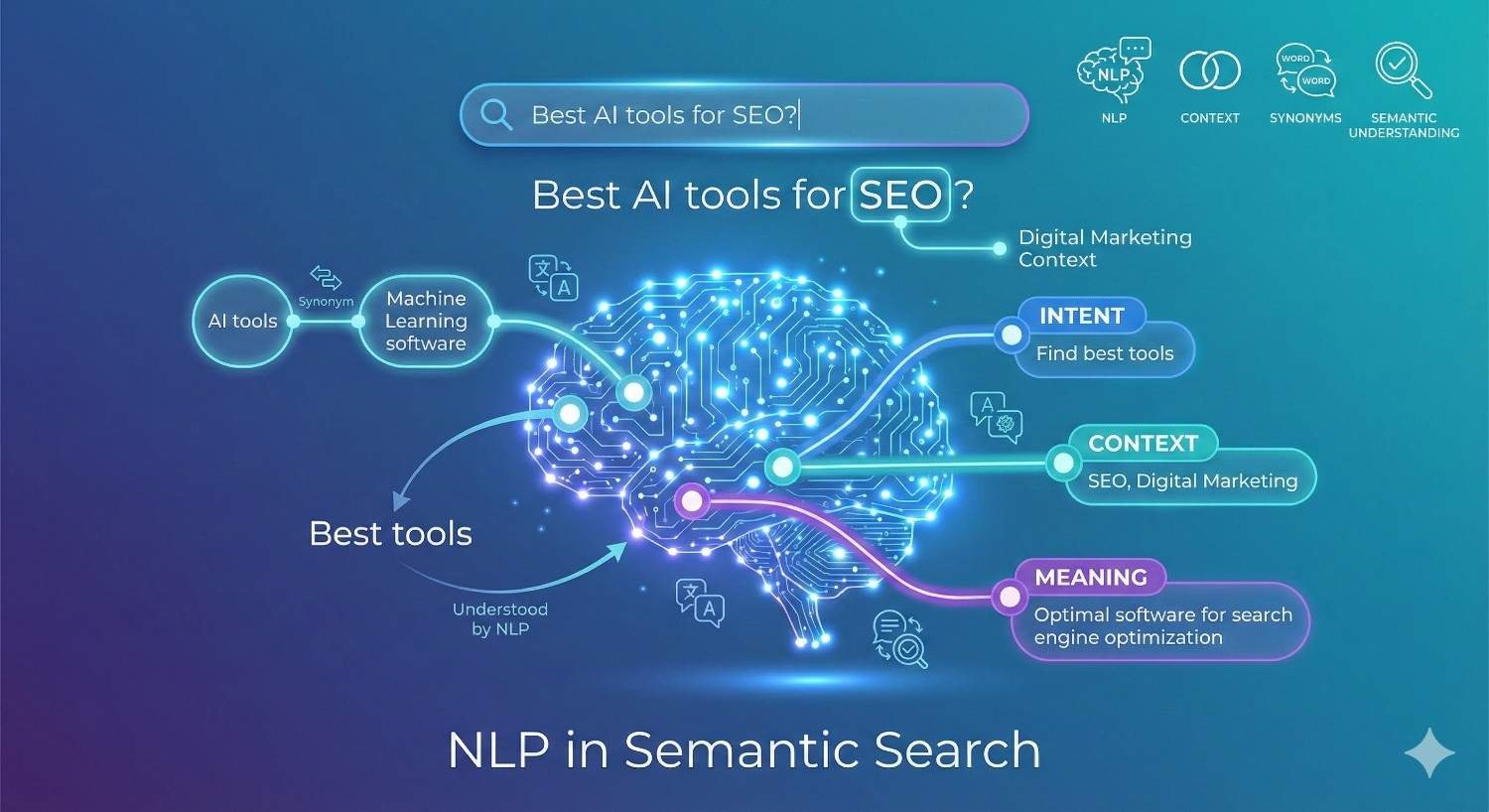
Natural Language Processing (NLP) is the backbone of semantic search. Search engines now don’t just match exact words; they understand your intent using AI models like BERT and MUM. NLP helps them read queries like humans, notice synonyms via word embeddings, and see context between words. This makes your content more discoverable when you optimise for meaning, not just keywords.
How NLP Understands Queries
NLP breaks down your sentence into pieces. It detects what’s important using Named Entity Recognition (NER) and what’s related. For example, “cheap laptop for gaming” shows “cheap” as price and “gaming” as performance—you should write content that answers this intent clearly.
Synonyms and Variations
Search engines use NLP to recognise similar words via embeddings. “Car” and “automobile” are treated the same. Use natural language and include variations in content.
Context Matters
NLP sees how words connect. “Apple” near “iPhone” means tech, not fruit. Keep context clear in your writing so search engines can understand quickly.
Semantic Search Benefit
This makes content rank for ideas, not just words. Track performance and refine phrases as you go. Content flows like a clear path for users.
Master Google's AI Overview
Learn advanced strategies to rank your website in Google's AI-generated search results and stay ahead of the competition.
Read Full Guide →Understanding User Intent in Semantic Search
Understanding user intent is key in semantic search. People don’t just type words—they look for answers, products, or websites. Semantic search tries to read their meaning, not only keywords. You must know the intent to make content useful and rank better.
Informational Intent
Focus on users who want knowledge. They search for questions like “how to optimise SEO” or “best digital marketing tools.” Write clear answers, use examples, and structure content for easy reading. Think like a teacher, not a seller.
Commercial Intent
Commercial intent sits between learning and buying, such as “best SEO tools comparison.” These users are researching options, so create comparison guides, pros and cons, and honest recommendations to guide their decision.
Transactional Intent
These users want to act or buy something. Queries like “buy SEO software” or “digital marketing course online.” Make calls-to-action strong, landing pages fast, checkout simple. This is where sales flow like water if the funnel is clear.
Navigational Intent
Users try to reach a site or brand. Example: “HubSpot blog” or “Google Ads help.” Make your site easy to find and well-branded. Keep the menus and search internal simple.
How Semantic Search Uses Context to Improve Results
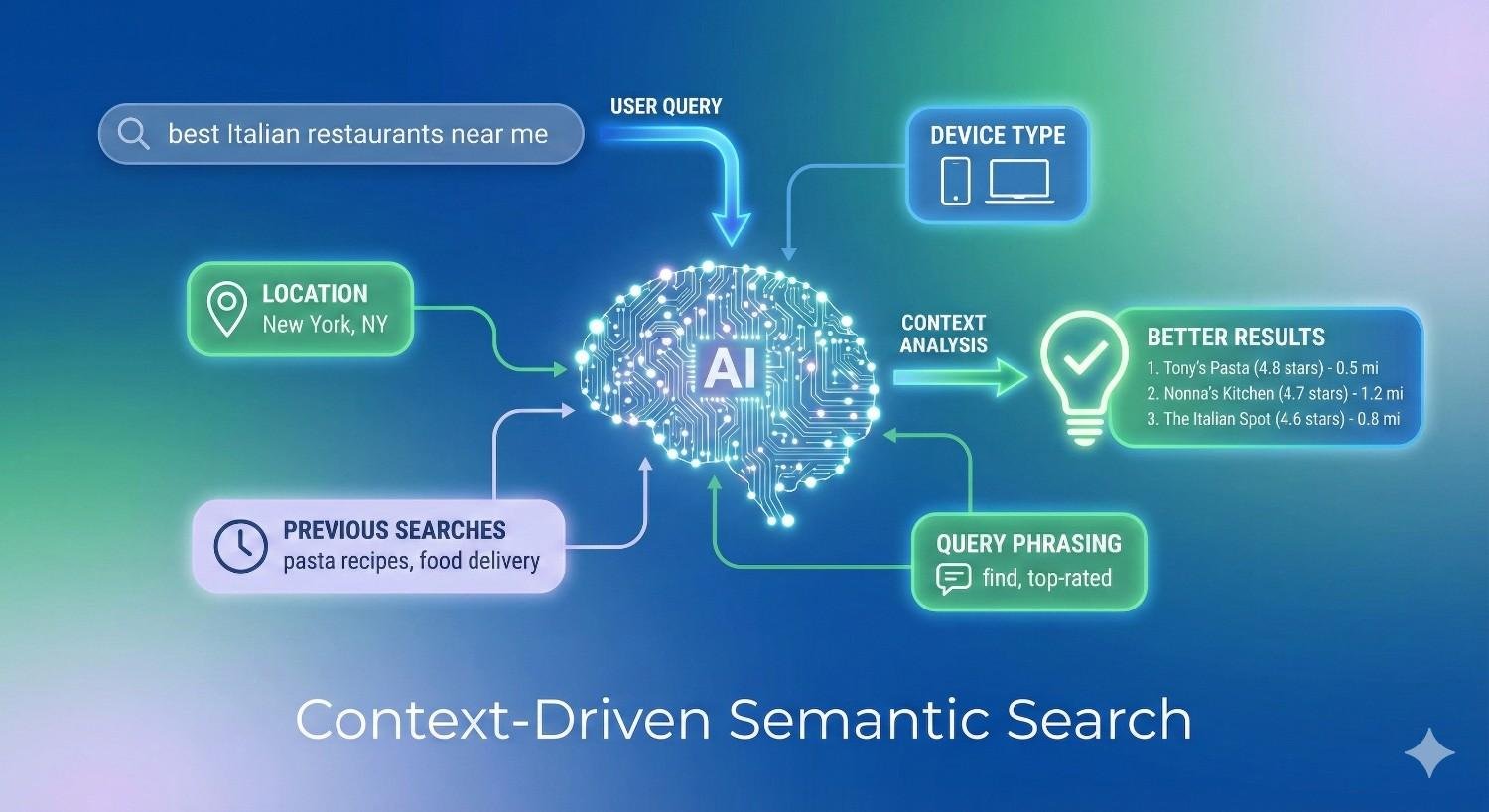
Semantic search uses context to improve results and give users what they really want. It looks beyond exact keywords and tries to understand the meaning behind your query. This makes search smarter and more helpful for real-world questions.
Location Matters
Search engines check where you are. If you look for “coffee shop,” it shows nearby places first. So always consider location signals if you want local traffic.
Previous Searches Influence Results
Your past searches tell engines your interest. If you search “iPhone review” and then “best cases,” search knows you want phone accessories. Track your search history to see patterns.
Device Type Signals
Mobile, desktop, or tablet? Search results may change. Mobile users get faster-loading, local-friendly pages. Optimise pages for all devices to match context.
Query Phrasing Impact
How do you ask for a change in the result? “Best laptop 2025 for students” gives a different answer than “cheap student laptop 2025.” Use natural phrasing for accurate results.
Knowledge Graphs and Their Importance in Semantic Search
Knowledge graphs help search engines understand real-world connections between things, people, and places. They make semantic search smarter. When Google sees structured data, it links ideas fast and shows better results for users. You should know this because it affects your website's visibility and traffic.
What is a Knowledge Graph
Think of it as a big map of information. Each entity, like “Apple” or “iPhone”, connects to related things like “smartphone” or “technology company.” Search engines read this map to know context, not just keywords. For example:
Knowledge Graph Example
Semantic connections between entities
How It Boosts Semantic Search
Semantic search is about meaning, not exact words. Knowledge graphs show search engines what your content really talks about. You should mark entities in content, like people, products, or locations.
Why You Need It
Use structured data in your pages. This makes search engines link your info correctly. Traffic flows better when search understands you. It also helps appear in rich snippets and answer boxes.
AEO vs SEO vs GEO Explained
Understand the differences between these key digital marketing strategies and choose the right approach for your business.
Compare Strategies →The Impact of Semantic Search on SEO Strategies
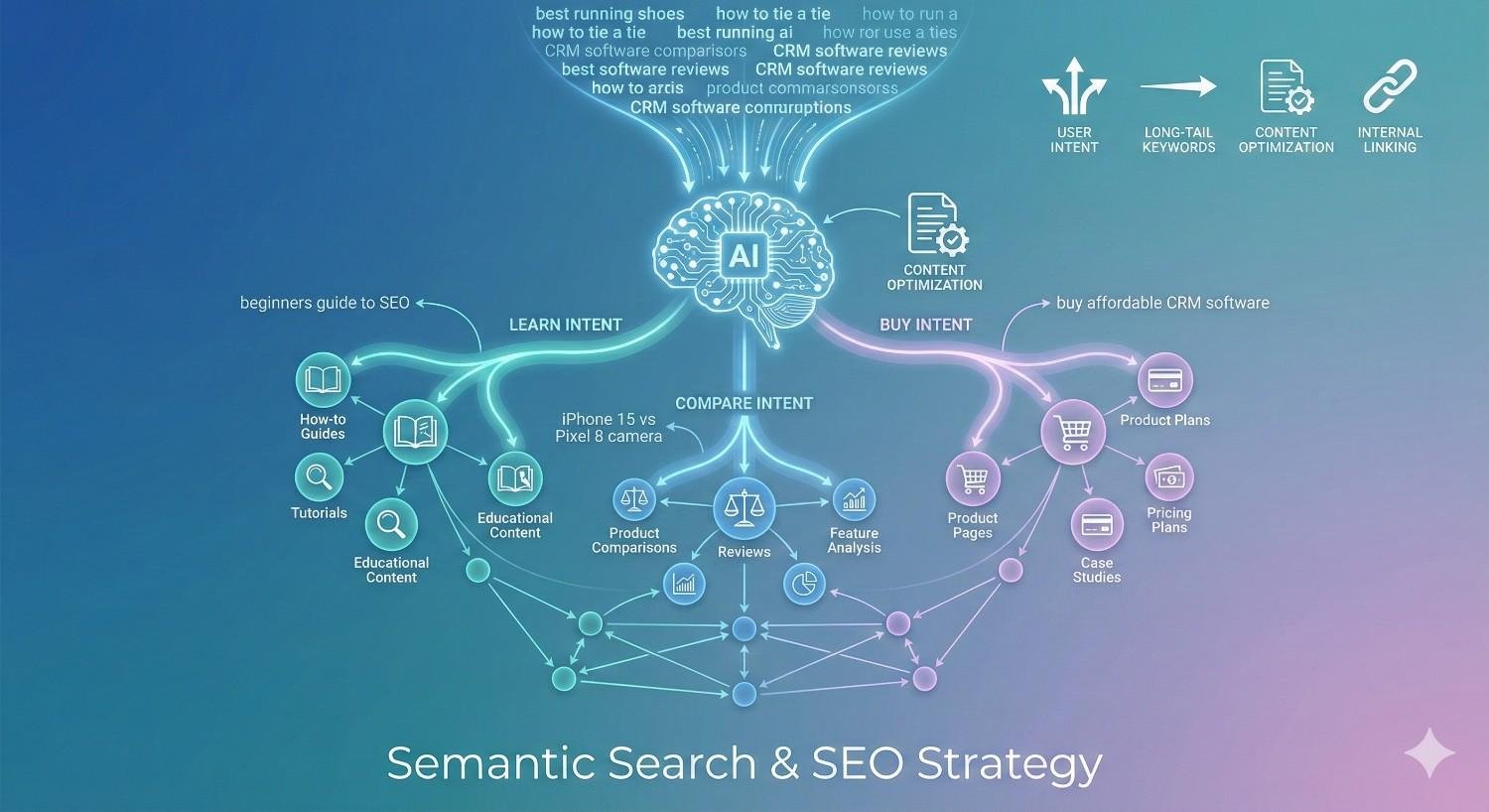
Semantic search is changing SEO strategies fast. It focuses on meaning, not just exact keywords. You need to think like your audience, understand intent, and give answers they really want. Old tricks with keyword stuffing don’t work. This shift affects how you plan content and target search queries.
Optimise Content for Meaning
Write content that answers questions clearly. Use natural language (like people actually speak). Don’t force keywords everywhere. Google now reads context, so explain the topic fully. Use synonyms and related words. This makes the content strong for semantic search.
Map User Intent
Understand why people search. Are they looking to buy, learn, or compare? Categorise your pages for each intent. This helps search engines show the right page at the right time.
Focus on Long-Tail Keywords
Long-tail phrases match real questions. Include them naturally. They drive traffic fast sometimes and convert better (like small streams feeding a river).
Adjust Keyword Strategy
Target concepts, not single words. Mix short and long terms. Track performance and tweak content often.
Improve Internal Linking
Connect related topics inside the site. This shows a relationship and authority. Users spend more time, and search engines trust the site more.
Semantic Search and Voice Search Integration
Semantic search is changing how people find information online. Voice search is growing fast, and tools like Siri, Alexa, and Google Assistant use semantic search to understand what you mean, not just the exact words. This makes the search more human and the results more useful. You should know how to use this for your website and content.
How Semantic Search Works
Semantic search looks at meaning, context, and intent. It reads full questions, not just keywords. So when someone says “best Italian restaurant near me,” they know you mean location, food type, and quality. Your content must answer these naturally.
Voice Search Integration
Voice assistants use semantic search to talk like humans. You must write content as people speak. Use questions, short answers, and natural words.
Tips for Websites
Optimise pages for natural language. Add FAQ sections. Use structured data (it helps search understand your content). Track queries that lead traffic. This strategy gives fast insights sometimes.
Benefits
Visitors get exact answers fast. Sales flow like water when content matches search intent. SEO works slowly but stably.
Examples of Semantic Search in Action
Semantic search helps Google understand what you really mean, not just the words you type. This makes search results smarter and faster for users. You see this everywhere online, from “People also ask” to maps. If you want to use it for your website, you need to understand how it works in real situations.
People Also Ask
Check Google for any topic. You see boxes with questions like “how to improve SEO” or “best digital marketing tips.” This gives related answers fast. You should use this to create content that answers common questions (like a small FAQ on your page).
Featured Snippets
Type a clear question in Google. The top result often shows a short paragraph or list. This snippet gives an instant answer without a click. Optimise your content to fit this style.
Google Maps Queries
Search local businesses, like “coffee near me.” Maps show location, reviews, and hours. Semantic search understands “coffee” and “near me” together.
Knowledge Panels
Search for a brand or person. Panel appear on the right with summary, images, and links. It improves trust and helps users find info fast.
Semantic search makes search natural. You should track how your keywords match user intent and structure content to appear in these features.
Benefits of Semantic Search for Businesses and Users
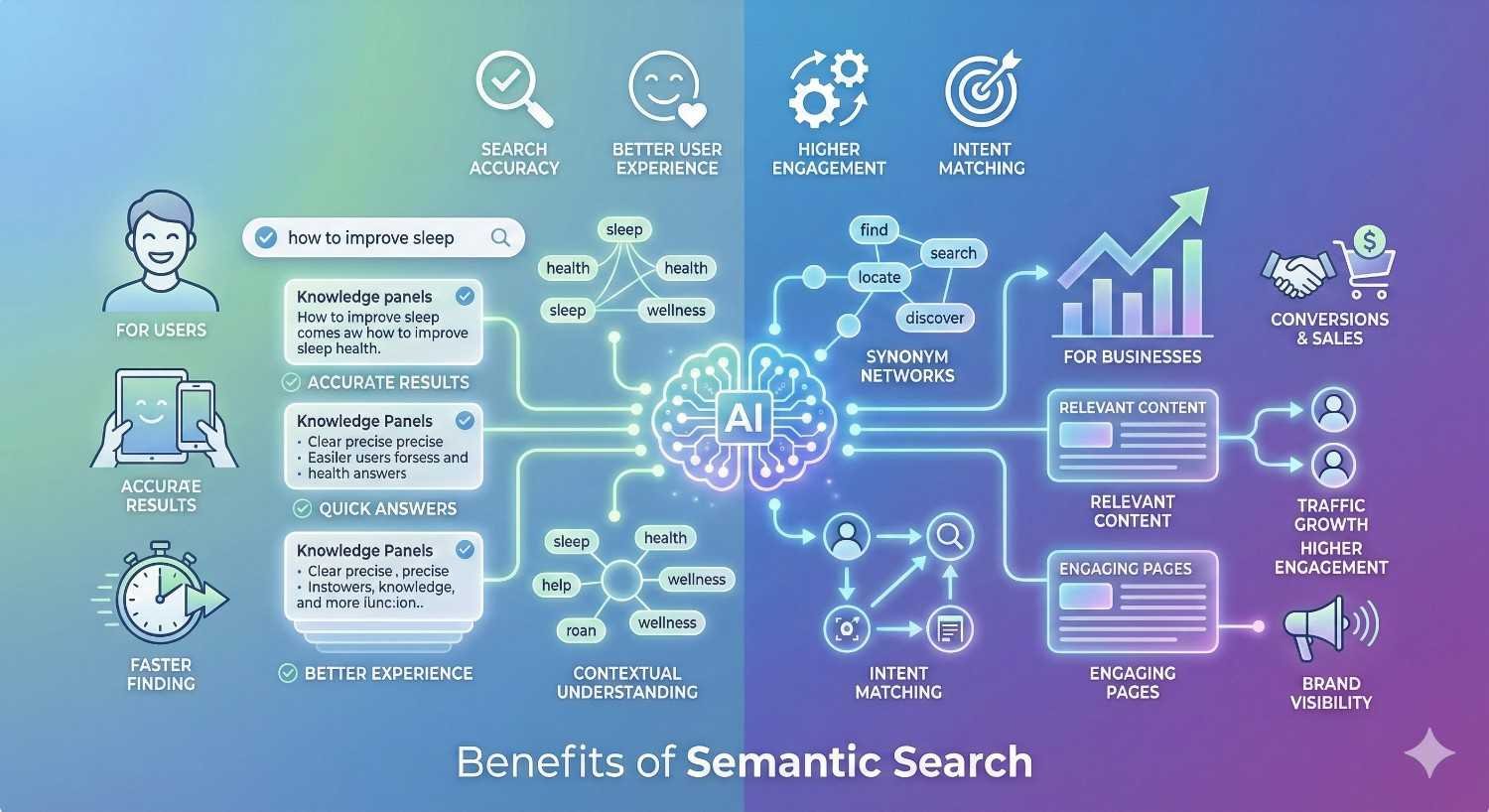
Semantic search is changing how users find information and how businesses reach them. It focuses on the meaning behind words, not just exact keywords. This helps both users and businesses get better results and more relevant interactions.
Improved Search Accuracy
Semantic search understands what the user really wants. It looks at context, synonyms, and related ideas. This means your content shows up even if the exact words are not used. You should optimise pages for concepts, not only keywords (this gives more chances to appear in searches).
Better User Experience
Users find what they want faster. No more scrolling through unrelated results. Make content clear and structured, so search engines can easily match it. Smooth experience keeps users happy and returning.
Higher Engagement
When users see relevant info, they interact more. Clicks, shares, and time on page all increase. Your site has become like a useful guide instead of just an info dump.
Match User Intent
Semantic search helps businesses understand intent. You can create content that answers questions directly. This improves leads and conversions, like sales flow when the funnel is clear.
Challenges and Limitations of Semantic Search
Semantic search is powerful, but it has limits you should know. It tries to understand meaning, not just words, but it faces problems in real use. Queries can be tricky, and sometimes results confuse more than help. You need to know where it struggles.
Ambiguity in Queries
Handle vague queries carefully. Semantic search can misread what you want. For example, “apple” can mean fruit or a brand. Specify context, or results may be wrong.
Understanding Complex Queries
Break long or multi-part queries. Semantic search sometimes misses nuances. You should simplify questions or use keywords smartly.
Multilingual Challenges
Semantic search works best in English. Other languages may give poor results. Translate carefully or expect slower accuracy.
Maintaining Knowledge Graphs
Keep your data updated. Semantic search relies on graphs for meaning. Old info makes the suggestions wrong. Check connections regularly (like wires in a machine).
Our Location
Find our office location and get in touch with our team for consultations and digital marketing services.
View on Maps →The Future of Semantic Search
Semantic search is changing how people find information online. Now search engines understand meaning, not just keywords. This gives smarter results for queries and makes content more visible if done right. Businesses must prepare for AI-driven search, visual search, and even AR integration.
AI-Driven Semantic Search
Use AI tools to understand user intent. Optimise content for context, not just keywords. AI predict what the user wants sometimes before they type fully. Track trends and adjust content regularly.
Predictive Search
Implement predictive search on your website. Suggest queries to visitors in real-time. This improves engagement and conversions. Think of it like showing the right path before someone asks.
Visual Search
Add image optimisation. Users search by photos more than by text now. Tag images properly and include descriptive alt text. This increases traffic from visual search engines.
AR Integration
Prepare for AR search experiences. Product placement and interactive visuals help users explore virtually. This makes shopping or discovery smoother.