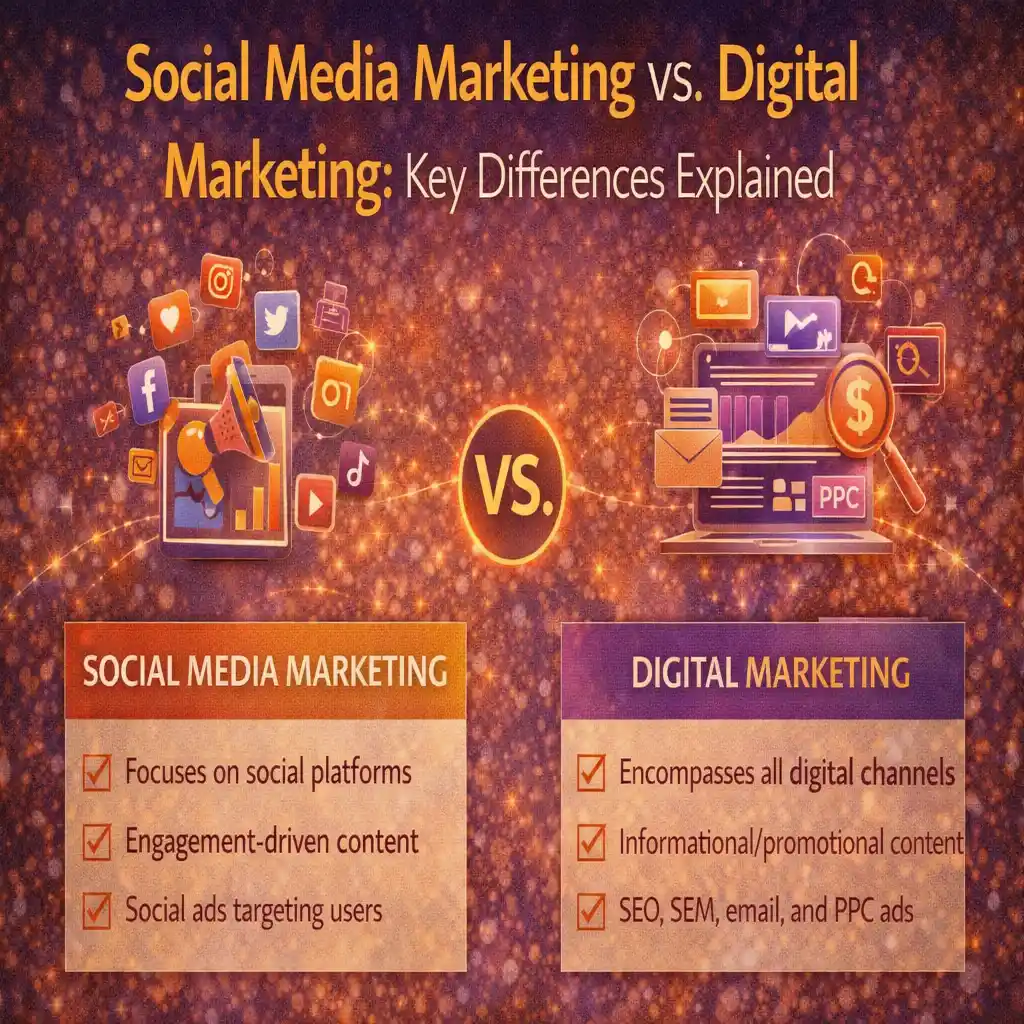

Defining Social Media Marketing
Social media marketing focuses on leveraging social networks to achieve marketing and branding goals. This strategy involves creating and sharing content on social media platforms like Facebook, Twitter, Instagram, LinkedIn, and Pinterest. The primary objective is to engage with an audience, foster community, and drive brand awareness. Social media marketing also includes paid advertising, influencer collaborations, and interactive content such as polls and live streams.
The essence of social media marketing lies in its ability to create a two-way conversation between brands and consumers. Unlike traditional marketing methods, social media marketing allows businesses to respond to customer inquiries, comments, and feedback in real-time. This interaction builds trust and loyalty, enhancing the overall customer experience.
Moreover, social media marketing is highly visual and often relies on multimedia content to attract attention. High-quality images, engaging videos, and compelling graphics are essential elements that make social media posts stand out. Brands that effectively utilize visual storytelling on social media can create a more memorable and impactful presence online.
Defining Digital Marketing
Digital marketing is a broad term that encompasses all marketing efforts conducted through digital channels. This includes search engine optimization (SEO), pay-per-click (PPC) advertising, email marketing, content marketing, and online campaigns. Digital marketing aims to reach potential customers through various online touchpoints, driving traffic, generating leads, and converting them into paying customers.
One of the key components of digital marketing is SEO, which involves optimizing website content to rank higher in search engine results pages (SERPs). By targeting specific keywords and improving site performance, businesses can increase their visibility and attract organic traffic. PPC advertising, on the other hand, involves paying for ad placements on search engines and websites, ensuring immediate visibility for targeted audiences.
Email marketing remains a powerful tool in the digital marketing arsenal, allowing businesses to send personalized messages directly to a subscriber’s inbox. Effective email campaigns can nurture leads, promote products, and build lasting relationships with customers. Additionally, content marketing focuses on creating valuable and relevant content to attract and engage a target audience, ultimately driving profitable customer actions.
Key Differences Between Social Media Marketing and Digital Marketing
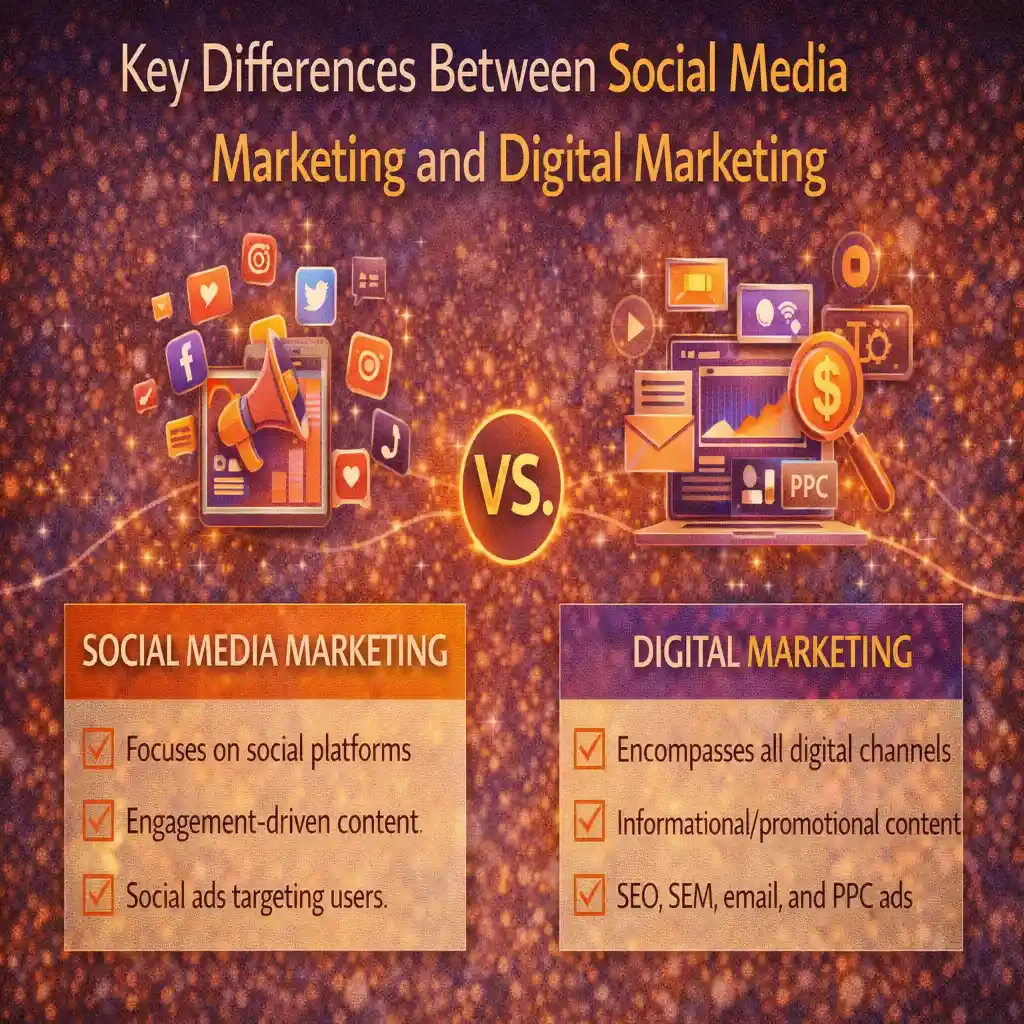
While social media marketing is a subset of digital marketing, there are key differences that set them apart. Social media marketing is primarily focused on building brand presence and engagement on social platforms, whereas digital marketing encompasses a wider range of online strategies, including social media marketing as one of its components.
One notable difference is the immediacy and interactivity of social media marketing vs digital marketing. Social media platforms enable real-time communication and engagement with users, allowing brands to respond promptly to comments, questions, and feedback. This level of interaction is less prevalent in other forms of digital marketing, which often involve more one-way communication methods such as email newsletters or PPC ads.
Another distinction lies in the types of content used in each approach. Social media marketing heavily relies on visual and multimedia content to capture attention and encourage sharing. In contrast, digital marketing strategies like SEO and content marketing may focus more on text-based content, such as blog posts, articles, and whitepapers, to drive organic traffic and establish thought leadership.
Target Audience: Who Benefits from Each Approach?
Understanding the target audience is crucial for determining which marketing approach is best suited for a business. Social media marketing is highly effective for brands looking to connect with younger, tech-savvy consumers who are active on social networks. Platforms like Instagram and TikTok are particularly popular among millennials and Gen Z, making them ideal for businesses targeting these demographics.
On the other hand, digital marketing can be advantageous for reaching a broader and more diverse audience. For instance, SEO and PPC campaigns can target users based on their search behavior and online activity, regardless of their age or social media preferences. This makes digital marketing a versatile option for businesses aiming to reach a wide range of potential customers.
Additionally, businesses with a B2B (business-to-business) focus may benefit more from digital marketing strategies such as LinkedIn advertising and email marketing. These methods allow for targeted outreach to professionals and decision-makers within specific industries, facilitating lead generation and nurturing through more formal channels
Strategies Used in Social Media Marketing
Social media marketing strategies are diverse and adaptable, catering to the unique dynamics of each platform. One common approach is to create and share engaging content that resonates with the target audience. This can include everything from inspirational quotes and behind-the-scenes glimpses to user-generated content and interactive polls. The key is to maintain a consistent brand voice and aesthetic, ensuring that all posts align with the overall marketing objectives.
Influencer marketing is another powerful strategy within social media marketing. By partnering with influencers who have a significant following and credibility within a niche, brands can tap into new audiences and gain authentic endorsements. Influencers can create sponsored posts, reviews, and collaborations that highlight the brand’s products or services, driving awareness and trust among their followers.
Paid social media advertising also plays a critical role in social media marketing. Platforms like Facebook and Instagram offer advanced targeting options, allowing businesses to reach specific demographics, interests, and behaviors. Sponsored posts, carousel ads, and video ads can be strategically placed to maximize visibility and engagement, ultimately driving traffic and conversions.
Strategies Used in Digital Marketing
Digital marketing encompasses a wide array of strategies, each designed to achieve specific goals. SEO is a foundational strategy that involves optimizing website content, structure, and performance to improve search engine rankings. By conducting keyword research, creating high-quality content, and building backlinks, businesses can increase their organic visibility and attract more visitors.
PPC advertising is another essential digital marketing strategy, providing immediate results through paid placements. Advertisers bid on keywords relevant to their products or services, and their ads appear at the top of search engine results or on relevant websites. PPC campaigns can be highly targeted, allowing businesses to reach users who are actively searching for their offerings.
Content marketing is a long-term strategy focused on creating and distributing valuable content to attract and engage an audience. This can include blog posts, articles, ebooks, videos, and infographics. The goal is to provide information that addresses the needs and interests of the target audience, establishing the brand as a trusted authority and driving organic traffic over time.
Measuring Success: Metrics for Social Media vs Digital Marketing
Measuring the success of social media marketing involves tracking various engagement metrics. Key performance indicators (KPIs) include likes, shares, comments, and follower growth. These metrics provide insights into how well the content resonates with the audience and the level of interaction it generates. Additionally, social media analytics tools can track the reach and impressions of posts, helping businesses understand their overall visibility.
For digital marketing, success is often measured through metrics such as website traffic, conversion rates, and return on investment (ROI). SEO performance can be evaluated by tracking organic search rankings, click-through rates (CTR), and the number of backlinks. PPC campaigns are assessed based on metrics like cost per click (CPC), conversion rate, and the overall cost per acquisition (CPA).
Email marketing metrics include open rates, click-through rates, and unsubscribe rates, providing insights into the effectiveness of email campaigns in engaging and retaining subscribers. By analyzing these metrics, businesses can refine their strategies and optimize their efforts to achieve better results.
When to Use Social Media Marketing vs Digital Marketing
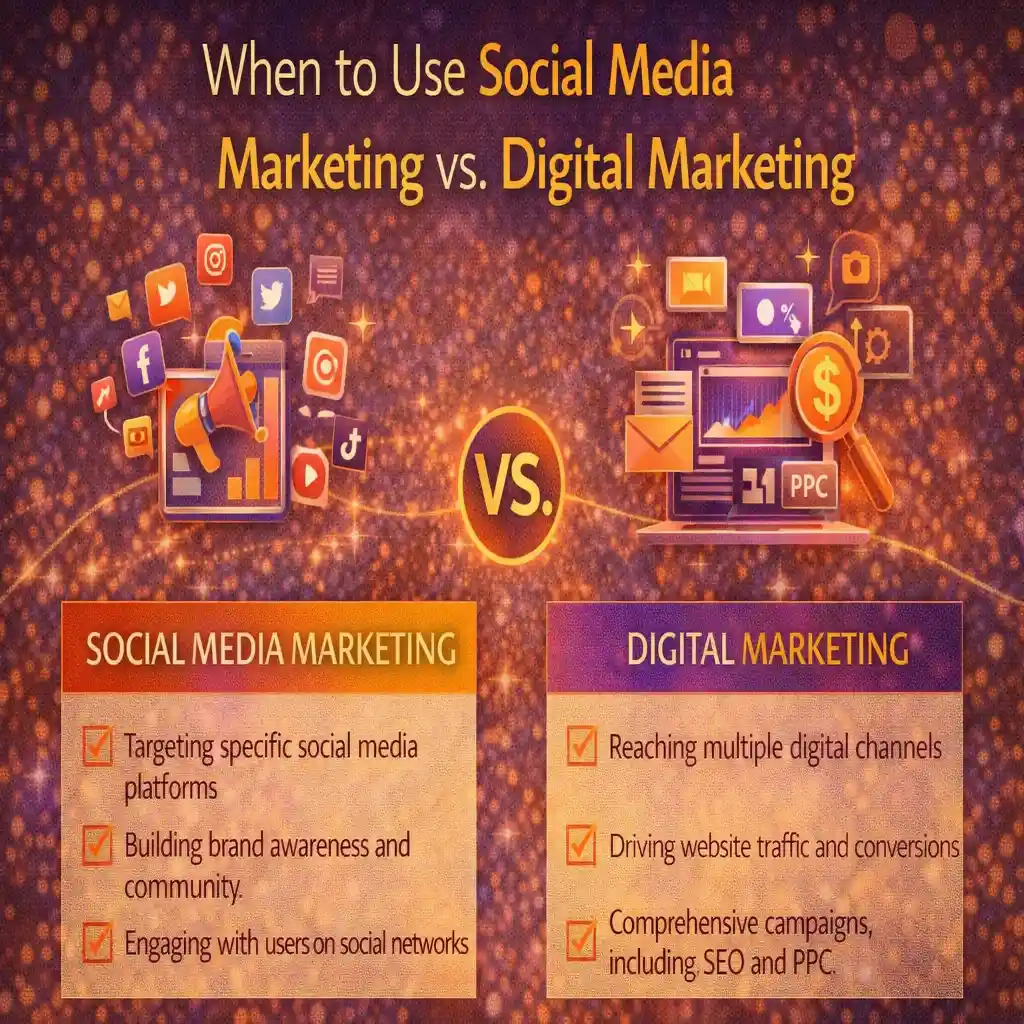
Deciding when to use social media marketing versus digital marketing depends on the business goals and target audience. Social media marketing is ideal for building brand awareness, fostering community engagement, and creating a strong online presence. It is particularly useful for businesses looking to connect with younger audiences and leverage visual storytelling.
Digital marketing, with its broader scope, is suitable for achieving a wide range of objectives, from driving website traffic and generating leads to enhancing brand authority and increasing sales. Businesses with a diverse target audience or complex sales funnels may benefit more from a comprehensive digital marketing strategy that includes SEO, PPC, email marketing, and content marketing.
Ultimately, the choice between social media marketing and digital marketing is not mutually exclusive. Many businesses find success by integrating both approaches, leveraging the strengths of each to create a cohesive and effective marketing strategy. By understanding the unique benefits and applications of each method, businesses can make informed decisions that align with their goals and resources.
Conclusion: Choosing the Right Strategy for Your Business
In conclusion, social media marketing and digital marketing each offer distinct advantages and can be tailored to meet specific business goals. Social media marketing excels in building brand engagement and fostering real-time interactions with consumers, making it ideal for brands aiming to create a vibrant online community. Digital marketing, with its broader range of strategies, provides a comprehensive approach to reaching diverse audiences and driving measurable results.
Businesses should consider their target audience, objectives, and resources when deciding which strategy to prioritize. In many cases, a hybrid approach that combines the strengths of both social media and digital marketing will yield the best results. By leveraging the interactive nature of social media and the expansive reach of digital marketing, businesses can create a powerful and cohesive marketing strategy that drives growth and success.
Ultimately, the key is to remain adaptable and responsive to changing trends and consumer behaviors. By continuously analyzing performance metrics and adjusting strategies accordingly, businesses can stay ahead of the curve and achieve their marketing goals in an ever-evolving digital landscape.