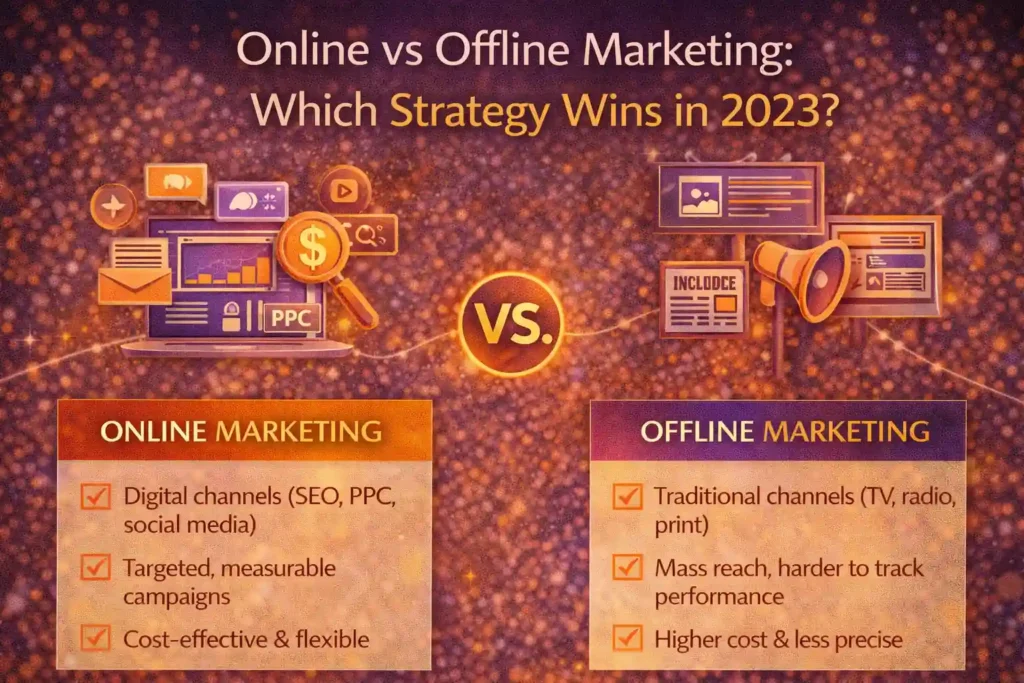

Key Differences Between Online and Offline Marketing
In the modern marketing landscape, understanding the fundamental differences between online and offline marketing is crucial for any successful campaign. Online marketing encompasses all promotional efforts that leverage the internet and digital platforms. This includes email marketing, social media campaigns, search engine optimization (SEO), and pay-per-click (PPC) advertising. Offline marketing, on the other hand, refers to traditional methods such as print advertising, billboards, direct mail, and events like trade shows and networking gatherings.
The primary difference lies in the medium used to reach potential customers. Online marketing relies heavily on digital technologies and platforms, allowing for real-time engagement and analytics. Offline marketing, however, tends to focus on physical media and face-to-face interactions. This means that online marketing often has a broader reach and can be more cost-effective, while offline marketing can offer a more personal touch and higher levels of local engagement.
Moreover, the measurement of success varies significantly between the two. Online marketing’s metrics are more immediate and precise, with tools that can track user behavior, click-through rates, and conversion rates almost instantaneously. Offline marketing, however, often relies on more traditional metrics such as sales lift, brand recognition surveys, and customer foot traffic, which can take longer to gather and analyze.https://www.geeksforgeeks.org/marketing/difference-between-online-marketing-and-offline-marketing-in-seo/
Advantages of Online Marketing in 2023
The evolution of digital technologies has positioned online marketing as a powerhouse in 2023. One of the most significant advantages of online marketing is its unparalleled reach. With billions of people using the internet daily, businesses can tap into a global audience with relative ease. Social media platforms like Facebook, Instagram, and Twitter enable brands to engage with consumers in real-time, fostering a sense of community and loyalty.
Additionally, online marketing offers incredible cost-efficiency. Methods such as content marketing, SEO , and email campaigns often require a lower financial investment compared to traditional advertising. Businesses can also leverage advanced targeting options to ensure their ads are seen by the right audience, thereby maximizing the return on investment. For instance, PPC campaigns on Google allow advertisers to bid on specific keywords, ensuring that their ads appear when potential customers are searching for related products or services.
Another key advantage is the ability to track and measure performance with high precision. Tools like Google Analytics and social media insights provide detailed data on user engagement, conversion rates, and overall campaign effectiveness. This allows marketers to make data-driven decisions, optimize their strategies in real-time, and achieve better results. The ability to split-test different elements of a campaign also means that businesses can continuously refine their approach to achieve the best possible outcomes.
Advantages of Offline Marketing in 2023
Despite the digital revolution, offline marketing retains several unique advantages that make it relevant in 2023. One of the most compelling benefits is the ability to create tangible, memorable experiences. Physical advertisements like billboards, brochures, and direct mail can leave a lasting impression on consumers. These methods often engage multiple senses, making the brand experience more immersive and memorable.
Offline marketing also excels in building personal connections and trust. Face-to-face interactions at trade shows, networking events, and in-store promotions allow businesses to build stronger relationships with their customers. This human element can significantly enhance brand loyalty and customer satisfaction. Consumers often appreciate the effort and personal touch that comes with offline interactions, which can lead to higher levels of trust and long-term commitment to the brand.
Furthermore, offline marketing can effectively target local audiences. Local newspapers, radio stations, and community events provide a platform for businesses to engage with their immediate community. This localized approach can be particularly beneficial for small businesses looking to establish a strong presence in their area. Additionally, offline marketing is less saturated than its online counterpart, meaning that a well-placed advertisement can stand out more and face less competition for consumer attention.
Current Trends in Online Marketing
As technology continues to advance, several key trends are shaping the online marketing landscape in 2023. One of the most notable trends is the rise of video content. Platforms like YouTube, TikTok, and Instagram Reels have skyrocketed in popularity, making video a critical component of modern marketing strategies. Brands are leveraging video content to tell compelling stories, showcase products, and engage with their audience in dynamic ways.
Another significant trend is the increasing importance of personalization. Consumers today expect tailored experiences that cater to their individual preferences and needs. Advanced data analytics and machine learning algorithms enable marketers to deliver personalized content, product recommendations, and advertisements. This level of personalization can significantly enhance user engagement and conversion rates, as consumers are more likely to respond positively to content that resonates with them personally.
The integration of artificial intelligence (AI) and automation is also transforming online marketing. AI-powered tools can analyze vast amounts of data to uncover insights and predict consumer behavior. Automation platforms allow businesses to streamline their marketing efforts, from email campaigns to social media management, enabling them to operate more efficiently and effectively. This not only saves time but also ensures that marketing efforts are consistent and optimized for performance.
Current Trends in Offline Marketing
While digital marketing trends are undoubtedly influential, offline marketing is also evolving to stay relevant in 2023. One of the key trends is the integration of technology with traditional methods. For example, QR codes are making a comeback, allowing consumers to seamlessly transition from offline to online experiences. By scanning a QR code on a billboard or print advertisement, consumers can instantly access a brand’s website, social media profiles, or special promotions.
Experiential marketing is another trend gaining traction in the offline space. Brands are creating immersive experiences that engage consumers on a deeper level. Pop-up shops, interactive installations, and branded events are just a few examples of how companies are using experiential marketing to create memorable interactions. These experiences not only generate buzz and excitement but also foster a stronger emotional connection between the brand and its audience.
Sustainability is also becoming a significant focus in offline marketing. Consumers are increasingly aware of environmental issues and prefer brands that demonstrate a commitment to sustainability. Companies are responding by using eco-friendly materials for print advertisements, reducing waste at events, and promoting sustainable practices through their marketing campaigns. This not only appeals to environmentally conscious consumers but also enhances the brand’s reputation and credibility.
Case Studies: Successful Online and Offline Campaigns
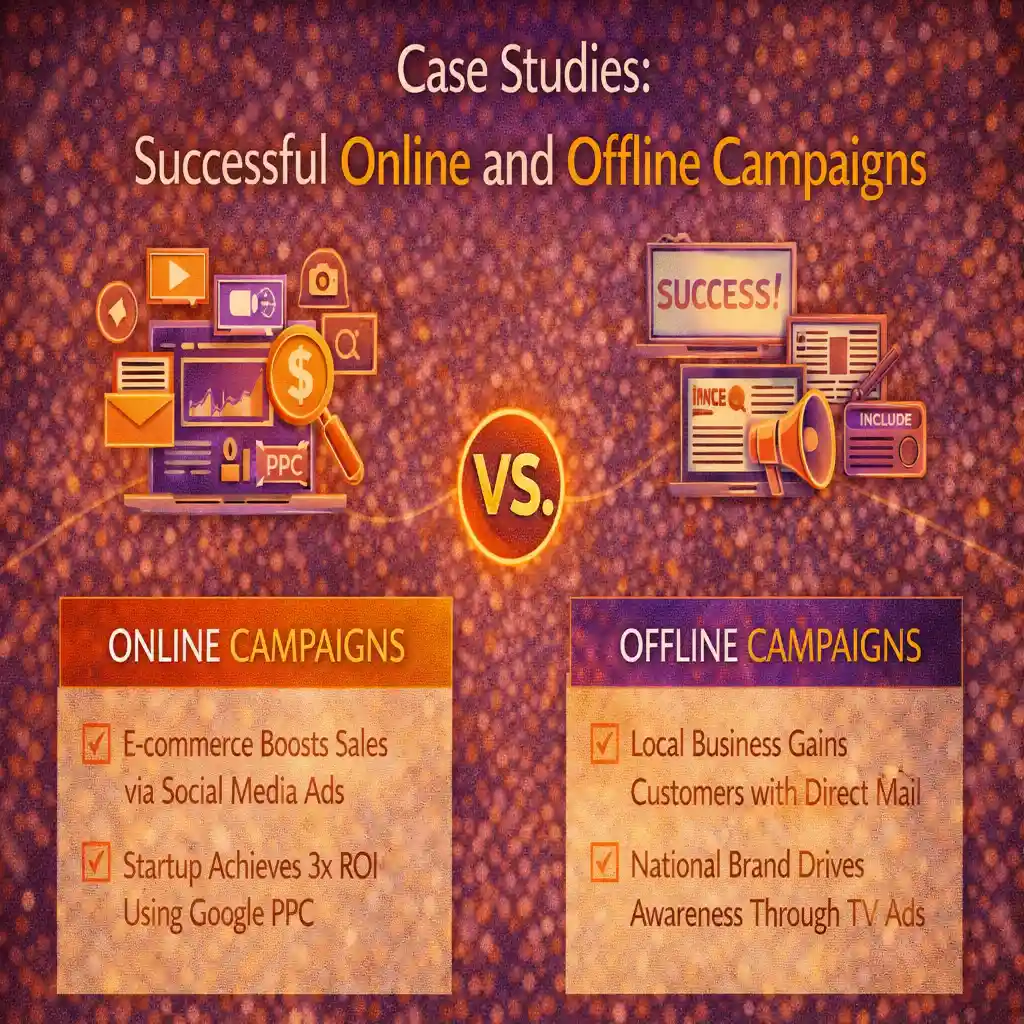
Examining real-world examples can provide valuable insights into the effectiveness of both online and offline marketing strategies. One notable online marketing success story is that of Dollar Shave Club. The company’s viral video campaign, which humorously highlighted the benefits of its subscription service, garnered millions of views and propelled the brand to success. The video’s clever storytelling and shareable content resonated with consumers, demonstrating the power of engaging, relatable online content.
In the offline realm, Coca-Cola’s “Share a Coke” campaign stands out as a prime example of effective marketing. The campaign involved printing popular names on Coke bottles and encouraging consumers to find and share bottles with their friends and family. This offline initiative created a sense of personalization and community, driving significant consumer engagement and boosting sales. The success of the campaign was further amplified by social media, where consumers shared their personalized Coke bottles, bridging the gap between offline and online marketing.
Another compelling case study is Nike’s “Dream Crazy” campaign, featuring Colin Kaepernick. The campaign, which included both online and offline elements, sparked widespread conversation and debate. The powerful messaging and bold stance on social issues resonated with a broad audience, generating substantial media coverage and consumer support. This case demonstrates the impact of a well-executed, multi-channel marketing strategy that leverages the strengths of both online and offline platforms.
How to Integrate Online and Offline Marketing Strategies
Successfully integrating online and offline marketing strategies can create a cohesive and comprehensive approach that maximizes reach and impact. One effective method is to use offline marketing to drive online engagement. For example, a print advertisement or billboard can include a QR code or a unique URL that directs consumers to a landing page or social media profile. This not only bridges the gap between offline and online but also provides a way to track the effectiveness of the offline campaign.
Another strategy is to create consistent branding and messaging across all channels. Whether a consumer encounters your brand online or offline, the experience should be seamless and cohesive. This means using the same logos, color schemes, and tone of voice in all marketing materials. Consistency helps reinforce brand identity and ensures that consumers have a unified perception of your brand.
Leveraging data from both online and offline channels can also enhance your marketing efforts. Online analytics can provide insights into consumer behavior and preferences, which can inform offline strategies. Conversely, feedback and data from offline interactions can help refine online campaigns. For instance, if a particular product is performing well in physical stores, you can highlight it in your online marketing efforts to capitalize on its popularity.
Measuring Success: Metrics for Online and Offline Marketing
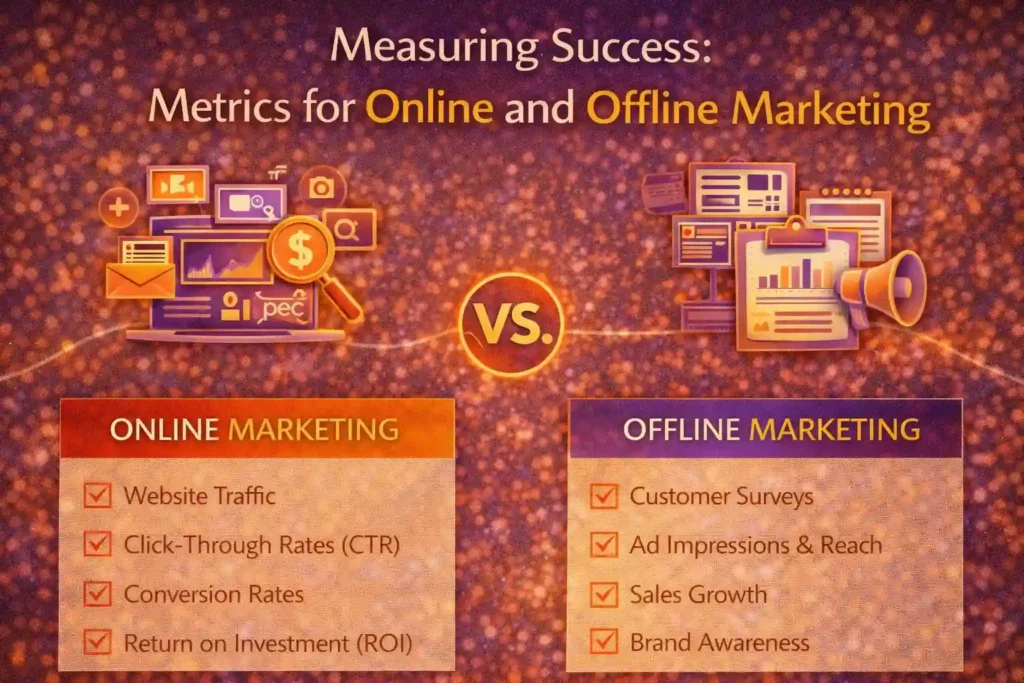
Measuring the success of marketing campaigns is essential for understanding their impact and making informed decisions. For online marketing, a variety of metrics can provide valuable insights. Key performance indicators (KPIs) such as website traffic, click-through rates, conversion rates, and social media engagement are commonly used to gauge the effectiveness of online efforts. Tools like Google Analytics and social media insights offer detailed data that can help marketers optimize their strategies in real-time.
Offline marketing, while more challenging to measure, also has its own set of metrics. Sales lift, or the increase in sales resulting from a marketing campaign, is a critical indicator of success. Tracking foot traffic in physical stores can also provide insights into the effectiveness of offline promotions. Additionally, brand recognition surveys and customer feedback can help assess the impact of offline marketing efforts on brand perception and consumer behavior.
Combining online and offline metrics can provide a more comprehensive view of your marketing performance. For example, tracking how many customers visit your website after seeing a billboard or print advertisement can help measure the offline campaign’s impact on online engagement. This holistic approach to measurement enables businesses to understand the full scope of their marketing efforts and make data-driven decisions to improve outcomes.
Conclusion: Choosing the Right Strategy for Your Business
In the ever-evolving marketing landscape of 2023, both online and offline strategies offer unique advantages and opportunities. Online marketing excels in reach, cost-efficiency, and precise measurement, making it a powerful tool for engaging with a global audience. Offline marketing, on the other hand, provides tangible experiences, personal connections, and effective local targeting, which can significantly enhance brand loyalty and trust.
Ultimately, the best approach for your business will depend on your specific goals, target audience, and resources. A balanced integration of both online and offline marketing strategies can create a cohesive and comprehensive approach that maximizes reach and impact. By leveraging the strengths of each method and continuously measuring and optimizing your efforts, you can develop a winning marketing strategy that delivers results in 2023 and beyond.