
Get ready to navigate the ever-changing landscape of SEO! Google’s May 2026 Core Update is set to reshape how websites rank. Discover what you need to know to stay ahead.
Key Changes and Features of the Update
Google’s May 2026 Core Update represents a significant shift in the way the search engine evaluates and ranks websites. One of the primary changes revolves around enhanced user experience (UX) metrics. Google has always prioritized providing users with the most relevant and useful information, but this update takes it a step further by integrating advanced UX signals. This includes factors such as page load times, mobile-friendliness, and interactivity. Websites that offer a seamless user experience are now more likely to be rewarded with higher rankings.
Another notable change is the increased emphasis on content relevance and authority. While Google’s algorithm has always valued high-quality content, the May 2026 update introduces more sophisticated methods for assessing content relevance. This means that the search engine can better understand the context and intent behind user queries, ensuring that the most pertinent information is presented. Additionally, the update includes enhanced mechanisms for evaluating the authority and trustworthiness of websites, favoring those with well-established credibility.
Finally, the update also brings about improvements in handling structured data. Google’s algorithm now has a more refined capability to interpret and utilize structured data, which helps in better understanding the content and context of webpages. This could lead to richer search results, such as enhanced snippets and more detailed information in search previews. For website owners, this means that incorporating structured data into their pages can provide a competitive edge in search rankings.
Impact on Search Rankings and Visibility
The May 2026 Core Update has had a profound impact on search rankings and visibility, as evidenced by the fluctuations observed across various industries. Some websites have experienced significant gains in their rankings, while others have seen notable declines. The enhanced focus on user experience has meant that websites with slow load times, poor mobile optimization, or intrusive interstitials have been penalized. Conversely, sites that prioritize a smooth and engaging user experience have been rewarded with improved visibility.
Another area of impact is the visibility of content across different types of searches. The update has led to a more nuanced understanding of search intent, resulting in more accurate and contextually relevant search results. For example, informational queries are now more likely to surface comprehensive and authoritative articles, while transactional queries might highlight e-commerce sites with excellent user reviews and clear purchasing pathways. This change underscores the importance of tailoring content to match the specific intent behind search queries.
Furthermore, the increased scrutiny on content relevance and authority has caused shifts in competitive landscapes. Websites that consistently produce high-quality, authoritative content have gained a competitive edge, often outranking those that rely on superficial or keyword-stuffed content. This shift emphasizes the need for businesses to invest in well-researched and expertly crafted content to maintain or improve their search rankings. The May 2026 update has made it clear that there are no shortcuts to achieving and sustaining high visibility in search results.
Understanding Google’s Core Algorithm Principles
To effectively navigate the changes brought about by Google’s May 2026 Core Update, it’s crucial to understand the core principles that underpin Google’s algorithm. At its heart, Google’s algorithm aims to deliver the most relevant and high-quality results to users. This is achieved through a complex interplay of various ranking factors, including content quality, user experience, and technical optimization. Understanding these principles can help website owners make informed decisions about their SEO strategies.
One of the fundamental principles is the prioritization of user intent. Google strives to understand the purpose behind each search query, whether it’s informational, navigational, transactional, or commercial. By accurately interpreting user intent, the algorithm can deliver results that best match the user’s needs. This principle underscores the importance of creating content that directly addresses the questions and concerns of your target audience. It’s not just about optimizing for keywords, but about providing genuine value.
Semantic Search is another concept which is a search technology that understands user intent and context behind words. It not only looks for keywords but also figures out what you really mean. Modern search engines like Google use this to give better answers, so your content must match intent, not just words.
Another key principle is the emphasis on expertise, authority, and trustworthiness (E-A-T). Google evaluates websites and content based on their credibility and reliability. This involves assessing the qualifications of content creators, the reputation of the website, and the quality of external links pointing to the site. High E-A-T signals can significantly enhance a website’s rankings. Therefore, building a strong online presence through authoritative content, reputable backlinks, and transparent information about your business is essential for SEO success.
How to Analyze Your Website’s Performance Post-Update
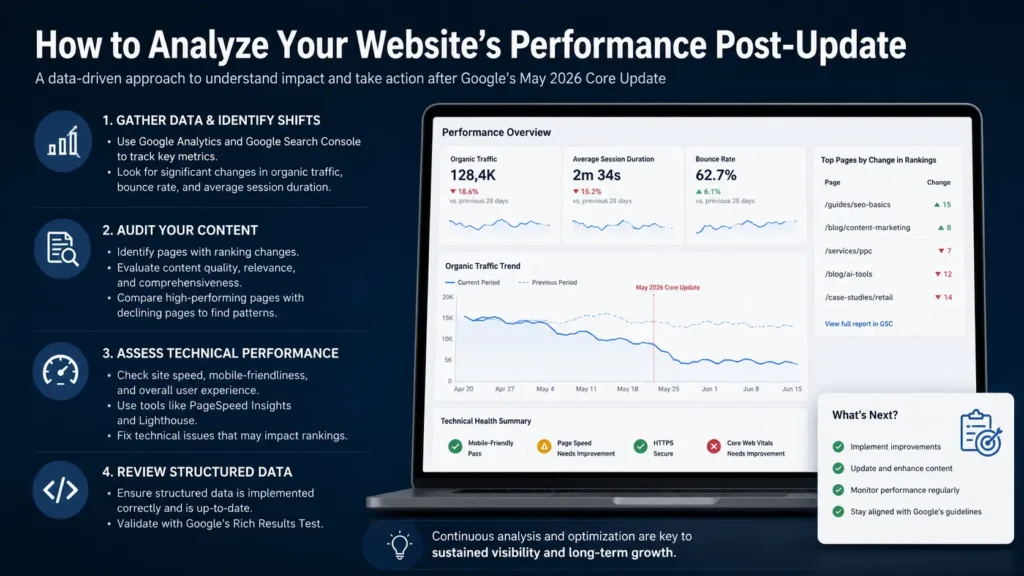
After the rollout of Google’s May 2026 Core Update, it’s important to thoroughly analyze your website’s performance to identify any changes in rankings and visibility. Start by using Google Analytics and Google Search Console to gather data on your site’s traffic, user behavior, and search performance. Look for any significant shifts in metrics such as organic traffic, bounce rate, and average session duration. These insights can help you pinpoint areas that may have been impacted by the update.
Next, conduct a comprehensive audit of your website’s content. Identify which pages have experienced changes in rankings and analyze the characteristics of those pages. Pay attention to factors such as content quality, relevance, and comprehensiveness. Compare high-performing pages with those that have declined to identify any patterns or discrepancies. This analysis can provide valuable clues about what aspects of your content may need improvement to align with the updated algorithm.
It’s also essential to assess your website’s technical performance. Use tools like PageSpeed Insights and Lighthouse to evaluate your site’s loading speed, mobile-friendliness, and overall user experience. Address any technical issues that could be negatively impacting your site’s performance. Additionally, review your website’s structured data implementation to ensure that it’s correctly configured and up-to-date. By conducting a thorough analysis, you can develop a targeted strategy to enhance your site’s performance post-update.
Essential SEO Strategies to Adapt to the Update
Adapting to Google’s May 2026 Core Update requires a strategic approach that focuses on enhancing both content quality and user experience. One of the most effective strategies is to prioritize the creation of high-quality, authoritative content. This involves conducting thorough research to understand the needs and preferences of your target audience, and producing content that addresses those needs comprehensively. Use data-driven insights to identify trending topics and emerging keywords, and create content that provides in-depth information and practical value.
Another critical strategy is to optimize your website for user experience. Ensure that your site loads quickly, is mobile-friendly, and offers a seamless navigation experience. Implementing responsive design, minimizing intrusive ads, and improving page load times can significantly enhance user satisfaction. Additionally, focus on creating engaging and interactive content that keeps users on your site longer. This can include multimedia elements such as videos, infographics, and interactive tools that enrich the user experience.
Technical SEO also plays a vital role in adapting to the update. Regularly audit your website for technical issues that could affect its performance, such as broken links, duplicate content, and crawl errors. Implement structured data to provide search engines with clear information about your content and context. Additionally, focus on building a strong backlink profile by earning links from reputable and authoritative websites. By combining these strategies, you can create a robust SEO framework that aligns with the core principles of Google’s updated algorithm.
Common Mistakes to Avoid After the Update
As you adapt to the changes brought by Google’s May 2026 Core Update, it’s important to be aware of common mistakes that could hinder your SEO efforts. One of the most prevalent mistakes is neglecting user experience. With the update placing a strong emphasis on UX metrics, failing to optimize your site for speed, mobile-friendliness, and ease of navigation can lead to significant drops in rankings. Ensure that your site provides a seamless and enjoyable experience for users across all devices.
Another common mistake is over-optimizing for keywords at the expense of content quality. While keywords remain an important aspect of SEO, stuffing your content with excessive keywords can result in a poor user experience and lower rankings in AI Overview and traditional search result. Instead, focus on creating high-quality content that naturally incorporates relevant keywords. Aim to provide valuable and informative content that addresses the needs and questions of your audience. Remember, Google’s algorithm rewards content that offers genuine value.
Additionally, failing to stay updated with SEO best practices can be detrimental. The landscape of SEO is constantly evolving, and staying informed about the latest trends and algorithm changes is crucial. Relying on outdated tactics, such as buying low-quality backlinks or using black-hat SEO techniques, can lead to penalties and decreased visibility. Continuously educate yourself and your team about the latest developments in SEO and adapt your strategies accordingly to stay ahead of the competition.
Tools and Resources for Monitoring Changes
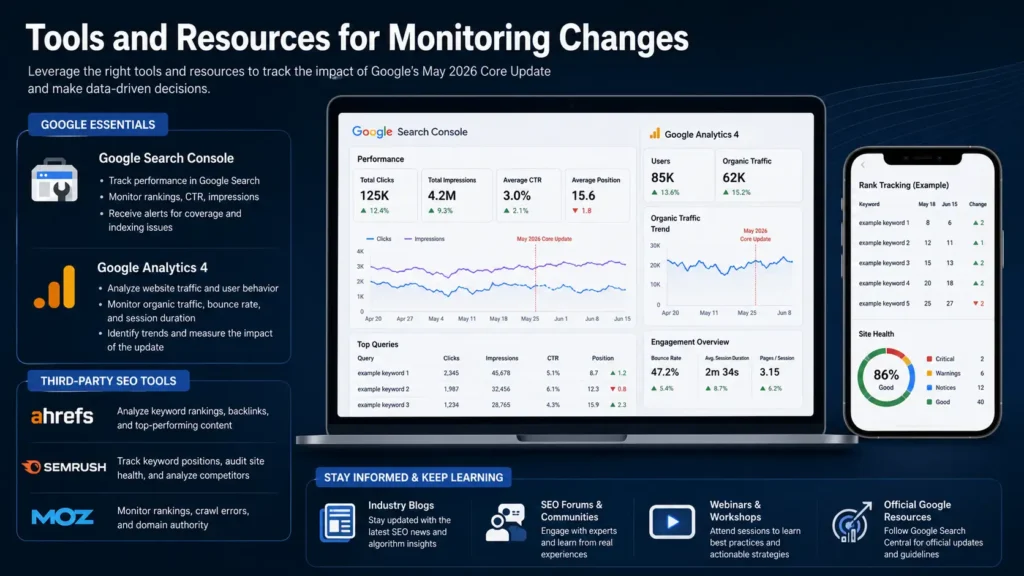
Monitoring the impact of Google’s May 2026 Core Update on your website requires the use of various tools and resources that provide valuable insights and data. Google Search Console is an essential tool that offers detailed information about your site’s search performance, including changes in rankings, click-through rates, and impressions. It also provides alerts for any issues that may affect your site’s visibility, allowing you to address them promptly.
SEO for zero click searches is also become important now because due to AI overview people get answer directly above.
Google Analytics is another powerful tool that helps you track and analyze your website’s traffic and user behavior. By examining metrics such as organic traffic, bounce rate, and average session duration, you can gain a better understanding of how the update has affected your site’s performance. Use the data to identify trends and patterns, and make informed decisions about your SEO strategy.
In addition to Google’s tools, consider using third-party SEO tools such as Ahrefs, SEMrush, and Moz. These platforms offer comprehensive insights into keyword rankings, backlink profiles, and competitive analysis. They can help you identify opportunities for improvement and track your progress over time. Additionally, staying updated with industry blogs, forums, and webinars can provide valuable information about the latest SEO trends and best practices. By leveraging these tools and resources, you can effectively monitor changes and optimize your website for success.
Case Studies: Websites Affected by the Update
Examining case studies of websites affected by Google’s May 2026 Core Update can provide valuable lessons and insights into how different strategies and practices impact search rankings. One notable case study involves a popular e-commerce website that experienced a significant drop in rankings post-update. Upon analysis, it was discovered that the site had numerous technical issues, including slow page load times and poor mobile optimization. By addressing these issues and enhancing the overall user experience, the website was able to recover its rankings and improve its visibility.
Another case study focuses on a content-driven website that saw a substantial increase in rankings after the update. This site had consistently produced high-quality, authoritative content that addressed the needs and interests of its audience. The May 2026 update’s emphasis on content relevance and authority rewarded the site with higher rankings and increased organic traffic. This case highlights the importance of investing in well-researched and expertly crafted content to achieve long-term SEO success.
A third case study involves a local business website that initially experienced a decline in visibility. The analysis revealed that the site had neglected its local SEO efforts, such as optimizing for local keywords and obtaining positive reviews. By implementing a targeted local SEO strategy and improving its online reputation, the business was able to regain its rankings and attract more local customers. These case studies underscore the importance of a holistic and adaptive approach to SEO that aligns with the core principles of Google’s algorithm.
Conclusion and Future Outlook for SEO Best Practices
As we navigate the changes brought about by Google’s May 2026 Core Update, it’s clear that the landscape of SEO continues to evolve. The update’s focus on user experience, content relevance, and authority underscores the importance of providing genuine value to users. To stay ahead in this dynamic environment, website owners and SEO professionals must prioritize high-quality content, seamless user experiences, and strong technical optimization.
Looking to the future, it’s likely that Google’s algorithm will continue to evolve with an increasing emphasis on user-centric factors. This means that staying informed about the latest SEO trends and developments will be crucial. Investing in ongoing education and staying updated with industry best practices can help you adapt to future algorithm changes and maintain a competitive edge.
Ultimately, the key to SEO success lies in a holistic and adaptive approach. By understanding and aligning with Google’s core principles, continuously monitoring and analyzing your website’s performance, and implementing effective SEO strategies, you can achieve sustainable growth and visibility in search rankings. The May 2026 Core Update serves as a reminder that there are no shortcuts to SEO success – it’s about providing real value to users and continuously striving for excellence.