SEO for Zero-Click Searches: How to Get Traffic When Google Steals the Click?
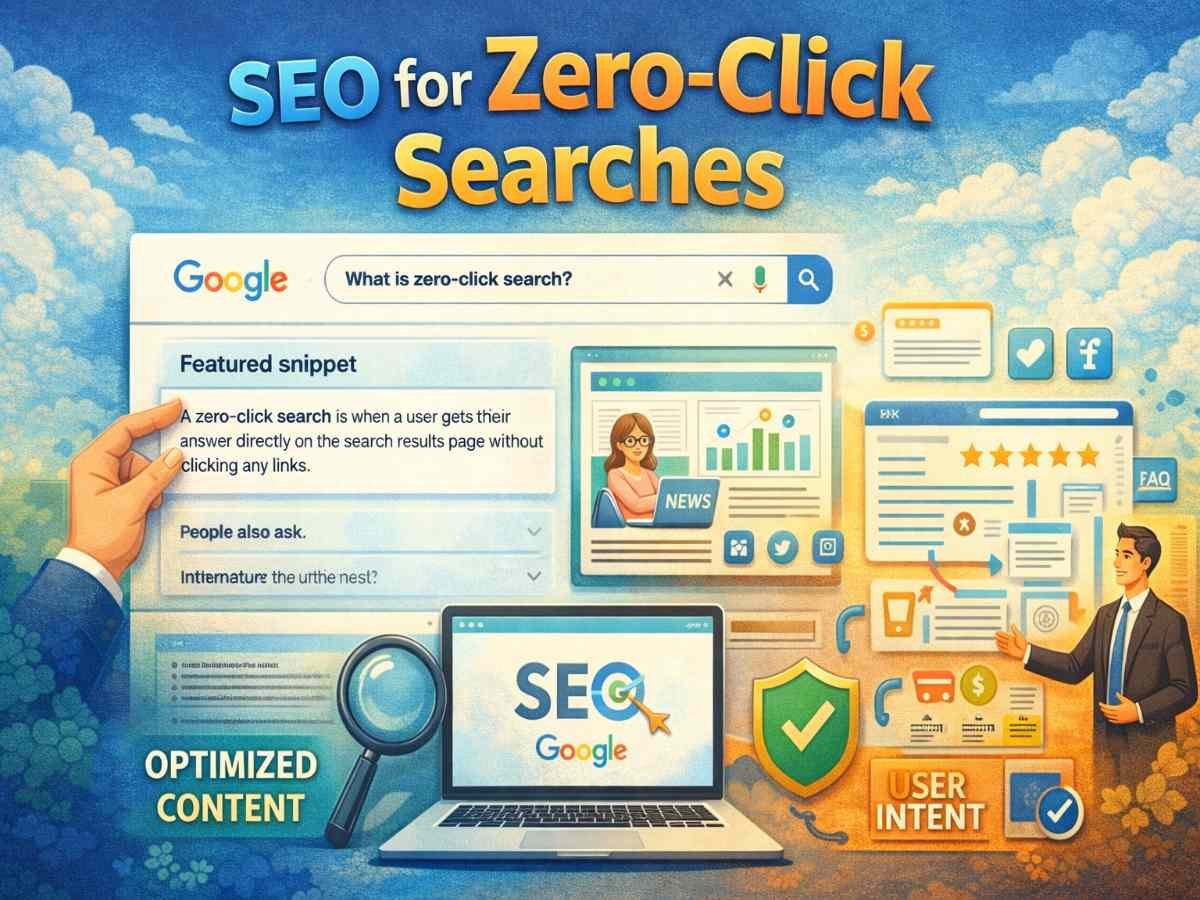
Zero-click SEO focuses on getting content recognised as the answer in Google without users needing to click a link. With featured snippets, AI search ranking, and Google’s MUVERA update, more searches now show answers directly on the results page. Success is measured by answer ownership rather than clicks. Businesses that adapt can maintain visibility even when traffic is invisible.
By 2026, AI Overviews and Search Generative Experience (SGE) dominate search results. When Google provides direct answers, users rarely click links, so traditional traffic drops. Brands that secure featured snippets or authoritative answers still influence decisions. Being cited ensures trust and authority, even if clicks are minimal.
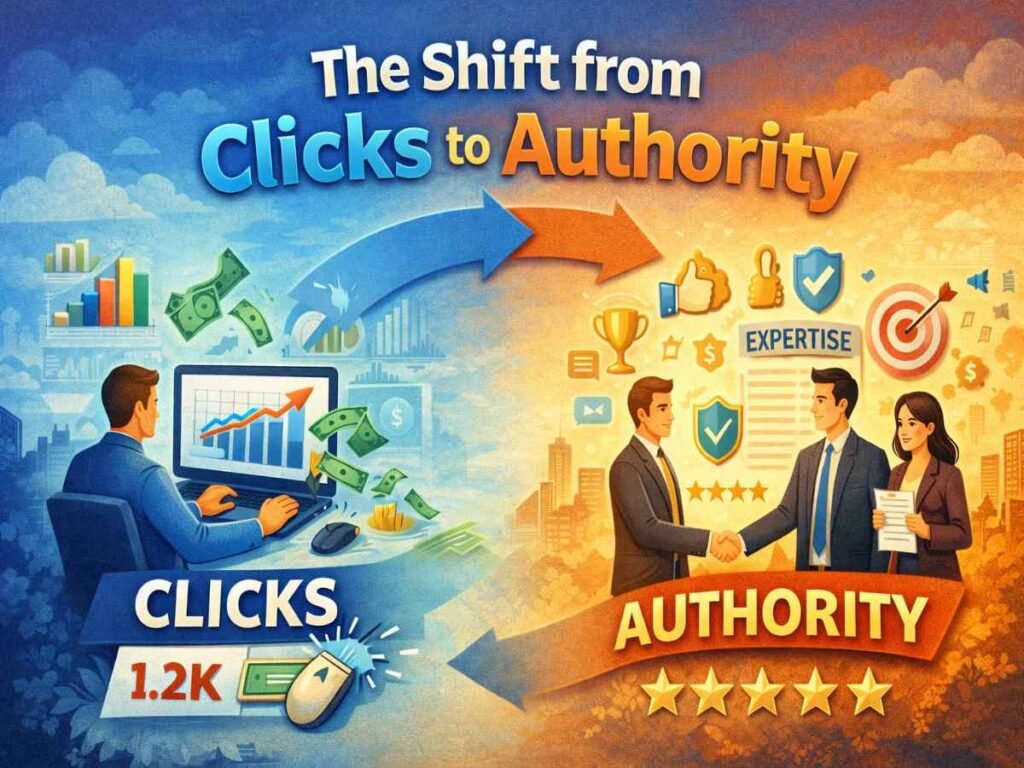
Introduction: The Shift from Clicks to Authority
Zero-click search is changing how businesses think about search visibility. Fewer users click through to websites, but appearing in AI Overviews, snippets, and knowledge panels still builds strong brand authority. Modern SEO now balances attention between human readers and AI systems, a framework often called the dual-reader approach. Brands that focus on both can maintain trust while boosting recognition in search results.
What is a Zero-Click Search?
- A search where Google answers the query directly on the SERP.
- Includes Featured Snippets, Knowledge Panels, and AI Overviews.
Reduces traditional click-through traffic but increases brand visibility
Why Zero-Click Matters in 2026
- Establishes trust before a user even clicks.
- Enhances branded search signals, making brand recall a ranking factor.
Signals expertise to AI agents performing “agentic searches.”
The Dual-Reader Challenge
- Humans seek depth and actionable insights.
- AI looks for concise, well-structured definitions.
- Content must satisfy both at once; for example, a digital marketing manager might scan a snippet to gauge authority before deciding to explore the full page.
Crafting Snippet-Worthy Content
Featured snippet optimisation is a key method for creating content that search engines can highlight directly. It focuses on clear structure, easy-to-read definitions, and patterns that AI can quickly understand. Doing this helps content appear at the top of search results while still being useful to real readers. Using simple, organised writing makes pages more likely to earn clicks and build trust.
The Definition-First Paragraph
Start each section with a clear definition. For example, “Featured snippet optimisation is the process of arranging content so search engines can show it directly in results.” Keep this around 40–60 words to match the snippet length. Then, add a short explanation for humans, giving context or examples. Linking to trusted SEO sources can strengthen authority and show expertise.
Using Parallel Syntax for Lists
Parallel syntax helps lists read smoothly and appeals to both humans and AI. Begin every bullet with a strong action verb. For example: Identify trends, Structure paragraphs, simplify explanations. Keeping the same pattern makes content predictable for AI and easier to scan for readers.
Entity-Based Writing (Topic Modelling)
Include relevant entities naturally in your content. Mention things like Knowledge Panels, Search Generative Experience, and User Intent. Avoid forcing keywords; focus on related topics to show authority. This approach signals expertise and helps search engines understand the content’s depth.
Conversational FAQ Headers
Use full questions as H3 headers to match search intent. For instance, “Why is featured snippet optimisation important for small businesses?” Answer briefly first, then provide examples or context. This structure satisfies both quick readers and those who want deeper insights.
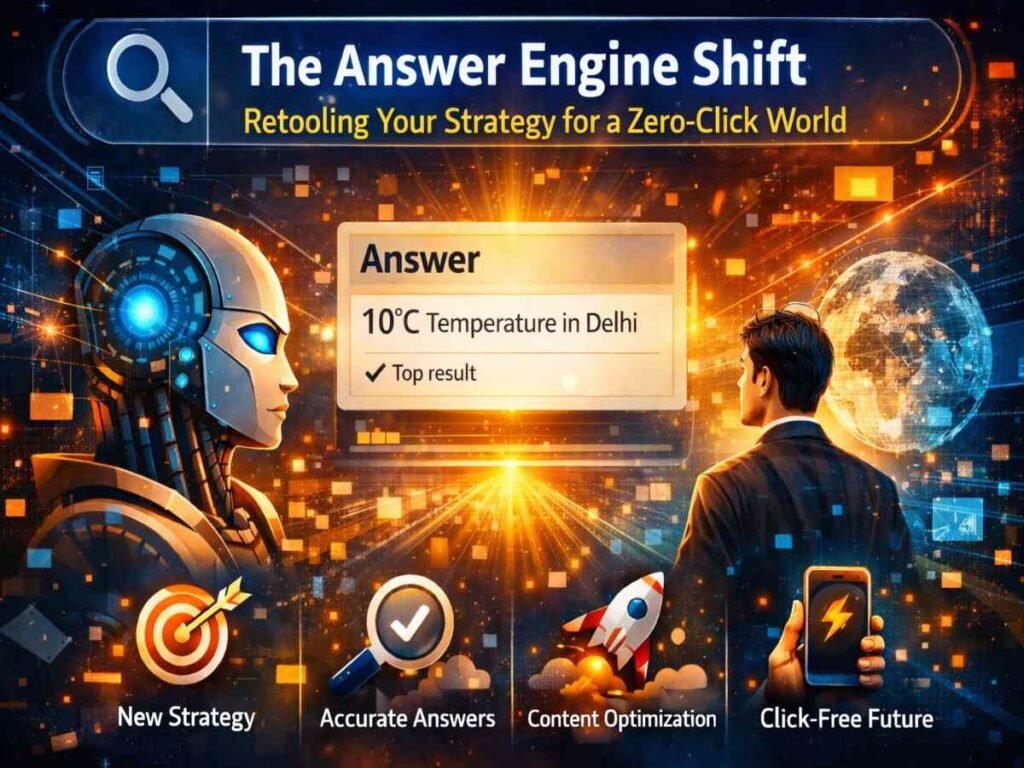
The Answer Engine Shift: Retooling Your Strategy for a Zero-Click World
SEO in 2026 demands a fresh approach that goes beyond chasing clicks. Brands must rethink how content serves both people and AI systems. The goal is visibility in AI-driven search while keeping readers engaged and informed.
Understanding the Answer Engine Shift
The AI search shift means results are increasingly pulled directly into answer boxes or voice responses. Users get what they need without visiting a site, which makes traditional click-focused SEO less effective. Businesses need a zero-click strategy that positions their content as authoritative and easily referenced by AI.
Designing Content for AI Agents
Content should be organised around user intent clusters instead of individual keywords. Entities, relationships, and context must be clear so AI can understand and surface them. Structured formatting like lists, tables, and clear headings helps machines parse information efficiently.
Structuring for Authority and Curiosity
Forward-linking between articles and creating curiosity gaps encourages longer reading sessions. This improves dwell time and signals relevance to both humans and AI agents. Building content as a trusted source increases the likelihood of being cited in AI-generated responses.
Measuring Zero-Click Success
Success is measured not just by clicks but by visibility in AI answers and snippet features. Track impressions, citation frequency, and engagement on supporting content. Over time, a well-executed zero-click strategy boosts brand authority and long-term recognition.
Advanced 2026 Strategies for Zero-Click Traffic
AI-first SEO is now the foundation for capturing traffic without relying on clicks. Websites must balance what algorithms understand with what readers value. By combining data-driven techniques with practical experience, brands can secure visibility and authority in search results. These strategies focus on engagement, dwell time, and subtle guidance toward conversions.
The Dual-Reader Framework in Action
Nugget: Dual-reader content ensures search engines and humans are both satisfied. AI parses structured signals, headings, and context, while human-friendly explanations increase retention and sharing, creating a balance that drives zero-click authority in 2026.
Nuance for Humans: For instance, an article can highlight key stats for the algorithm and follow with a short scenario showing how a user might apply the information. This approach prevents readers from bouncing while AI still indexes the page effectively. Providing examples like “step applied in a small business” makes content relatable and practical.
Show Hidden Experience
- Highlight real industry realities without using personal anecdotes.
- Example: An e-commerce manager might see 10,000 impressions but only 500 clicks; optimising meta and structured content helps capture value even without clicks.
- Show expertise by revealing patterns and insights professionals notice, such as common user pain points or frequent search variations.
Use comparisons and mini case studies to illustrate what works in practice.
Creating Curiosity Gaps
- Give an initial answer, then hint at deeper strategies to keep readers engaged.
- Example: Explain the basic step of a content funnel, then suggest that advanced optimisation will be detailed later.
- Transition readers from snippet-level satisfaction to full content consumption.
Encourage scrolling and engagement while keeping zero-click metrics high.
Post-Search Intent Optimisation
- Anticipate what a reader wants after a zero-click answer.
- Include sections like Implementation, Step-by-Step Tips, and Measurement Metrics.
- Example: After listing top tools, guide usage frequency and common mistakes.
Satisfying next-step intent boosts dwell time, which is critical for AI-first ranking signals in 2026.
Structuring for Agentic Search
- Use numbered lists for processes and tables for comparisons.
- Clearly label categories and subcategories for snippet extraction.
- Example: A table comparing SEO techniques with expected impact makes content machine-readable and actionable.
Well-structured content allows AI agents like Gemini or ChatGPT to interpret and surface information directly.
Measuring and Maintaining Zero-Click Authority
Zero-click measurement is essential for understanding how often users see your content without clicking. Monitoring branded search signals and snippet retention helps maintain authority in search results. By refining strategies based on these insights, content can stay visible and trusted.
Tracking Branded Search Signals
- Monitor searches containing your brand name to see how often it appears.
- Evaluate snippet citations versus actual clicks to identify content influence.
Adjust content to reinforce authority and improve recall among users.
Auditing Snippet Performance
- Identify which queries return your content as a featured snippet.
- Use real scenarios to observe why some snippets perform better than others.
Refine headings, entity usage, and list formatting to increase snippet visibility.
Continuous Semantic Optimisation
- Update content to include new related entities as they emerge.
- Ensure topic clusters cover the full spectrum of user intent.
- Keep sentences concise but semantically rich for easier AI parsing and indexing.
By following these steps, websites can strengthen zero-click authority while keeping content relevant and engaging.
Conclusion: From Clicks to Citation
Zero-click authority is now a key marker of AI-first SEO success. Brands that focus on owning answers, not just chasing clicks, see higher brand recall and trust from Google. This approach balances satisfying AI with engaging real readers, making content genuinely useful.
Ownership of information means providing clear, reliable answers that people remember and share. As 2026 SEO trends evolve, the brands that secure answer ownership will lead, turning each snippet into lasting recognition and authority online.
Read More Related Articles
Frequently Asked Questions
What is zero-click SEO, and why is it important?
Zero-click SEO is the practice of creating content that answers user queries directly on the search results page. It is important because it positions a brand as an authority, improves visibility, and captures attention without relying on clicks. This can lead to stronger brand recognition over time.
How do I optimise content for AI agents instead of clicks?
Focus on clear, concise answers and structured data. Use lists, tables, and bullet points that AI can easily read. Including direct answers to common questions increases the chance that AI or search features will surface the content.
Can featured snippets increase brand recall even without traffic?
Yes. Even if users do not click through, seeing the brand name in a snippet repeatedly strengthens recognition and trust. It acts like free branding on search results pages.
Which types of queries are most likely to trigger zero-click results?
Informational queries, “how-to” questions, and quick facts often trigger zero-click results. People want immediate answers for things like definitions, calculations, or simple instructions.
What role do entities and semantic clusters play in snippet success?
Entities and semantic clusters help search engines understand the context of content. Well-structured topics around related keywords increase the chance of earning snippets and appearing in AI-driven answers.