
Digital Arka

Technology’s Next Wave

Three Surprising Truths About Technology's Next Wave

Beyond the Hype: Three Surprising Truths About Technology's Next Wave

It’s impossible to ignore the constant flood of new AI tools and technology announcements. The daily deluge of demos and press releases can feel both exhilarating and completely overwhelming. But if you want to understand where technology is truly heading, you have to look past the flashy product launches. The most important shifts aren’t in the slick keynotes; they’re hidden in academic papers, user-experience reports, and dense technical benchmarks.

This article distills three of the most surprising and impactful lessons learned from digging into these sources. These truths are interconnected: the shift to unbounded data necessitates the rise of autonomous agents, while the friction of using bleeding-edge tools reveals the true cost of this new paradigm. They reveal deeper truths about the fundamental changes happening under the surface—changes that will reshape how we work with data, interact with new tools, and even define our role alongside intelligent machines.

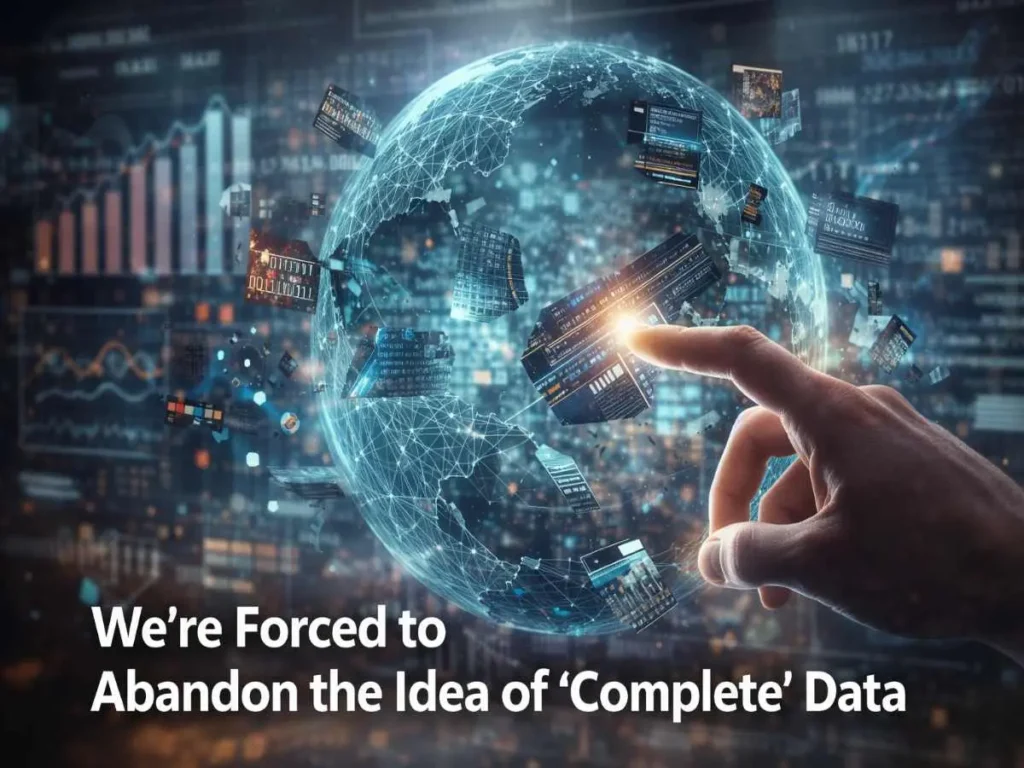
1. We're Forced to Abandon the Idea of ‘Complete’ Data

For decades, data processing has operated on a simple, comforting assumption: eventually, all the data will arrive. We wait for the daily logs, close out the quarterly sales figures, and then run our analysis on a finite, complete dataset. A foundational paper from Google Research, “The Dataflow Model,” argues that this entire mindset is now obsolete.

The paper’s core argument is that for most modern systems—from web logs and sensor networks to mobile usage statistics—data is an unbounded, unordered, and never-ending stream. It doesn’t have an “end.” It just keeps arriving, often out of sequence. To truly handle this reality, we must fundamentally change our approach.
Three Surprising Truths About Technology's Next Wave

“We as a field must stop trying to groom unbounded datasets into finite pools of information that eventually become complete, and instead live and breathe under the assumption that we will never know if or when we have seen all of our data…”

This is a profound and counter-intuitive shift. The traditional “batch processing” model is about waiting until you have all the information to calculate the final, correct answer. The new model required for streaming data is about generating the best possible answer right now, with the understanding that you’ll need a principled way to refine that answer as new, and potentially contradictory, information arrives later. It’s a move from a world of static certainty to one of dynamic, continuous adaptation.

2. The Cutting Edge Is Both Astonishing and Deeply Frustrating

The experience of using bleeding-edge AI tools is a study in contrasts. The results can be genuinely revolutionary, yet the process is often riddled with hidden costs and show-stopping flaws.

On the “astonishing” side, consider the user experiences with Google’s VEO 3, an AI video generator. Early adopters have described its outputs as “insanely good” and “unsettlingly lifelike.” Its ability to generate video and synchronized audio in a single step has been called a “game-changer,” collapsing what was once a multi-step, multi-tool process into a single text prompt.

But pivoting to the “frustrating” reality reveals the hidden price of innovation. A synthesis of numerous user reports on VEO 3 highlights significant and common pain points:

  • The Steep Cost: Access requires the top-tier “AI Ultra” subscription, priced at 249.99 per month. As one Reddit user noted, “250 is a lot for just AI enthusiasts.” This immediately places the tool out of reach for casual creators and hobbyists.
  • “Credit Anxiety”: The system operates on credits, which are consumed with each attempt to generate a video. This creates stress for users, as failed generations—which are common—still use up valuable credits, costing real money with nothing to show for it.
  • Show-Stopping Bugs: The most common technical glitch is a critical one: the tool frequently produces silent videos, even when explicitly prompted for dialogue or sound. This makes one of its core features “completely unreliable.” One user detailed an experience where, out of 30 video generation attempts, 17 had no sound and the other 13 failed completely.

This tension between advertised power and practical reality isn’t just for creatives; it runs deep into the technical infrastructure powering modern business. A benchmark conducted by Yahoo comparing Google Dataflow to Apache Flink reported that Dataflow was “1.5 – 2 times more cost effective.” However, this impressive cost-effectiveness was contingent on a crucial detail hidden in the configuration: it required activating a specific “resource-based billing” flag. As the report reveals, for any user who failed to enable this non-default setting, “Dataflow was five times more expensive.”

This matters because the promise of revolutionary technology often comes with a steep, and often hidden, price—not just in dollars, but in reliability, complexity, and the sheer effort required to make it work as advertised.

3. The Real Shift Isn't Better Tools, It's Autonomous Agents

While we are focused on using better tools to do our work, the most significant change on the horizon is a move from “manual execution to agentic delegation.” This isn’t just about better automation; it’s a fundamental shift in our relationship with software.

The old workflow is synchronous: you tell a tool to perform a task, and you wait for it to finish. The new, agentic workflow is asynchronous: you assign a mission to an AI agent, which then works in the background to achieve the goal. You are no longer the doer; you are the director.

Google’s ecosystem provides concrete examples of this emerging reality:

  • The Autonomous Maintainer: An agent like Google Jules can be given a high-level mission for maintaining a software project. A user can assign it a task like, “Update all dependencies on our marketing site and fix any breaking changes.” The agent will then perform the work, run tests to verify the changes, and submit the code for human review, all without direct, step-by-step instruction.
  • The Workflow Automator: Tools like Google Workspace Studio allow users to build no-code agents to handle complex business processes. For instance, a marketing team could build an agent to monitor a specific inbox. When a new lead comes in, the agent automatically extracts the contact information, enriches it with data from other sources, and notifies the correct sales team member in chat. This entire workflow runs continuously without any human intervention.

This transition implies a profound change in required expertise. The value is no longer in knowing how to configure the software, but in being able to precisely define a mission, set constraints, and evaluate the results of an autonomous agent. The most valuable employees will be excellent brief-writers and discerning critics of AI-generated work. This is more than just an upgrade to existing automation. It changes our primary role from operating software to defining objectives for it. We are moving from being hands-on executors to strategic delegators who oversee a team of autonomous AI agents.

Conclusion: From Doer to Director

The uncomfortable reality of our technological future is one of constant adaptation. The unending streams of data have forced us to abandon certainty, the very tools designed to manage this chaos are themselves a frustrating mix of brilliance and brokenness, and our only viable path forward is to shift our role from hands-on “doer” to strategic “director” of autonomous systems.

As intelligent agents take over the “how,” the ultimate human advantage will be mastering the “why.” Are we prepared for a future where the most valuable skill is no longer finding the answer, but having the wisdom to ask the right question?

Leave a Reply

Your email address will not be published. Required fields are marked *