Understanding Google Algorithms: Your Guide to SEO Success
Unlock the secrets behind Google algorithms to boost your SEO success. Discover strategies to navigate changes and enhance your online visibility effortlessly.
The Evolution of Google Algorithms
Google’s algorithms have undergone significant changes since the search engine’s inception in the late 1990s. Initially, Google’s ranking system was relatively simple, relying heavily on the number of backlinks pointing to a website. However, as the internet grew and became more complex, so too did the need for more sophisticated algorithms to ensure users received the most relevant and high-quality search results. The first major update, known as the “Florida Update,” rolled out in November 2003 and marked the beginning of Google’s commitment to refining its search algorithms.
Over the years, Google has introduced numerous updates designed to improve the accuracy and reliability of its search results. Each update targets different aspects of the search process, from combating spammy and low-quality content to improving user experience and understanding search intent. Notable updates like Panda, Penguin, and Hummingbird have each played a crucial role in shaping the modern SEO landscape. These updates have not only changed how websites are ranked but have also influenced the strategies that SEO professionals employ to achieve higher rankings.
As technology continues to evolve, so too will Google’s algorithms. The introduction of machine learning and artificial intelligence has further refined Google’s ability to deliver precise search results. Google’s RankBrain, for example, is an AI-based system that helps interpret complex search queries and deliver more accurate results. Understanding the history and evolution of Google algorithms is essential for anyone looking to succeed in the ever-changing world of SEO.
Key Google Algorithms You Should Know
Several key Google algorithms have had a profound impact on the way websites are ranked and how SEO strategies are developed. One of the most significant updates was the Panda algorithm, introduced in February 2011. Panda aimed to reduce the visibility of low-quality content and improve the rankings of high-quality sites. It evaluated factors such as content originality, user engagement, and overall site quality, penalizing websites with thin or duplicate content.
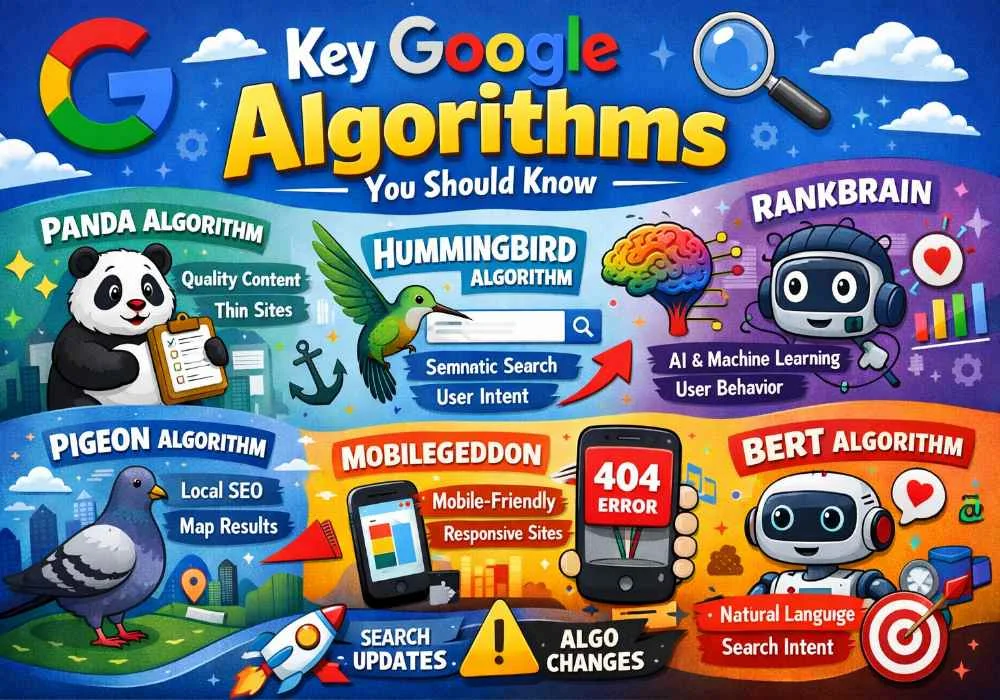
Another critical algorithm is Penguin, launched in April 2012. Penguin’s primary focus was to combat web spam, particularly practices such as keyword stuffing and manipulative link schemes. Websites that engaged in these black-hat SEO tactics saw significant drops in their rankings. Penguin emphasized the importance of natural, high-quality backlinks and encouraged webmasters to focus on creating valuable content rather than manipulating search rankings.
Hummingbird, introduced in August 2013, represented a significant shift in how Google understood and processed search queries. Unlike previous updates that focused on specific ranking factors, Hummingbird aimed to improve the overall search experience by better understanding the context and intent behind user queries. This algorithm placed a greater emphasis on semantic search, allowing Google to deliver more relevant results even for complex or conversational queries. Understanding these key algorithms is crucial for developing effective SEO strategies that align with Google’s evolving criteria.
How Google Algorithms Impact SEO
Google algorithms have a profound impact on SEO, influencing everything from keyword strategies to content creation and link-building practices. When a new algorithm update is released, it can cause significant fluctuations in search rankings, leading to increased traffic for some websites and drops for others. SEO professionals must stay informed about these updates to adapt their strategies accordingly and maintain or improve their rankings.
One of the primary ways Google algorithms impact SEO is through the evaluation of content quality. Algorithms like Panda and Hummingbird prioritize high-quality, relevant, and original content. This means that websites with well-researched, informative, and engaging content are more likely to rank higher in search results. Conversely, sites with thin, duplicate, or low-quality content may be penalized, resulting in lower rankings and reduced visibility.
Backlinks also play a crucial role in how Google algorithms impact SEO. Algorithms like Penguin focus on the quality and relevance of backlinks rather than sheer quantity. Websites with a diverse and natural backlink profile are more likely to rank higher, while those with spammy or manipulative link practices may be penalized. This shift has led to a greater emphasis on earning high-quality backlinks through content marketing, guest posting, and other legitimate strategies. Understanding how Google algorithms impact SEO is essential for developing effective and sustainable optimization practices.
Understanding Search Intent and Ranking Factors
Understanding search intent is a fundamental aspect of modern SEO. Search intent refers to the reason behind a user’s query – what they are looking to achieve or find when they enter a specific search term. Google algorithms have become increasingly sophisticated in interpreting search intent, allowing the search engine to deliver more relevant results. There are generally four types of search intent: informational, navigational, transactional, and commercial investigation.
Informational intent is when users are looking for information on a particular topic. For example, someone searching for “how to bake a cake” is likely seeking a recipe or baking tips. Navigational intent occurs when users are trying to find a specific website or page, such as searching for “Facebook login.” Transactional intent indicates that the user is looking to make a purchase, as in searches like “buy running shoes online.” Commercial investigation is when users are comparing products or services before making a purchase decision, such as “best laptops 2023.”
Ranking factors are the criteria used by Google algorithms to evaluate and rank websites. These factors include content quality, user engagement, mobile-friendliness, page speed, and backlink quality. Content that aligns with user search intent and meets these ranking factors is more likely to achieve higher rankings. SEO professionals must understand both search intent and ranking factors to create content that not only satisfies user needs but also meets Google’s criteria for high-quality search results.
Best Practices for Optimizing Your Content
Optimizing content for SEO involves several best practices that align with Google’s algorithms and ranking factors. One of the most important aspects is keyword research. Identifying relevant keywords that match user search intent is crucial for creating content that ranks well. Tools like Google Keyword Planner, SEMrush, and Ahrefs can help identify high-volume and low-competition keywords. Once you have a list of target keywords, incorporate them naturally into your content, including headings, subheadings, and body text.
Content quality is another critical factor in SEO optimization. Google’s algorithms prioritize high-quality, original, and informative content. Ensure that your content provides value to users, answers their questions, and addresses their pain points. Use clear and concise language, and break up text with headings, bullet points, and images to improve readability. Regularly updating and refreshing your content can also help maintain its relevance and improve its rankings.
On-page SEO elements, such as meta tags, headings, and internal links, also play a significant role in content optimization. Optimize meta titles and descriptions to include target keywords and provide a compelling reason for users to click on your link. Use heading tags (H1, H2, H3) to structure your content and highlight key points. Internal linking helps search engines understand the structure of your site and distributes link equity across your pages. By following these best practices, you can create content that aligns with Google’s algorithms and improves your chances of ranking higher in search results.
The Role of Backlinks in Algorithm Ranking
Backlinks, or inbound links from other websites to your own, are a crucial factor in Google’s ranking algorithms. They serve as a vote of confidence from one site to another, indicating that the content is valuable and trustworthy. However, not all backlinks are created equal. Google’s algorithms evaluate the quality, relevance, and diversity of backlinks, rather than simply counting the number of links.
High-quality backlinks come from reputable and authoritative websites within your industry. These links carry more weight in Google’s ranking algorithms and can significantly boost your site’s credibility and visibility. For example, a backlink from a well-known industry publication or a government website will have a more substantial impact than a link from a low-quality, unrelated blog. Building relationships with influencers, guest posting, and creating shareable content are effective strategies for earning high-quality backlinks.
Relevance is another critical factor in backlink evaluation. Links from websites that are relevant to your niche or industry are more valuable than links from unrelated sites. For instance, if you run a fitness blog, backlinks from health and wellness websites will carry more weight than links from unrelated domains like fashion or technology. Google’s algorithms use relevance to ensure that links are genuinely endorsing the content rather than being artificially manipulated.
Diversity in your backlink profile is also essential. Having a wide range of backlinks from different sources indicates that your content is widely recognized and valued. This diversity helps mitigate the risk of penalties from spammy or manipulative link-building practices. By focusing on earning high-quality, relevant, and diverse backlinks, you can improve your site’s authority and ranking in Google’s search results.
Common SEO Mistakes to Avoid
Despite best efforts, many website owners and SEO professionals still make common mistakes that can hinder their search rankings. One frequent error is keyword stuffing, where an excessive number of keywords are crammed into content in an attempt to manipulate rankings. This practice not only leads to poor user experience but can also result in penalties from Google’s algorithms. Instead, focus on incorporating keywords naturally and contextually within high-quality content.
Another common mistake is neglecting mobile optimization. With the increasing number of users accessing the internet via mobile devices, Google has prioritized mobile-friendly websites in its rankings. Websites that are not optimized for mobile devices may have slower load times, poor navigation, and a less-than-ideal user experience, all of which can negatively impact rankings. Ensure that your website is responsive, loads quickly, and provides a seamless experience across all devices.
Ignoring technical SEO aspects is another pitfall. Issues such as broken links, duplicate content, and slow page speeds can negatively affect your site’s performance in search results. Regularly audit your website to identify and fix any technical issues. Tools like Google Search Console, Screaming Frog, and GTmetrix can help you monitor and improve the technical health of your site. By avoiding these common SEO mistakes, you can create a more robust and effective optimization strategy.
Tools for Monitoring Algorithm Changes
Staying informed about Google algorithm changes is crucial for maintaining and improving your search rankings. Several tools can help you monitor these changes and adapt your SEO strategies accordingly. Google Search Console is an essential tool that provides insights into how your website is performing in search results. It alerts you to any issues, such as indexing problems or manual penalties, and offers recommendations for improvement.
SEMrush is another valuable tool for tracking algorithm changes. It provides detailed reports on your site’s performance, including keyword rankings, traffic analysis, and backlink profiles. SEMrush also offers a “Sensor” feature that monitors fluctuations in search rankings and alerts you to potential algorithm updates. This information can help you identify trends and adjust your SEO strategies to align with the latest changes.
Moz is a popular SEO tool that offers a range of features for monitoring algorithm updates. Its “MozCast” feature tracks daily changes in Google’s search results, providing a weather report-style visualization of ranking fluctuations. Moz also offers comprehensive site audits, keyword research, and backlink analysis tools. By using these tools to monitor algorithm changes, you can stay ahead of the curve and ensure that your SEO strategies remain effective and up-to-date.
Conclusion: Staying Ahead in SEO with Algorithm Knowledge
In the ever-evolving world of SEO, understanding Google algorithms is essential for achieving and maintaining high search rankings. By staying informed about algorithm updates and how they impact SEO, you can develop strategies that align with Google’s criteria for high-quality content and user experience. This includes focusing on content quality, understanding search intent, earning high-quality backlinks, and avoiding common SEO mistakes.
Utilizing tools like Google Search Console, SEMrush, and Moz can help you monitor algorithm changes and adapt your strategies accordingly. By staying proactive and informed, you can navigate the complexities of Google’s algorithms and achieve long-term SEO success. Remember, the key to staying ahead in SEO is continuous learning and adaptation. With the right knowledge and tools, you can enhance your online visibility and drive meaningful traffic to your website.
Contact Us
Read More Related Articles