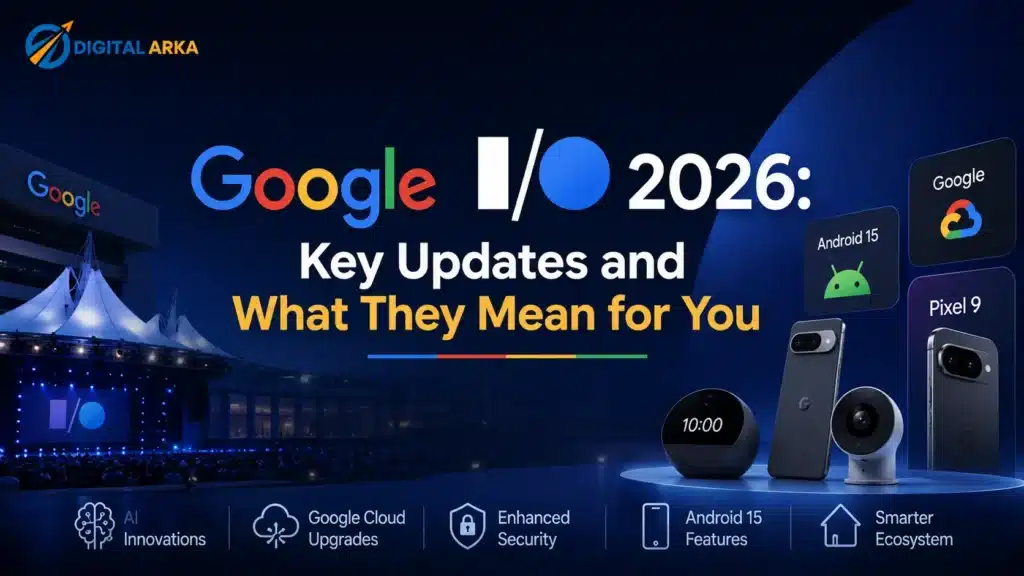

Get ready for Google I/O 2026! Discover the key updates and innovations that could reshape your digital experience and streamline your daily life.
Overview of Google I/O
2026
Google I/O 2026 has come and gone, leaving in its wake a plethora of announcements that are poised to revolutionize both the tech industry and our everyday lives. Held at the Shoreline Amphitheatre in Mountain View, California, this year’s conference was a testament to Google’s relentless pursuit of innovation. From groundbreaking AI advancements to substantial upgrades in their hardware and software ecosystems, the event was a treasure trove of revelations.
The event kicked off with Sundar Pichai, CEO of Alphabet Inc., taking the stage to outline the overarching themes of the conference. This year, the focus was squarely on harnessing the power of artificial intelligence, enhancing user privacy, and pushing the boundaries of what’s possible in mobile and cloud computing. Pichai emphasized how these innovations are not just about cutting-edge technology but about creating meaningful experiences that make life easier and more enjoyable for users around the globe.
As the keynote unfolded, it became clear that Google is deeply invested in shaping the future of technology in a way that is both inclusive and forward-thinking. The announcements made at Google I/O 2026 are not just incremental updates but represent significant strides in various domains, each with the potential to make a lasting impact. This blog will delve into the key updates from the conference, exploring what they mean for consumers, developers, and the tech landscape at large.
Major Announcements from Google I/O 2026
Google I/O 2026 was brimming with major announcements that captivated the audience and set the tone for the future of technology. One of the most talked-about revelations was the introduction of Google Quantum AI, a new initiative aimed at making quantum computing more accessible. This project promises to bring unprecedented computational power to various industries, from pharmaceuticals to climate science, potentially solving problems that were previously deemed unsolvable.
Another highlight was the unveiling of Android 15, codenamed “Nimbus,” which comes packed with new features designed to enhance user experience and security. The new Android version promises smoother multitasking, improved battery life, and more intuitive user interfaces. The integration of AI-driven functionalities, such as predictive text and personalized app suggestions, aims to make the operating system more adaptive to individual user needs.
Google also announced significant updates to its hardware lineup, introducing the Pixel 9 series and a new line of smart home devices under the Nest brand. The Pixel 9 smartphones boast cutting-edge camera technology, improved battery performance, and enhanced connectivity features. Meanwhile, the new Nest devices are designed to seamlessly integrate with Google Assistant, offering users a more connected and intuitive smart home experience.
Impact of AI Innovations on Users
Artificial intelligence has been a cornerstone of Google’s strategy for years, and the advancements showcased at Google I/O 2026 are set to elevate user experiences to new heights. One of the most exciting AI innovations is the enhanced Google Assistant, which now features advanced natural language processing capabilities. This allows users to engage in more natural and nuanced conversations with their digital assistants, making tasks like setting reminders, sending messages, and finding information more seamless than ever before.
AI is also making significant inroads in the realm of personalized content. Google News, for instance, now leverages machine learning algorithms to curate news feeds tailored to individual preferences and reading habits. This ensures that users receive the most relevant and engaging content, reducing information overload and enhancing the overall news consumption experience.
In the healthcare sector, Google’s AI innovations are poised to make a substantial impact. The company has introduced new AI-driven tools for early disease detection and personalized treatment plans. These tools use vast amounts of data to identify patterns and provide insights that can help healthcare professionals make more informed decisions. For patients, this means quicker diagnoses and more effective treatments, potentially saving lives and improving overall health outcomes.
Read truth about Google AI search here.
Enhancements in Google Cloud Services
Google Cloud services received a significant boost at this year’s I/O, with a slew of updates aimed at making cloud computing more efficient, secure, and accessible. One of the standout announcements was the introduction of Google Cloud AI, a suite of machine learning tools designed to help businesses harness the power of AI. These tools are aimed at simplifying the deployment of machine learning models, making it easier for companies to integrate AI into their operations.
Another major enhancement is the expansion of Google Cloud’s hybrid and multi-cloud capabilities. The new Google Anthos platform allows businesses to manage workloads across different cloud environments, including on-premises data centers and other cloud providers. This flexibility enables organizations to optimize their cloud strategies and reduce dependency on a single provider, enhancing resilience and operational efficiency.
Security remains a top priority for Google Cloud, and this was evident in the introduction of several new security features. These include advanced threat detection algorithms, enhanced data encryption methods, and more robust identity management tools. These updates are designed to protect sensitive data and ensure compliance with global security standards, giving businesses the confidence to migrate more of their operations to the cloud.
Updates to Android: Features and Improvements
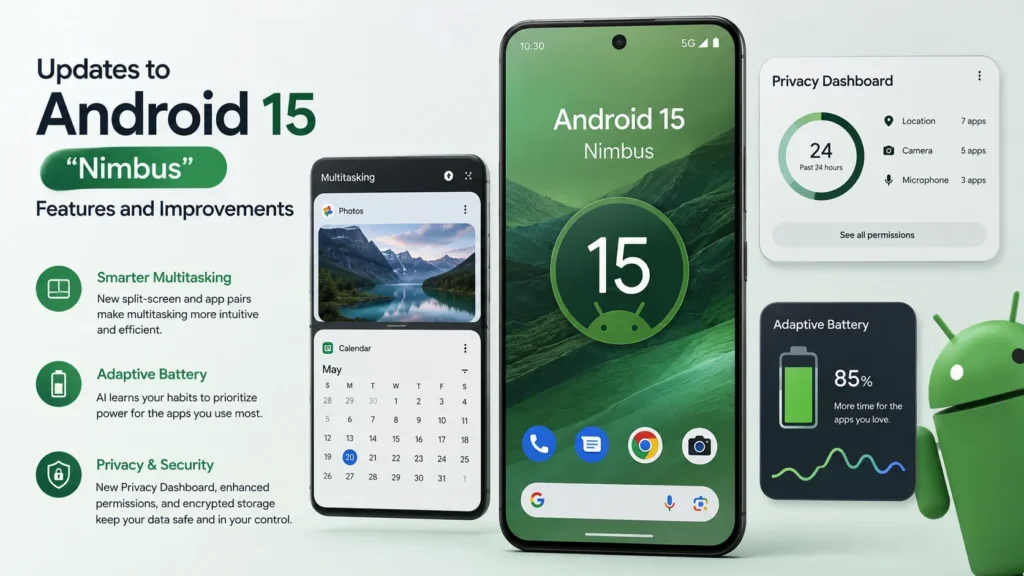
Android 15 “Nimbus” was one of the most eagerly anticipated announcements at Google I/O 2026, and it did not disappoint. The new operating system comes with a host of features aimed at enhancing user experience and improving device performance. One of the most notable updates is the introduction of a new multitasking interface that allows users to run multiple apps simultaneously in a more intuitive and efficient manner.
Battery life has always been a critical concern for smartphone users, and Android 15 addresses this with a range of optimizations. The new Adaptive Battery feature uses machine learning to understand user habits and prioritize battery usage for the most frequently used apps. This results in significantly improved battery performance, allowing users to get more out of their devices without constantly worrying about recharging.
Privacy and security have also been given a major overhaul in Android 15. The new Privacy Dashboard provides users with a comprehensive overview of how their data is being used by various apps. This transparency allows users to make more informed decisions about their privacy settings. Additionally, enhanced app permissions and encrypted storage options ensure that user data remains secure.
The Future of Google Assistant
The future of Google Assistant is brighter than ever, thanks to the significant upgrades announced at Google I/O 2026. One of the most exciting developments is the integration of advanced natural language understanding, which allows the Assistant to comprehend context and nuance in conversations. This makes interactions with the Assistant feel more natural and engaging, enhancing its utility in everyday tasks.
Google has also introduced new features and AI SEO tools aimed at making the Assistant more proactive. For instance, the Assistant can now anticipate user needs based on their routines and habits, offering timely reminders and suggestions. This proactive approach transforms the Assistant from a reactive tool into a more intuitive and helpful companion, capable of anticipating and addressing user needs before they even arise.
Another significant update is the expanded integration of the Assistant with third-party apps and services. This allows users to perform a wider range of tasks using voice commands, from booking a ride to ordering food. The seamless integration with various services makes the Assistant a more versatile and indispensable part of the user’s digital ecosystem.
New Developments in Google Hardware
Google’s hardware announcements at I/O 2026 were nothing short of groundbreaking. The introduction of the Pixel 9 series marks a significant leap forward in smartphone technology. These new devices feature cutting-edge camera systems that leverage AI to deliver stunning photography and videography capabilities. The Pixel 9’s advanced computational photography algorithms ensure that users can capture professional-quality images in any lighting condition.
In addition to the Pixel 9, Google unveiled a new line of smart home devices under the Nest brand. These devices are designed to work seamlessly with Google Assistant, offering users a more connected and intuitive smart home experience. The new Nest Hub, for example, features an advanced display and improved voice recognition, making it easier for users to control their smart home devices and access information.
Google also introduced new wearable technology, including the Pixel Watch 2, which comes with enhanced health and fitness tracking features. The new watch includes advanced sensors that monitor heart rate, sleep patterns, and even stress levels. These features are designed to provide users with a more comprehensive understanding of their health and well-being, making it easier to achieve their fitness goals.
Privacy and Security Updates from Google
Privacy and security have always been paramount for Google, and the updates announced at I/O 2026 underscore this commitment. One of the most significant announcements was the introduction of end-to-end encryption for all Google services. This ensures that user data is protected at all stages of transmission, providing an added layer of security against potential breaches.
Google also unveiled a new Privacy Dashboard that gives users greater control over their data. This dashboard provides a comprehensive overview of how data is being used by various apps and services, allowing users to make more informed decisions about their privacy settings. The dashboard also includes tools for managing app permissions and controlling data sharing preferences.
In addition to these features, Google has introduced new measures to combat online threats. These include advanced threat detection algorithms that can identify and neutralize potential security risks in real-time. Google’s commitment to privacy and security ensures that users can enjoy the benefits of their digital experiences without compromising their personal information.
How These Updates Affect Developers
The announcements made at Google I/O 2026 have significant implications for developers, offering new opportunities and tools to enhance their applications and services. One of the most impactful updates is the introduction of new APIs for Google’s AI and machine learning platforms. These APIs make it easier for developers to integrate advanced AI capabilities into their apps, allowing them to create more intelligent and responsive applications.
Google has also expanded its support for cross-platform development, making it easier for developers to create applications that work seamlessly across different devices and operating systems. The new Flutter 5.0 framework, for example, includes tools for building high-performance applications for both Android and iOS. This cross-platform support enables developers to reach a wider audience and deliver a consistent user experience across all devices.
Another significant update is the introduction of new tools for cloud-based development. The enhanced Google Cloud Platform includes a range of services designed to simplify the development and deployment of cloud-native applications. These tools provide developers with the resources they need to build scalable and secure applications, reducing the time and effort required to bring their ideas to market.
Conclusion: What’s Next for Google and Its Users
As Google I/O 2026 comes to a close, it’s clear that the company is committed to pushing the boundaries of technology and innovation. The announcements made at this year’s conference highlight Google’s dedication to enhancing user experiences, improving privacy and security, and providing developers with the tools they need to create the next generation of applications and services.
The impact of these updates will be felt across various industries, from healthcare to entertainment, as AI and machine learning continue to revolutionize the way we interact with technology. For users, this means more intuitive and personalized experiences, enhanced security, and greater control over their digital lives. For developers, the new tools and platforms provide unprecedented opportunities to innovate and create impactful solutions.
Looking ahead, it’s exciting to imagine what the future holds for Google and its users. With a strong focus on AI, privacy, and cross-platform development, Google is well-positioned to lead the way in the next era of technology. As we embrace these advancements, one thing is certain: the digital landscape is set to become more interconnected, intelligent, and user-centric, thanks to the innovations unveiled at Google I/O 2026.