
Unlock the secrets of effective blog writing with our guide on mastering format trends for 2026. Elevate your content and engage your audience!
First of all I want to tell you that it is different from Article content formatting as both part are different.
The Importance of Formatting in Blog Writing
In the digital age, content is king, but formatting is the throne that holds it up. The significance of proper formatting in blog writing cannot be overstated. It is the backbone that supports the structure, readability, and overall engagement of your content. Readers are inundated with information, and a well-formatted blog can make the difference between a post that is skimmed and one that is thoroughly read. Formatting guides the reader’s eye, making the content more digestible and enjoyable.
Formatting is not just about making your blog aesthetically pleasing; it also enhances the user experience. A well-formatted blog post ensures that your audience can easily navigate through the content. Headers, bullet points, and paragraph breaks help in breaking down complex information into manageable chunks. This not only aids in comprehension but also keeps the reader engaged. A blog post that is hard to read will quickly lose the reader’s attention, no matter how valuable the content might be.
Moreover, proper formatting has a direct impact on SEO (Search Engine Optimization). Search engines like Google prioritize content that is well-structured and easy to read. By using appropriate headings, subheadings, and lists, you can improve your blog’s search engine ranking. This increases the visibility of your content, driving more traffic to your site. In essence, mastering the art of blog formatting is crucial for both retaining your audience and attracting new readers.
Key Blog Writing Formats to Consider
As we approach 2026, the landscape of blog writing formats is evolving. Traditional formats are giving way to more innovative and reader-friendly structures. One of the key formats to consider is the listicle. Listicles, or articles formatted as lists, are highly popular due to their easy-to-read nature. They break down information into bite-sized pieces, making complex topics more accessible. Listicles are particularly effective for how-to guides, tips, and recommendations.
Actually these all things are optimized for ranking in LLMs and AI tools.
Another format gaining traction is the long-form article. Contrary to the belief that shorter is better, long-form content is making a strong comeback. These in-depth articles, typically over 2000 words, allow for a comprehensive exploration of a topic. They provide value to the reader by offering detailed insights and thorough analysis. Long-form articles are perfect for thought leadership pieces, case studies, and research-based posts. They also tend to perform well in search engine rankings due to their rich content.
The interview format is also worth considering. Featuring interviews with industry experts or influencers can add credibility and a unique perspective to your blog. This format not only provides valuable content but also helps in building relationships with key figures in your industry. Interviews can be presented in a Q&A format or woven into a narrative. Either way, they offer a fresh and engaging way to present information.
Visual Elements: Enhancing Engagement through Images and Videos
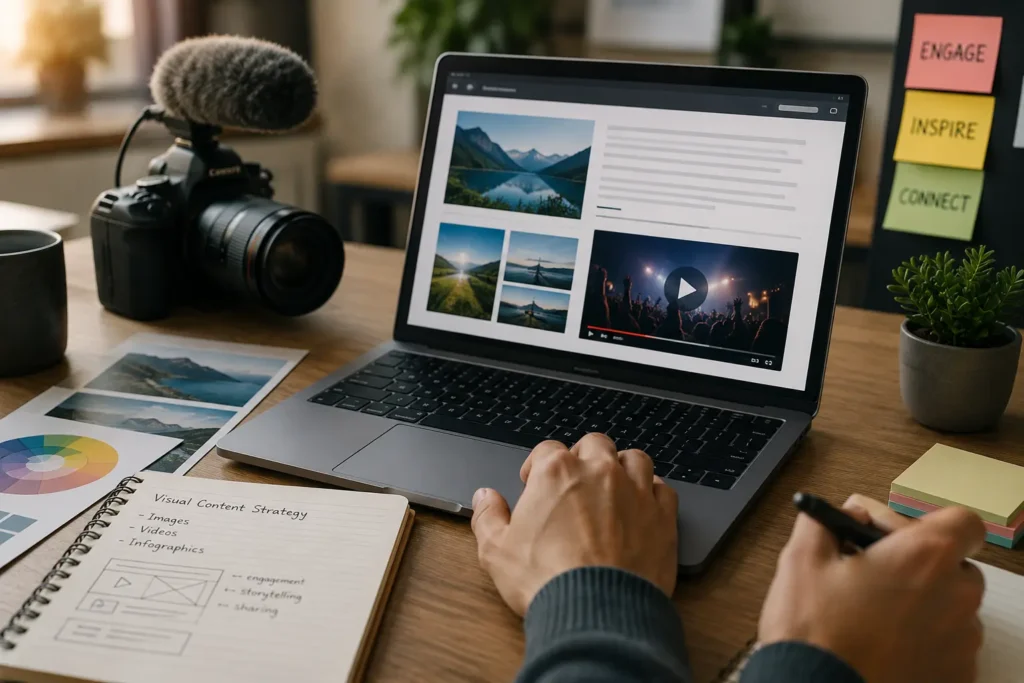
Incorporating visual elements into your blog is no longer optional; it’s a necessity. Images and videos significantly enhance the engagement level of your content. They break up large blocks of text and provide a visual rest for the reader’s eyes. Relevant images can help illustrate points, making complex information easier to understand. Infographics, for example, are excellent for presenting data in a visually appealing manner.
Videos are another powerful tool for increasing engagement. They can be used to complement the written content or provide a different medium for conveying information. Tutorials, product reviews, and behind-the-scenes videos are just a few examples of how you can integrate video content into your blog. Videos cater to different learning styles, making your content more inclusive and accessible to a broader audience.
It also helps social media marketing and digital marketing although both are different but they often work hand to hand.
Moreover, visual elements contribute to the emotional appeal of your blog. A well-chosen image or a compelling video can evoke emotions, making the content more memorable. They also encourage social sharing, increasing the reach of your blog. Visual elements should be optimized for fast loading times to ensure they don’t negatively impact the user experience. By strategically incorporating images and videos, you can create a more engaging and effective blog.
The Rise of Interactive Content in Blogs
Interactive content is revolutionizing the way we engage with blogs. Unlike static content, interactive elements invite the reader to participate, making the experience more engaging and memorable. Quizzes, polls, and surveys are some of the most popular forms of interactive content. They not only engage the reader but also provide valuable insights into their preferences and opinions. This data can be used to tailor future content to better meet the needs of your audience.
Interactive infographics are another trend to watch. These dynamic visuals allow users to interact with the data, exploring different aspects of the information presented. They are particularly effective for complex topics that benefit from a more hands-on approach. Interactive infographics can be used to present statistical data, comparison charts, and timelines, making the information more digestible and engaging.
Another exciting development is the use of interactive storytelling. This format combines traditional narrative techniques with interactive elements to create a more immersive experience. Readers can make choices that influence the direction of the story, making them active participants rather than passive consumers. This level of engagement can significantly increase the time spent on your blog and foster a deeper connection with your audience.
It is best for user signals which Google prioritize in new Google updates.
SEO Best Practices for Blog Formatting
Search engine optimization (SEO) remains a critical component of successful blog writing. Proper formatting plays a crucial role in enhancing your blog’s SEO performance. One of the fundamental practices is the use of appropriate headings and subheadings. These not only break up the text for better readability but also help search engines understand the structure and hierarchy of your content. Using relevant keywords in your headings can further improve your search engine ranking.
Another essential aspect is the use of meta descriptions. These short snippets provide a summary of your blog post and appear in search engine results. A well-crafted meta description can significantly increase the click-through rate to your blog. It should be concise, compelling, and include relevant keywords. Additionally, using alt text for images is crucial for both accessibility and SEO. Alt text helps search engines index your images, improving the overall SEO of your blog.
Internal and external linking are also important SEO practices. Internal links connect different pages on your website, helping search engines crawl your site more effectively. They also keep readers engaged by directing them to related content. External links, on the other hand, connect your blog to reputable sources, adding credibility to your content. Both types of links should be used judiciously and naturally within the context of your blog.
These also helps in LLMs ranking which are crucial part of 2026.
Mobile Optimization: Adapting Your Blog for Mobile Readers
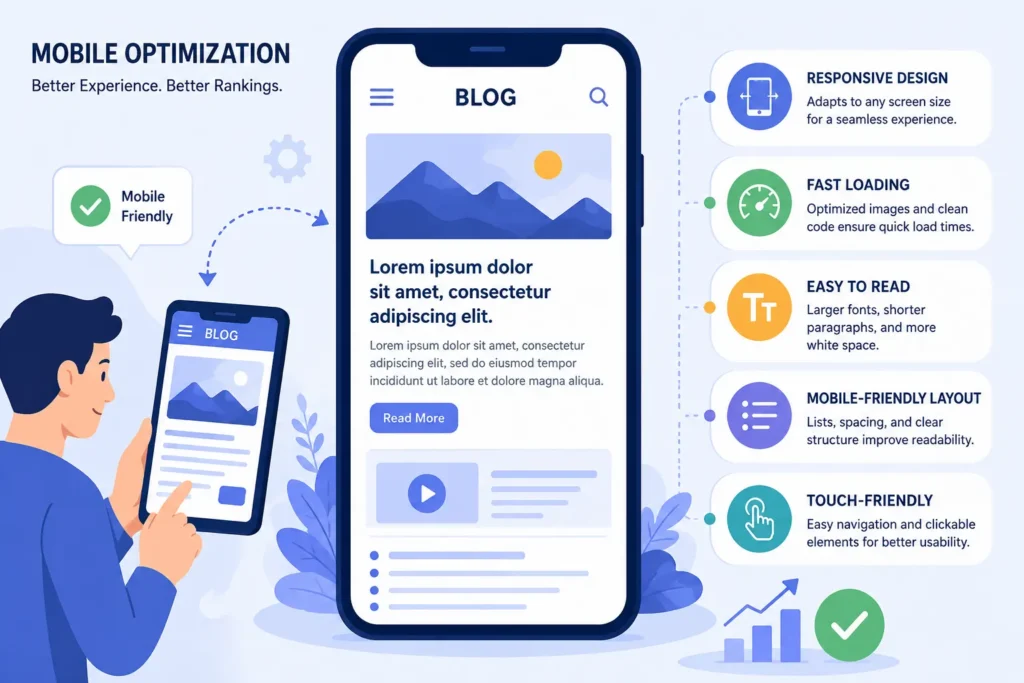
As mobile internet usage continues to rise, optimizing your blog for mobile readers is more important than ever. A mobile-friendly design ensures that your content is accessible and readable on various devices, including smartphones and tablets. This involves using a responsive design that automatically adjusts the layout based on the screen size. Mobile optimization not only enhances the user experience but also improves your search engine ranking, as search engines prioritize mobile-friendly sites.
One of the key aspects of mobile optimization is ensuring fast loading times. Mobile users are often on the go and have little patience for slow-loading pages. Compressing images, using efficient coding practices, and minimizing the use of heavy scripts can significantly improve loading times. A fast-loading blog keeps readers engaged and reduces bounce rates, contributing to better overall performance.
Another important consideration is the readability of your content on small screens. This involves using larger fonts, shorter paragraphs, and ample white space. Bullet points and numbered lists can also enhance readability on mobile devices. Additionally, touch-friendly navigation and easily clickable links ensure a seamless experience for mobile users. By prioritizing mobile optimization, you can reach a broader audience and provide a better user experience.
The Role of Readability and Accessibility in Blog Writing
Readability and accessibility are fundamental aspects of effective blog writing. Readability refers to how easily a reader can understand and engage with your content. This involves using clear and concise language, short sentences, and an active voice. Avoiding jargon and complex terminology ensures that your content is accessible to a wider audience. Tools like the Flesch-Kincaid readability test can help you gauge the readability of your blog and make necessary adjustments.
Accessibility, on the other hand, ensures that your content is usable by people with disabilities. This involves following web accessibility guidelines, such as providing alt text for images, using descriptive link text, and ensuring that your content can be navigated using a keyboard. Accessible content not only caters to a broader audience but also improves SEO, as search engines favor accessible websites.
Both readability and accessibility contribute to a positive user experience. Content that is easy to read and accessible to everyone is more likely to be shared and recommended. It also builds trust and credibility, as readers appreciate content that respects their time and effort. By prioritizing readability and accessibility, you can create a more inclusive and engaging blog.
Future Trends: AI and Automation in Blog Formatting
Artificial intelligence (AI) and automation are poised to revolutionize the world of blog formatting. AI-powered tools can assist in various aspects of content creation, from generating topic ideas to optimizing formatting. For instance, AI can analyze reader behavior and preferences to suggest the most effective layout and structure for your blog. This data-driven approach ensures that your content is tailored to meet the needs of your audience.
Automation can also streamline the formatting process, saving time and effort. Tools like WordPress plugins and content management systems offer automated formatting options, such as applying consistent styles, generating tables of contents, and optimizing images. These tools can also assist in ensuring compliance with SEO best practices, such as keyword placement and meta descriptions. Automation allows you to focus more on content creation and less on the technical aspects of formatting.
Moreover, AI-powered language models can assist in improving the readability and coherence of your content. They can provide suggestions for simplifying complex sentences, enhancing clarity, and maintaining a consistent tone. As AI and automation continue to advance, they will become indispensable tools for mastering blog formatting, allowing you to create high-quality, engaging content more efficiently.
Conclusion: Embracing Change in Blog Writing for 2026
As we look ahead to 2026, the landscape of blog writing is set to undergo significant transformations. Embracing these changes is crucial for staying relevant and engaging in a rapidly evolving digital world. From innovative formats and visual elements to interactive content and AI-driven tools, the future of blog writing is exciting and full of possibilities. By staying informed about emerging trends and best practices, you can elevate your content and connect more effectively with your audience.
Formatting remains a cornerstone of effective blog writing. It enhances readability, engagement, and SEO performance, ensuring that your content reaches and resonates with a broader audience. Prioritizing mobile optimization, readability, and accessibility is essential for providing a seamless and inclusive user experience. As AI and automation continue to advance, they will offer new opportunities for optimizing blog formatting and content creation.
In conclusion, mastering blog writing format is an ongoing journey that requires continuous learning and adaptation. By embracing change and leveraging new tools and techniques, you can create compelling, high-quality content that stands out in the crowded digital landscape. The future of blog writing is bright, and those who are willing to innovate and evolve will undoubtedly thrive.