
Maximize your SEO strategy with a Rapid Index Checker Tool. Instantly monitor your site’s indexing status and enhance your online visibility today!
What is a Rapid Index Checker Tool?
A Rapid Index Checker Tool is a vital instrument in the toolkit of any digital marketer or website owner. This tool is designed to quickly and efficiently determine whether the pages on your website are indexed by search engines. Essentially, it provides a fast and reliable way to check the indexing status of your web pages, ensuring that they are visible and can be discovered through search engine results. The speed and accuracy of a Rapid Index Checker Tool make it an indispensable asset for maintaining and improving your site’s SEO performance.
The core function of a Rapid Index Checker Tool is to query search engines like Google, Bing, and others to see if a specific URL is listed in their index. When a web page is indexed, it means the search engine has crawled the page, analyzed its content, and stored it in its database. This process is crucial because only indexed pages can appear in search engine results, which directly impacts your site’s visibility and traffic. Without proper indexing, even the most well-optimized pages won’t reach their potential audience.
In addition to checking if your pages are indexed, these tools often come with a suite of features aimed at enhancing your overall SEO strategy. They can provide detailed reports, highlight pages that are not indexed, and offer insights into potential issues that might be preventing indexing. By using a Rapid Index Checker Tool, you can stay on top of your website’s indexing status and take proactive measures to address any problems, ensuring that your online presence remains strong and competitive.
Read Also: Google’s Antigravity: The Easter Egg, the AI IDE, and What Brands Can Learn From Both
Importance of Indexing in SEO
Indexing is the backbone of SEO because it directly affects how and where your website appears in search engine results. When a search engine indexes your page, it includes the content in its database and makes it eligible to be displayed in response to relevant search queries. This is the first step towards driving organic traffic to your site, as users typically only visit pages that appear on the first few search engine results pages (SERPs). Therefore, ensuring that your pages are indexed is crucial for SEO success.
Without proper indexing, your content remains hidden from potential visitors, regardless of how well it is optimized or how valuable the information might be. Search engines use complex algorithms to crawl and index web pages, looking at factors such as relevance, keyword usage, meta tags, and overall content quality. If your pages are not indexed, they are essentially invisible to search engines, which dramatically reduces your chances of attracting organic traffic. This invisibility can significantly hamper your site’s growth and online presence.
Moreover, indexing is not a one-time process but an ongoing one. Search engines continuously update their indexes to reflect new content, changes, and emerging trends. Regularly monitoring your site’s indexing status helps you stay informed about how search engines perceive your site. It allows you to quickly identify and fix issues that might be preventing proper indexing, such as technical errors, duplicate content, or poor website structure. By keeping your pages indexed, you maintain your site’s relevance and ensure that your SEO efforts are effective and up-to-date.
Key Features of a Rapid Index Checker Tool
One of the most compelling features of a Rapid Index Checker Tool is its speed. These tools are designed to perform quick checks on multiple URLs simultaneously, providing instant feedback on their indexing status. This rapid assessment is crucial for large websites with numerous pages, as it allows webmasters to swiftly identify and address indexing issues. The ability to conduct bulk checks saves time and effort, making the tool highly efficient and user-friendly.
Another significant feature is the detailed reporting capabilities offered by these tools. Beyond simply indicating whether a page is indexed, a Rapid Index Checker Tool often provides comprehensive reports that highlight specific issues affecting indexing. These reports may include information on crawl errors, broken links, duplicate content, and other technical problems. By offering actionable insights, these tools enable users to pinpoint and resolve issues that might be hindering their site’s performance in search engine results.
User-friendliness is also a key feature of these tools. Most Rapid Index Checker Tools come with intuitive interfaces that make them accessible to users with varying levels of technical expertise. Features such as easy-to-understand dashboards, customizable settings, and straightforward navigation ensure that users can efficiently utilize the tool without needing extensive training. This accessibility empowers website owners and digital marketers to take control of their SEO strategies and make informed decisions to improve their site’s indexing and overall visibility.
How to Use a Rapid Index Checker Tool Effectively
Using a Rapid Index Checker Tool effectively begins with understanding its core functionalities. First, you need to compile a list of URLs that you want to check for indexing. This list can include new pages, updated content, or any URLs that you suspect might have indexing issues. Once you have your list, input these URLs into the tool, which will then perform a quick scan to determine their indexing status. This initial step provides a snapshot of your site’s current standing in terms of indexed pages.
After running the initial check, it’s crucial to analyze the results carefully. Look for patterns or recurring issues that might be affecting multiple pages. Common problems might include pages that are not indexed due to crawl errors, duplicate content, or insufficient internal linking. The tool’s detailed reports will help you identify these issues, allowing you to take targeted actions to resolve them. For instance, if the tool highlights crawl errors, you might need to check your site’s robots.txt file or sitemap to ensure that all pages are accessible to search engine crawlers.
Read Also: What is Notebook LM and How It’s Revolutionizing Your Note-Taking Experience
Regular monitoring is another essential aspect of using a Rapid Index Checker Tool effectively. SEO is not a one-time effort but an ongoing process that requires continuous attention and refinement. Set a schedule to regularly check your site’s indexing status, especially after making significant changes or updates to your content. By consistently monitoring your pages, you can promptly address any new issues that arise and keep your site’s indexing status in optimal condition. This proactive approach ensures that your SEO strategy remains robust and your website continues to attract organic traffic.
Benefits of Using a Rapid Index Checker Tool for Your Website
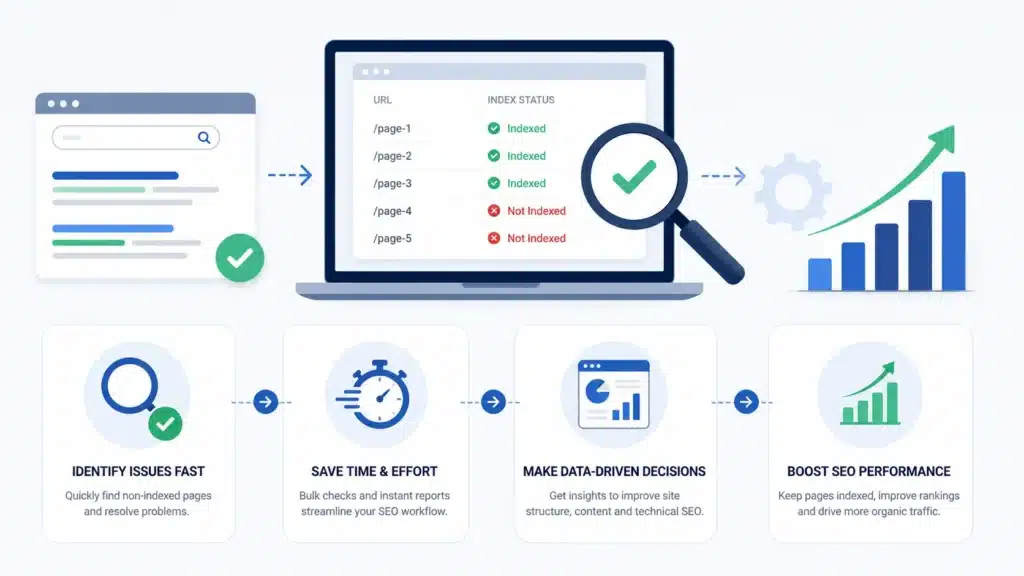
One of the primary benefits of using a Rapid Index Checker Tool is the ability to quickly identify and resolve indexing issues. By providing immediate feedback on the indexing status of your web pages, these tools allow you to take swift action to address any problems. This rapid response capability is crucial for maintaining your site’s visibility in search engine results, as unresolved indexing issues can lead to significant drops in organic traffic and search rankings.
Another significant advantage is the enhanced efficiency that these tools bring to your SEO workflow. Checking the indexing status of numerous pages manually can be a time-consuming and labor-intensive process. A Rapid Index Checker Tool streamlines this task by performing bulk checks and generating comprehensive reports within minutes. This efficiency frees up valuable time and resources, allowing you to focus on other critical aspects of your SEO strategy, such as content creation and link building.
Moreover, using a Rapid Index Checker Tool can lead to improved overall website performance. By regularly monitoring your site’s indexing status and addressing any identified issues, you ensure that your pages are consistently discoverable by search engines. This ongoing optimization helps maintain and enhance your site’s search rankings, driving more organic traffic and increasing your online visibility. Additionally, the insights provided by these tools can guide you in making informed decisions about your site’s structure, content, and technical setup, further boosting your SEO efforts.
Comparing Popular Rapid Index Checker Tools
Several Rapid Index Checker Tools are available on the market, each with its unique features and benefits. One popular option is Google’s Search Console, a free tool that provides comprehensive insights into your site’s indexing status and performance. It allows users to submit sitemaps, monitor crawl errors, and view detailed reports on indexed pages. While highly effective, it may require some technical knowledge to fully utilize its capabilities.
Another widely used tool is Ahrefs, known for its robust SEO features and user-friendly interface. Ahrefs offers a site audit feature that includes indexing checks, providing users with detailed reports on crawl issues, duplicate content, and other technical problems. Its ability to perform in-depth analysis and generate actionable insights makes it a favorite among digital marketers and SEO professionals. However, Ahrefs is a paid tool, which might be a consideration for budget-conscious users.
SEMrush is another notable Rapid Index Checker Tool that offers a comprehensive suite of SEO tools, including indexing checks. SEMrush provides detailed reports on your site’s indexing status, highlighting issues such as crawl errors, broken links, and duplicate content. Its intuitive interface and extensive features make it a powerful tool for optimizing your site’s SEO performance. Like Ahrefs, SEMrush is a paid tool, but its extensive capabilities can justify the investment for serious SEO practitioners.
Common Issues Identified by Index Checker Tools
One common issue identified by Rapid Index Checker Tools is crawl errors. These occur when search engine bots are unable to access certain pages on your site, preventing them from being indexed. Crawl errors can result from various factors, such as broken links, server errors, or issues with your site’s robots.txt file. Rapid Index Checker Tools can pinpoint these errors, allowing you to take corrective actions to ensure that all pages are accessible to search engines.
Duplicate content is another prevalent issue that can hinder your site’s indexing. When multiple pages on your site have identical or very similar content, search engines may struggle to determine which version to index, leading to potential exclusion from search results. Rapid Index Checker Tools can identify instances of duplicate content, enabling you to address them by consolidating pages, using canonical tags, or rewriting content to ensure uniqueness.
Broken links are also commonly flagged by these tools. Broken links can disrupt the user experience and impede search engine crawlers’ ability to navigate your site effectively. Rapid Index Checker Tools can detect broken links, providing you with the necessary information to repair or replace them. By maintaining a site with functional links, you enhance both user experience and search engine crawlability, contributing to better indexing and SEO performance.
Best Practices for Improving Your Site’s Indexing
One of the best practices for improving your site’s indexing is optimizing your site structure. A well-organized site with clear navigation and a logical hierarchy makes it easier for search engine crawlers to access and index your pages. Ensure that your site has a clear and consistent URL structure, with meaningful and descriptive URLs that reflect the content of each page. Additionally, create an XML sitemap and submit it to search engines to facilitate the indexing process.
Another effective practice is producing high-quality, unique content. Search engines prioritize indexing pages that offer valuable and original information to users. Avoid duplicating content from other sites and focus on creating informative, engaging, and relevant content that addresses the needs and interests of your target audience. Regularly update your site with fresh content to keep it dynamic and appealing to both users and search engines.
Ensuring proper internal linking is also crucial for improving indexing. Internal links help search engine crawlers navigate your site and discover new pages. Use descriptive anchor text for internal links and create a network of links that connect related content throughout your site. This practice not only aids in indexing but also enhances the user experience by providing easy access to related information. Additionally, monitor and repair any broken links to maintain a seamless navigation experience.
Conclusion: Enhancing Your SEO Strategy with Rapid Index Checker Tools
In conclusion, a Rapid Index Checker Tool is an invaluable asset for any website owner or digital marketer looking to enhance their SEO strategy. By providing quick and accurate insights into your site’s indexing status, these tools enable you to identify and address issues that might be hindering your site’s visibility in search engine results. The ability to perform bulk checks, generate detailed reports, and offer actionable recommendations makes these tools essential for maintaining and improving your site’s SEO performance.
The importance of indexing in SEO cannot be overstated, as it directly impacts your site’s ability to attract organic traffic and achieve higher search rankings. Using a Rapid Index Checker Tool allows you to stay on top of your site’s indexing status, ensuring that your pages are discoverable and accessible to search engines. By regularly monitoring and optimizing your site’s indexing, you can maintain a strong online presence and drive sustained traffic to your site.
Ultimately, incorporating a Rapid Index Checker Tool into your SEO strategy empowers you to take proactive measures to enhance your site’s performance. From identifying crawl errors and duplicate content to optimizing site structure and internal linking, these tools provide the insights and guidance needed to achieve SEO success. By leveraging the capabilities of a Rapid Index Checker Tool, you can maximize your site’s visibility, attract more visitors, and achieve your digital marketing goals.