
AI is reshaping marketing at an unprecedented pace, empowering brands to engage customers like never before. Discover how this revolution is unlocking new possibilities.
The Role of AI in Data Analysis and Insights
In the realm of marketing, data is the new gold. The sheer volume of data generated every day is staggering, and making sense of it all can be a daunting task. This is where Artificial Intelligence (AI) steps in. AI systems can process massive datasets at lightning speed, identifying patterns and trends that would be impossible for humans to discern. By leveraging machine learning algorithms, businesses can gain deeper insights into consumer behavior, preferences, and purchasing habits. This enables marketers to make data-driven decisions that are more accurate and impactful.
For example, AI can analyze customer data to segment audiences more effectively. Traditional methods of segmentation, such as demographics and geographic locations, are now being supplemented with psychographic and behavioral data. This multi-dimensional approach allows for a more nuanced understanding of the target audience. Additionally, AI can uncover hidden correlations in data, revealing insights that may not be immediately obvious. These insights can then be used to fine-tune marketing strategies, ensuring that campaigns are both efficient and effective.
Moreover, AI is revolutionizing predictive analytics, enabling marketers to forecast future trends with remarkable accuracy. By analyzing historical data, AI can predict how certain variables will influence consumer behavior. This foresight allows businesses to anticipate market changes and adapt their strategies accordingly. Whether it’s predicting the success of a new product launch or understanding the potential impact of a marketing campaign, AI provides the analytical prowess needed to stay ahead of the curve. In sum, AI’s role in data analysis and insights is indispensable for modern marketing.
Personalized Marketing through AI
Personalization has become a cornerstone of modern marketing, and AI is at the forefront of this transformation. Gone are the days of one-size-fits-all advertising; today’s consumers expect personalized experiences that cater to their individual needs and preferences. AI enables brands to deliver these tailored experiences by analyzing vast amounts of data and generating insights in real time. This allows for the creation of highly targeted marketing messages that resonate with each customer on a personal level.
One of the most significant applications of AI in personalized marketing is recommendation engines. These algorithms analyze user behavior, such as browsing history and past purchases, to suggest products or services that are likely to interest the customer. Companies like Amazon and Netflix have mastered this approach, using AI to recommend items that keep users engaged and coming back for more. This level of personalization not only enhances the customer experience but also drives sales and increases customer loyalty.
Furthermore, AI can personalize email marketing campaigns by tailoring content to individual preferences. By analyzing data such as open rates, click-through rates, and purchase history, AI can determine the optimal time to send emails and the most effective content to include. This ensures that each email is relevant and engaging, increasing the likelihood of conversion. In essence, AI-powered personalization transforms generic marketing efforts into highly targeted campaigns that speak directly to the consumer, fostering deeper connections and driving business growth.
AI-Powered Content Creation and Curation
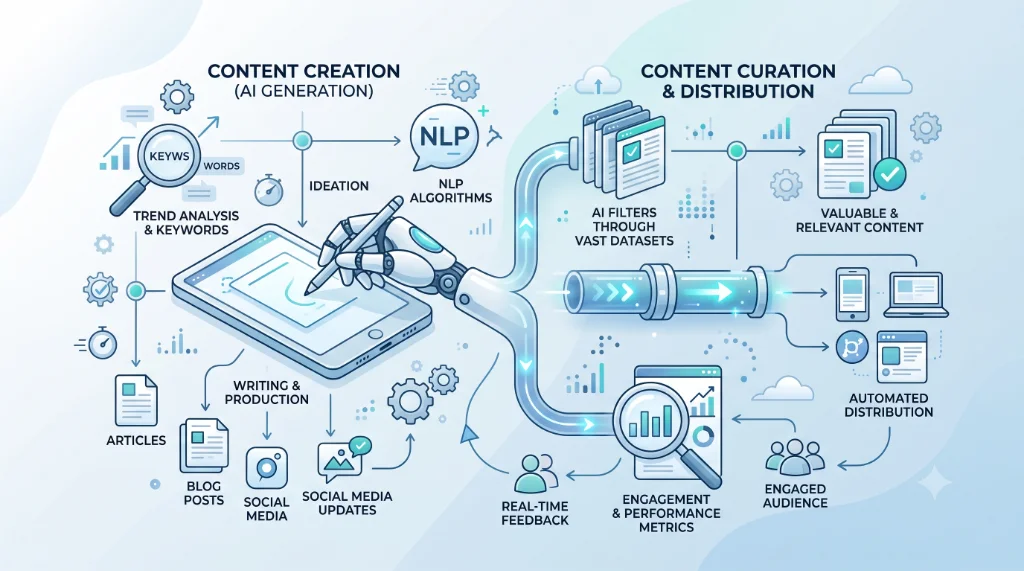
Content is king in the digital marketing world, and AI is revolutionizing the way content is created and curated. AI-powered tools can generate high-quality content at scale, significantly reducing the time and effort required for content creation. Natural Language Processing (NLP) algorithms enable AI systems to understand and mimic human language, producing articles, blog posts, social media updates, and even video scripts that are coherent and engaging.
For instance, AI can analyze trending topics and popular keywords to generate content ideas that are likely to resonate with the target audience. This ensures that the content produced is not only relevant but also optimized for search engines, increasing its visibility and reach. AI can also assist in content curation by sifting through vast amounts of information to identify and recommend the most valuable and relevant content for a specific audience. This helps marketers maintain a consistent content strategy and keep their audience engaged with fresh, high-quality material.
Moreover, AI is enhancing the creative process by providing real-time feedback on content performance. By analyzing metrics such as engagement rates, shares, and comments, AI can identify what works and what doesn’t. This allows marketers to refine their content strategies and produce material that consistently resonates with their audience. In addition, AI-powered tools can automate the distribution of content across various channels, ensuring that it reaches the right audience at the right time. Overall, AI is transforming content creation and curation, making it more efficient, effective, and impactful.
Chatbots and Customer Service Automation
Customer service is a critical component of any marketing strategy, and AI is revolutionizing this aspect through the use of chatbots and automation. AI-powered chatbots can handle a wide range of customer inquiries, providing instant and accurate responses 24/7. This not only improves the customer experience but also frees up human agents to focus on more complex issues that require a personal touch.
Chatbots are becoming increasingly sophisticated, thanks to advancements in Natural Language Understanding (NLU) and machine learning. They can understand and respond to complex queries, offering solutions that are tailored to the individual customer’s needs. For example, a chatbot on an e-commerce website can assist with product recommendations, track orders, and even handle returns and exchanges. This level of automation ensures that customers receive prompt and efficient service, enhancing their overall experience and satisfaction.
In addition to handling customer inquiries, AI-powered chatbots can also gather valuable data on customer interactions. This data can be analyzed to identify common issues, track customer sentiment, and measure the effectiveness of customer service efforts. These insights can then be used to improve service quality and develop more effective customer engagement strategies. By automating routine tasks and providing valuable insights, AI-powered chatbots are transforming customer service and enhancing the overall marketing strategy.
Predictive Analytics in Marketing Strategies
Predictive analytics is one of the most powerful applications of AI in marketing, enabling businesses to forecast future trends and make data-driven decisions. By analyzing historical data, AI can identify patterns and trends that can be used to predict future outcomes. This allows marketers to anticipate customer behavior, optimize marketing campaigns, and allocate resources more effectively.
For example, predictive analytics can be used to identify the most promising leads and prioritize them for follow-up. By analyzing data such as online behavior, purchase history, and demographic information, AI can determine which leads are most likely to convert into customers. This enables sales and marketing teams to focus their efforts on high-potential prospects, increasing the efficiency and effectiveness of their campaigns.
Moreover, predictive analytics can optimize marketing budgets by identifying the most effective channels and strategies. By analyzing past campaign performance, AI can determine which tactics have the highest ROI and allocate resources accordingly. This ensures that marketing efforts are focused on the most impactful activities, maximizing the return on investment. In addition, predictive analytics can help businesses identify potential risks and opportunities, allowing them to adapt their strategies in real time. Overall, predictive analytics is a game-changer for marketing, providing the insights and foresight needed to stay ahead of the competition.
The Impact of AI on Advertising Campaigns
AI is transforming advertising in profound ways, making campaigns more targeted, efficient, and effective. One of the most significant impacts of AI on advertising is the ability to deliver highly personalized ads. By analyzing data such as browsing history, social media activity, and purchase behavior, AI can create detailed profiles of individual consumers. This allows for the delivery of ads that are tailored to each person’s interests and preferences, significantly increasing the likelihood of engagement and conversion.
Programmatic advertising is another area where AI is making a substantial impact. Programmatic advertising uses AI to automate the buying and selling of ad space in real time. This ensures that ads are displayed to the right audience at the right time, maximizing the effectiveness of each impression. By leveraging machine learning algorithms, programmatic advertising can continuously optimize ad placements based on performance data, ensuring that campaigns achieve the best possible results.
In addition to personalization and automation, AI is also enhancing the creative aspects of advertising. AI-powered tools can analyze the performance of different ad creatives and provide insights on what works best. This allows marketers to refine their ad designs and messaging to maximize impact. Furthermore, AI can generate ad creatives based on predefined criteria, ensuring that ads are not only effective but also consistent with the brand’s identity. In summary, AI is revolutionizing advertising by making campaigns more personalized, automated, and effective.
Ethical Considerations in AI Marketing
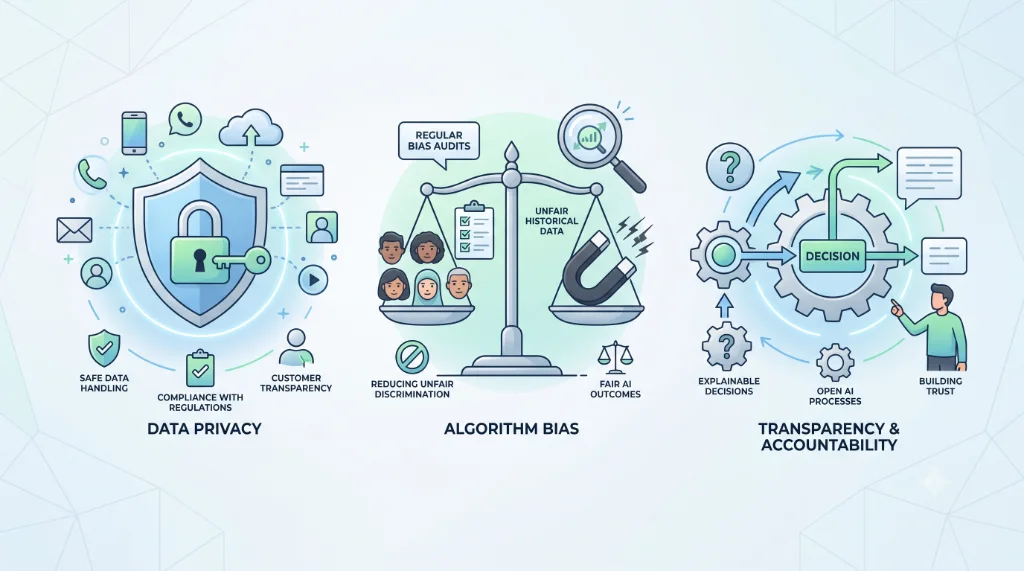
As AI continues to transform the marketing landscape, it is crucial to address the ethical considerations associated with its use. One of the primary concerns is data privacy. AI relies on vast amounts of data to function effectively, raising questions about how this data is collected, stored, and used. It is essential for businesses to ensure that they are complying with data protection regulations and that they are transparent with customers about how their data is being used.
Another ethical consideration is the potential for bias in AI algorithms. AI systems are trained on historical data, which can sometimes contain biases that are inadvertently perpetuated in the algorithms. This can lead to unfair or discriminatory outcomes, particularly in areas such as targeted advertising and customer segmentation. To mitigate this risk, it is important to regularly audit AI systems for bias and to take steps to ensure that they are fair and unbiased.
Finally, there is the issue of transparency and accountability in AI decision-making. As AI systems become more complex, it can be challenging to understand how they arrive at certain decisions. This lack of transparency can erode trust and make it difficult to hold AI accountable for its actions. To address this, businesses should strive to make their AI systems as transparent as possible and to provide clear explanations for AI-driven decisions. By addressing these ethical considerations, businesses can ensure that their use of AI in marketing is both effective and responsible.
Future Trends: AI Innovations in Marketing
The future of AI in marketing is incredibly promising, with numerous innovations on the horizon that have the potential to further transform the industry. One of the most exciting trends is the development of AI-powered voice assistants. As voice search becomes more prevalent, businesses will need to optimize their marketing strategies to accommodate this new mode of interaction. AI-powered voice assistants can provide personalized recommendations and facilitate seamless interactions, enhancing the overall customer experience.
Another emerging trend is the use of AI in visual and augmented reality (AR). AI can analyze visual data to provide insights and recommendations, enabling more immersive and engaging marketing experiences. For example, AI-powered AR applications can allow customers to virtually try on products or visualize how a piece of furniture would look in their home. This level of interactivity can significantly enhance the customer journey and drive higher levels of engagement and conversion.
Additionally, AI is set to revolutionize influencer marketing by providing more accurate and data-driven insights. AI can analyze social media data to identify the most influential personalities and assess the impact of their endorsements. This ensures that brands can partner with influencers who are genuinely aligned with their values and who have a meaningful impact on their target audience. As AI continues to evolve, it will undoubtedly unlock new possibilities and drive further innovation in the marketing landscape.
Conclusion: Embracing AI for Marketing Success
AI is rapidly transforming the marketing landscape, offering unprecedented opportunities for businesses to engage with their customers in more meaningful and impactful ways. From data analysis and personalized marketing to content creation and customer service automation, AI is revolutionizing every aspect of marketing. By leveraging AI, businesses can gain deeper insights, optimize their strategies, and deliver personalized experiences that drive customer loyalty and growth.
However, it is crucial for businesses to address the ethical considerations associated with AI and to ensure that their use of AI is both responsible and transparent. By doing so, they can build trust with their customers and create a solid foundation for long-term success. As AI continues to evolve, it will undoubtedly unlock new possibilities and drive further innovation in the marketing landscape.
In conclusion, embracing AI is not just an option; it is a necessity for businesses that want to stay competitive in today’s fast-paced digital world. By harnessing the power of AI, businesses can transform their marketing efforts and achieve unparalleled success. The future of marketing is here, and it is powered by AI.