
Digital Arka

What is seo (Search Engine Optimization)

What is seo (Search Engine Optimization)

Unlocking the Power of SEO: What You Need to Know About Search Engine Optimization

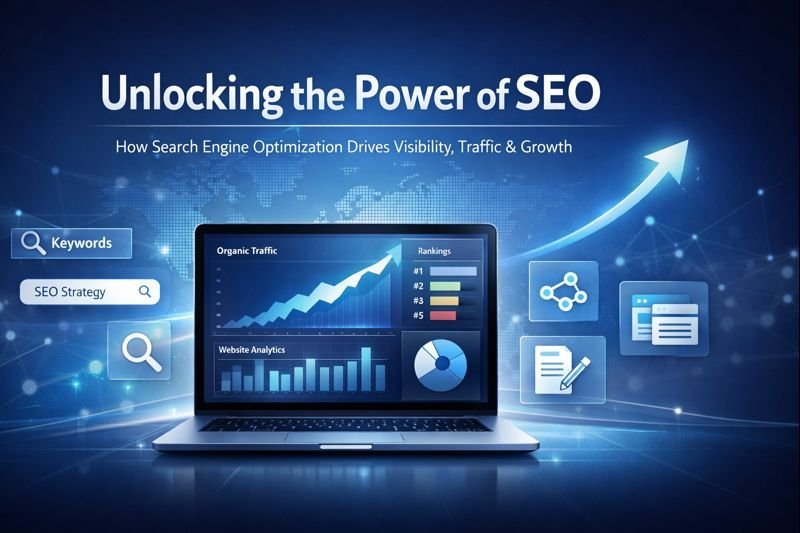
In today’s digital landscape, mastering search engine optimization (SEO) is no longer optional—it’s essential. As businesses and content creators strive to stand out in an increasingly crowded online marketplace, understanding the intricacies of SEO can be the key to unlocking unprecedented visibility and growth. Whether you’re a seasoned marketer or just dipping your toes into the world of digital marketing, the power of SEO offers transformative potential. From optimizing your website’s structure to crafting compelling content that resonates with both users and search engines, the strategies you employ can shape your online presence dramatically. In this article, we will explore the core principles of SEO, demystifying its complex components and providing you with actionable insights to enhance your digital footprint. Get ready to unlock the true potential of your online content and propel your brand into new heights with effective search engine optimization.

The Importance of SEO in Digital Marketing

SEO stands at the forefront of digital marketing strategies for a reason. In an era where consumers rely heavily on search engines to find information, products, and services, appearing at the top of search results can significantly impact your business’s success. High search engine rankings enhance your visibility, driving more organic traffic to your website. This visibility is not just about quantity but quality; users who find you through a search query are already seeking what you offer, making them more likely to convert.

Moreover, SEO builds trust and credibility. Websites that rank high are often perceived as more authoritative and trustworthy. Search engines like Google use complex algorithms to rank pages, considering factors such as the quality of content, user experience, and the number of backlinks. When your site meets these criteria, it signals to users that your content is reliable and valuable. This trust translates into higher engagement rates, longer site visits, and ultimately, increased conversions.

SEO also provides a cost-effective marketing strategy. Unlike paid advertising, where visibility stops once the budget is exhausted, the effects of SEO are long-lasting. While it requires an initial investment of time and resources, the ongoing benefits make it a sustainable approach. By continuously optimizing your site and content, you can maintain and improve your rankings, ensuring a steady stream of organic traffic without recurring costs.

Key Components of SEO

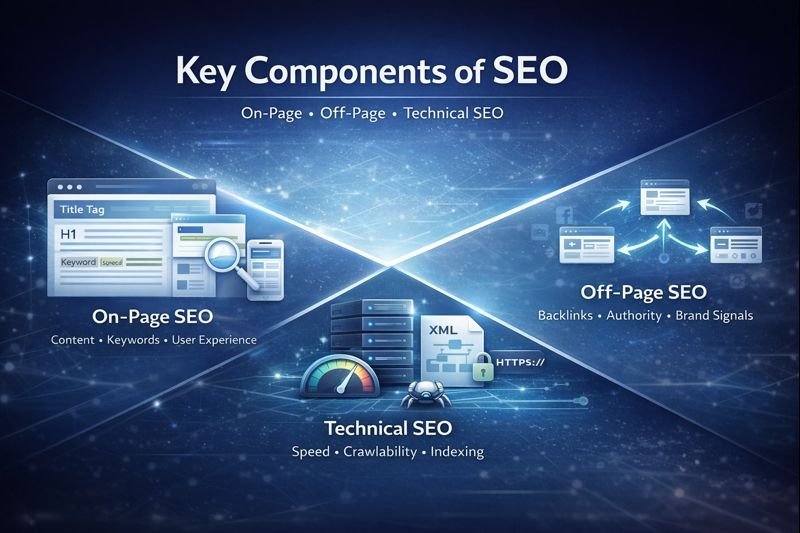
SEO is a multifaceted discipline encompassing various strategies and techniques. The primary components can be broadly categorized into on-page SEO, off-page SEO, and technical SEO. Each plays a unique role in enhancing your site’s performance and visibility.

On-page SEO focuses on optimizing the content and HTML source code of individual pages. This includes elements such as title tags, meta descriptions, headers, and keyword usage. Crafting high-quality, relevant content that answers users’ queries is central to on-page SEO. Additionally, ensuring your site is user-friendly and mobile-responsive can significantly impact your rankings.
Key Components of SEO

Off-page SEO, on the other hand, involves activities outside your website that influence your rankings. The most prominent off-page strategy is link building, which is the process of acquiring backlinks from other reputable websites. These backlinks act as votes of confidence, signaling to search engines that your content is valuable and authoritative. Social media engagement and influencer marketing also fall under off-page SEO, helping to increase your site’s visibility and credibility.

Technical SEO ensures that search engines can crawl and index your site efficiently. This involves optimizing site speed, ensuring mobile compatibility, and maintaining a clean and navigable site structure. Technical SEO also includes implementing secure protocols like HTTPS, creating XML sitemaps, and managing duplicate content. By addressing these technical aspects, you ensure that search engines can understand and rank your site effectively.

Understanding Keywords and Their Role in SEO

Keywords are the foundation of SEO. They are the terms and phrases that users type into search engines when looking for information. Understanding and effectively utilizing keywords is crucial for improving your search engine rankings and driving targeted traffic to your site.

Keyword research is the first step in this process. This involves identifying the terms your target audience uses when searching for products or services similar to yours. Tools like Google Keyword Planner, SEMrush, and Ahrefs can help you discover relevant keywords with high search volume and low competition. Once you have a list of potential keywords, you can strategically incorporate them into your content, meta tags, and URLs.

It’s essential to balance keyword usage to avoid over-optimization. Keyword stuffing, or the practice of overloading content with keywords, can harm your rankings and user experience. Search engines prioritize natural, valuable content, so your keywords should flow seamlessly within the text. This makes your content more readable and engaging while still signaling to search engines what your page is about.

Long-tail keywords are another critical aspect of keyword strategy. These are longer, more specific phrases that users are more likely to use when they are closer to making a purchasing decision. For example, “best running shoes for flat feet” is a long-tail keyword that is more targeted than a broad term like “running shoes.” Incorporating long-tail keywords can help you attract more qualified traffic and improve conversion rates.

On-Page SEO Techniques for Better Rankings

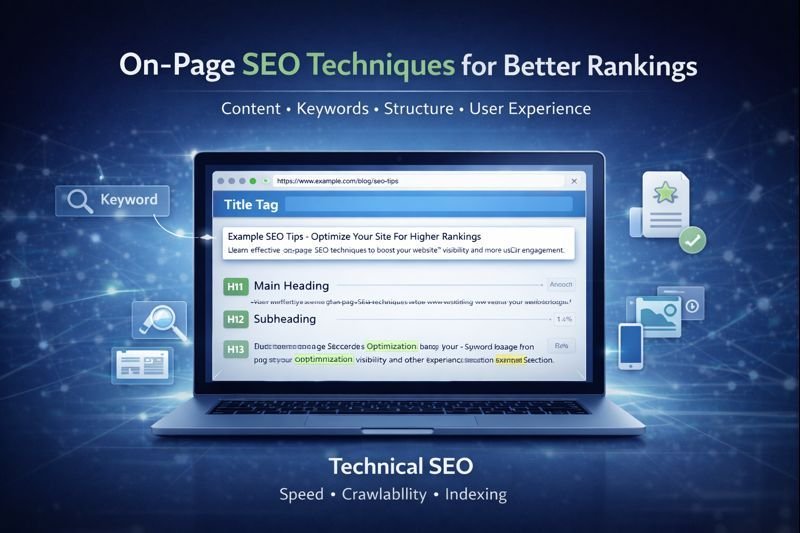
On-page SEO involves optimizing individual web pages to rank higher and earn more relevant traffic. This process includes several critical techniques that can enhance your site’s visibility and user experience.
On-Page SEO Techniques for Better Rankings

Content optimization is at the heart of on-page SEO. High-quality, relevant content that addresses the needs and interests of your audience is essential. This content should be well-structured, easy to read, and enriched with targeted keywords. Additionally, using multimedia elements like images, videos, and infographics can make your content more engaging and informative.

Title tags and meta descriptions are also crucial for on-page SEO. These HTML elements provide concise descriptions of your page’s content to search engines and users. Crafting compelling and keyword-rich title tags and meta descriptions can improve your click-through rates and overall search engine rankings. Ensure that these elements accurately reflect the content on your page and entice users to click.

Header tags (H1, H2, H3, etc.) are essential for organizing your content and making it more accessible to both users and search engines. Using these tags to create a clear hierarchy and structure helps search engines understand your content’s context and relevance. Additionally, ensure that your URLs are clean and descriptive, incorporating relevant keywords where appropriate. This not only improves SEO but also enhances the user experience.

Off-Page SEO Strategies to Boost Authority

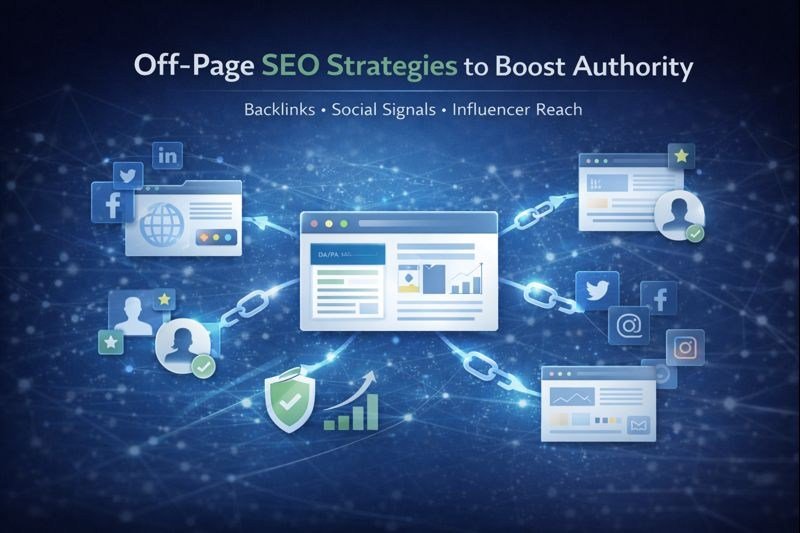
Off-page SEO focuses on activities that occur outside your website but significantly impact your search engine rankings. These strategies are essential for building your site’s authority, trustworthiness, and overall online presence.

Link building is the cornerstone of off-page SEO. Acquiring high-quality backlinks from reputable websites signals to search engines that your content is valuable and trustworthy. There are various methods for building backlinks, including guest blogging, creating shareable content, and engaging in industry forums. The quality of the backlinks is more important than the quantity, so focus on building relationships with authoritative sites in your niche.
Off-Page SEO Strategies to Boost Authority

Social media engagement also plays a vital role in off-page SEO. Sharing your content on social media platforms can increase its visibility and reach a broader audience. This can lead to more social signals, such as likes, shares, and comments, which search engines consider when ranking pages. Additionally, social media provides an excellent opportunity for building relationships with influencers and industry leaders who can amplify your content.

Another effective off-page SEO strategy is influencer marketing. Collaborating with influencers who have a significant following in your industry can help you reach a larger audience and gain valuable backlinks. Influencers can promote your content, products, or services to their followers, driving traffic to your site and enhancing your online authority.

Technical SEO: Ensuring Your Site is Search Engine Friendly

Technical SEO involves optimizing the technical aspects of your website to ensure that search engines can crawl, index, and rank your site efficiently. This area of SEO is crucial for improving your site’s performance and user experience.
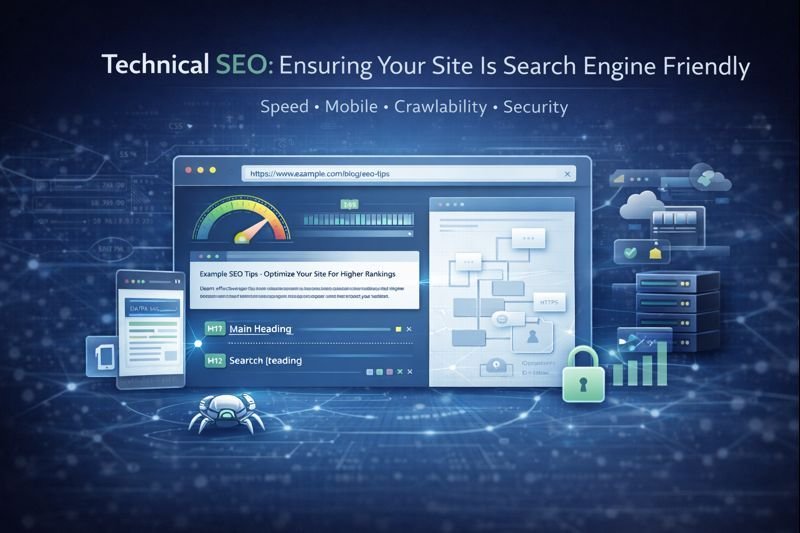
Technical SEO: Ensuring Your Site is Search Engine Friendly

Site speed is a critical factor in technical SEO. A fast-loading website not only provides a better user experience but also positively impacts your search engine rankings. To improve site speed, optimize images, leverage browser caching, and minimize the use of heavy scripts and plugins. Tools like Google PageSpeed Insights can help you identify areas for improvement and track your progress.

Mobile-friendliness is another essential aspect of technical SEO. With the increasing use of mobile devices for internet browsing, search engines prioritize mobile-friendly websites in their rankings. Ensure that your site is responsive, meaning it adapts to different screen sizes and provides a seamless experience across devices. Google’s Mobile-Friendly Test can help you assess your site’s mobile compatibility.

Creating a clean and organized site structure is vital for both users and search engines. Use a logical hierarchy for your pages, with clear navigation and internal linking. This helps search engines understand the relationship between different pages and improves the crawlability of your site. Additionally, implement secure protocols like HTTPS to protect user data and enhance your site’s credibility.

Measuring SEO Success: Tools and Metrics

Measuring the success of your SEO efforts is crucial for understanding what works and what needs improvement. Various tools and metrics can help you track your progress and make data-driven decisions.

Google Analytics is one of the most comprehensive tools for measuring SEO success. It provides insights into your website’s traffic, user behavior, and conversion rates. By analyzing metrics such as organic traffic, bounce rate, and average session duration, you can gauge the effectiveness of your SEO strategies. Google Search Console is another valuable tool that offers data on your site’s search performance, including impressions, clicks, and average position.

Keyword rankings are a direct indicator of your SEO success. Tracking your rankings for targeted keywords helps you understand how well your content is performing in search engine results. Tools like SEMrush, Ahrefs, and Moz can provide detailed keyword tracking and analysis, helping you identify opportunities for improvement.

Backlink analysis is also essential for measuring SEO success. The quality and quantity of backlinks to your site are significant ranking factors. Tools like Ahrefs and Moz can help you monitor your backlink profile, identify new link opportunities, and track the authority of referring domains. Additionally, keeping an eye on your competitors’ backlinks can provide valuable insights for your link-building strategy.

Common SEO Mistakes to Avoid

While SEO can significantly enhance your online presence, certain mistakes can hinder your progress and harm your rankings. Being aware of these common pitfalls can help you avoid them and achieve better results.

One of the most common SEO mistakes is neglecting keyword research. Without understanding what your target audience is searching for, you risk optimizing for irrelevant or overly competitive keywords. Invest time in thorough keyword research to identify terms that align with your audience’s intent and have a realistic chance of ranking well.

Another mistake is keyword stuffing, or overusing keywords in your content. This practice not only makes your content less readable but can also result in search engine penalties. Focus on creating valuable, natural content that incorporates keywords seamlessly. Strive for a balance that enhances user experience while signaling relevance to search engines.

Ignoring technical SEO can also hurt your rankings. Issues such as slow site speed, poor mobile compatibility, and broken links can negatively impact your site’s performance and user experience. Regularly audit your site for technical issues and address them promptly to ensure optimal performance and crawlability.

Future Trends in SEO and What They Mean for Your Strategy

SEO is a constantly evolving field, and staying ahead of the curve is essential for maintaining your competitive edge. Understanding future trends and adapting your strategy accordingly can help you achieve long-term success.

Voice search is one trend that is rapidly gaining traction. With the rise of virtual assistants like Siri, Alexa, and Google Assistant, more users are conducting searches using voice commands. This shift requires optimizing your content for natural language queries and long-tail keywords that reflect spoken language. Additionally, focusing on local SEO can help you capture voice search traffic, as users often search for nearby services and businesses.

Artificial intelligence (AI) and machine learning are also transforming the SEO landscape. Search engines are becoming more sophisticated in understanding user intent and delivering personalized results. To stay relevant, focus on creating high-quality, user-centric content that addresses specific needs and interests. Leveraging AI tools for keyword research, content creation, and data analysis can also enhance your SEO efforts.

The importance of user experience (UX) in SEO is expected to grow. Search engines increasingly prioritize sites that offer a seamless, enjoyable experience. This includes fast-loading pages, mobile-friendliness, intuitive navigation, and engaging content. Investing in UX design can improve your site’s performance and boost your search engine rankings.

In conclusion, unlocking the power of SEO requires a comprehensive understanding of its various components and a commitment to continuous improvement. By mastering on-page, off-page, and technical SEO, effectively utilizing keywords, and staying abreast of emerging trends, you can enhance your digital footprint and achieve unprecedented growth. Embrace the transformative potential of SEO, and propel your brand to new heights in the ever-evolving digital landscape.

Leave a Reply

Your email address will not be published. Required fields are marked *